


Adaptive Energy: How Much Do You Really Need for a Resilient Future?
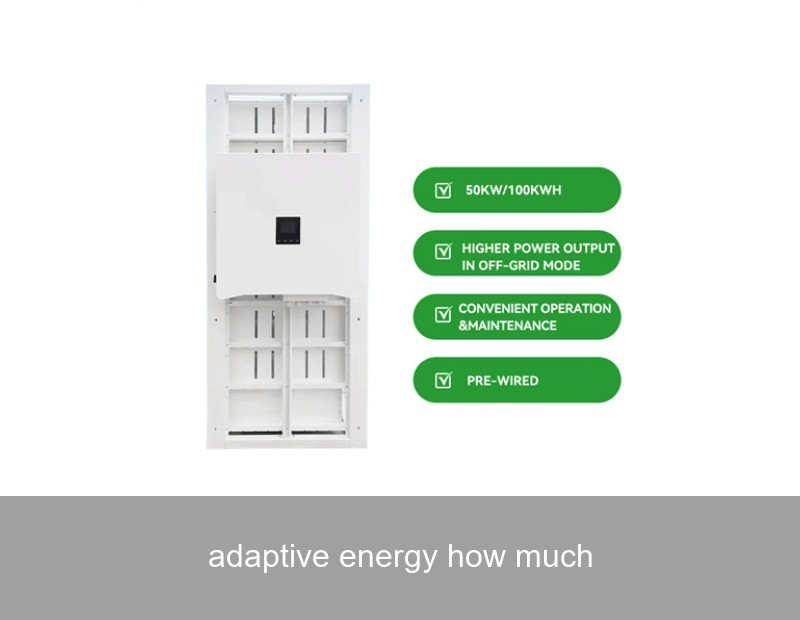
You've heard the terms: energy independence, resilience, a smart grid. But as energy prices fluctuate and weather events become more extreme, a new, more crucial question is emerging for homeowners and businesses alike: Adaptive energy – how much is enough? It's not just about having a battery; it's about having a system that intelligently adapts to your unique consumption, real-time grid conditions, and even the weather forecast. Let's explore how to quantify and build your adaptive energy capacity.
Table of Contents
- What is Adaptive Energy, Really?
- The "How Much" Equation: Factors That Define Your Need
- Case Study: The Munich Bakery – Quantifying Resilience
- Beyond Capacity: The Intelligence Layer of Adaptive Systems
- How Highjoule Delivers Precision-Adaptive Energy Solutions
- Your Adaptive Energy Journey: Where to Begin?
What is Adaptive Energy, Really?
Think of adaptive energy not as a static product, but as a dynamic capability. It's the ability of your energy system – typically combining solar generation and battery storage – to learn, predict, and respond. An adaptive system doesn't just store kilowatt-hours (kWh); it manages them based on a constantly shifting set of priorities: maximizing self-consumption of solar power, avoiding peak utility charges, providing backup during outages, and even participating in grid services. The core question, "adaptive energy how much?" therefore translates to: "How much adaptive capacity and intelligence do I need to meet my specific goals?"
The "How Much" Equation: Factors That Define Your Need
Determining the right scale for your adaptive energy system is a multi-variable calculation. Here are the key factors:
- Your Energy Consumption Profile: Not just your total daily kWh use, but when you use it. A load analysis is the first critical step.
- Solar PV Generation: The size and output of your solar array define the "fuel" for your storage system.
- Primary Goal (The "Why"):
- Bill Savings: Requires enough capacity to shift usage away from expensive peak periods.
- Backup Resilience: Defined by "hours of autonomy." What essential loads (refrigeration, lighting, critical machinery) must run, and for how long during an outage? This is often the defining factor for capacity.
- Grid Independence: Aims for near-total self-sufficiency, requiring significantly larger solar and storage capacity.
- Local Climate & Grid Reliability: Areas with frequent storms or unreliable grids naturally demand higher resilience capacity.
- Financial Incentives: Local rebates or favorable tariff structures (like time-of-use rates) can influence the optimal system size.
A Simplified Reference Table
| Primary Objective | Key Metric | Typical Residential Capacity Range* | Typical Commercial/Industrial Consideration |
|---|---|---|---|
| Peak Shaving (Bill Management) | Power (kW) discharge capability | 5 - 15 kWh | Demand charge analysis; often 100+ kWh systems |
| Essential Backup (Resilience) | Energy (kWh) capacity; hours of autonomy | 10 - 30+ kWh | Critical process protection; often requires modular, scalable solutions |
| Maximized Self-Consumption | Daily solar excess (kWh) | 8 - 20 kWh | Aligning storage charge/discharge with production & operational schedule |
*Ranges are illustrative. A professional audit is essential.
Case Study: The Munich Bakery – Quantifying Resilience
Let's ground this with a real European example. A family-owned bakery in Munich, Germany, faced two challenges: rising energy costs and the risk of spoilage during even short grid outages. Their "why" was clear: ensure refrigeration and key baking equipment could run for a minimum of 8 hours to safeguard inventory and daily operations.
An analysis revealed their essential load was 12 kW, with a daily energy need of about 65 kWh during an outage. Simply putting in a large battery wasn't the adaptive solution. The system needed to:
- Prioritize refrigeration circuits above all else.
- Automatically "shed" non-essential loads if solar recharge was limited.
- Pre-charge the battery based on storm warnings from a weather API.
The implemented solution featured a modular Highjoule IntelliStack battery system with a total capacity of 70 kWh and an inverter capable of managing the 12 kW critical load. The intelligent energy management system (EMS) was programmed with the bakery's operational logic. During a planned grid maintenance outage last winter, the system seamlessly took over. The bakery maintained full operations, saving an estimated €2,800 in potential lost product and revenue. The system also routinely shaves peak demand, reducing their monthly power costs by about 18%. This case shows that "how much" was answered by a precise resilience goal, not just a generic calculation.

Image Source: Unsplash (User: @picoftasty)
Beyond Capacity: The Intelligence Layer of Adaptive Systems
So, you've sized your battery capacity. But without the "adaptive" brain, it's just a dumb tank of electrons. The true value is unlocked by the Energy Management System (EMS). This software is the conductor of your energy orchestra, making real-time decisions:
- Forecasting: Integrating weather data to predict solar generation.
- Load Management: Dynamically prioritizing or shedding circuits.
- Economic Optimization: Deciding when to buy cheap grid power, store solar, or sell back based on tariffs. You can learn more about grid-interactive efficient buildings from the U.S. Department of Energy.
- Grid Interaction: In some markets, safely participating in demand response programs.
How Highjoule Delivers Precision-Adaptive Energy Solutions
At Highjoule, we've been answering the "how much" question with precision since 2005. We understand that adaptive energy is not one-size-fits-all. Our approach combines robust hardware with sophisticated software to deliver a system tailored to your specific "why."
For residential clients, our HomeHub series integrates seamlessly with existing or new solar PV. Its AI-driven learning algorithm maps your family's energy habits, automatically optimizing for comfort and savings. The intuitive app lets you set modes like "Maximum Savings" or "Storm Watch," putting adaptive control at your fingertips.
For commercial and industrial applications, our IntelliStack modular battery energy storage system (BESS) is the cornerstone. Its scalable design means you can start with the capacity you need today and expand as your needs evolve. Paired with our GridSynergy EMS, it provides unparalleled control, allowing facility managers to set hard rules for resilience while maximizing ROI through peak shaving and, where available, revenue stacking. For microgrid projects, this same technology forms the robust, self-healing heart of a community or campus energy system.

Image Source: Unsplash (User: @andy0)
Your Adaptive Energy Journey: Where to Begin?
The journey to answering "adaptive energy how much?" begins with a clear assessment. We recommend starting with a detailed energy audit, either through your utility or a qualified partner like Highjoule. Focus on defining your non-negotiable "why." Is it keeping the lights on for eight hours, or eliminating demand charges? The more precise your goal, the more precise the solution.
Consider also the future. Are you planning an electric vehicle? A home addition? An adaptive system should have the headroom to grow with you. The International Renewable Energy Agency (IRENA) provides extensive context on the evolving role of storage in the global energy transition.
So, we leave you with this question to ponder: If the grid went down tomorrow, what single energy goal would define success for your home or business, and what would achieving that goal be worth to you?
 Inquiry
 Online Chat