


Almacenamiento Térmico de Energía: The Unsung Hero of a Renewable Grid
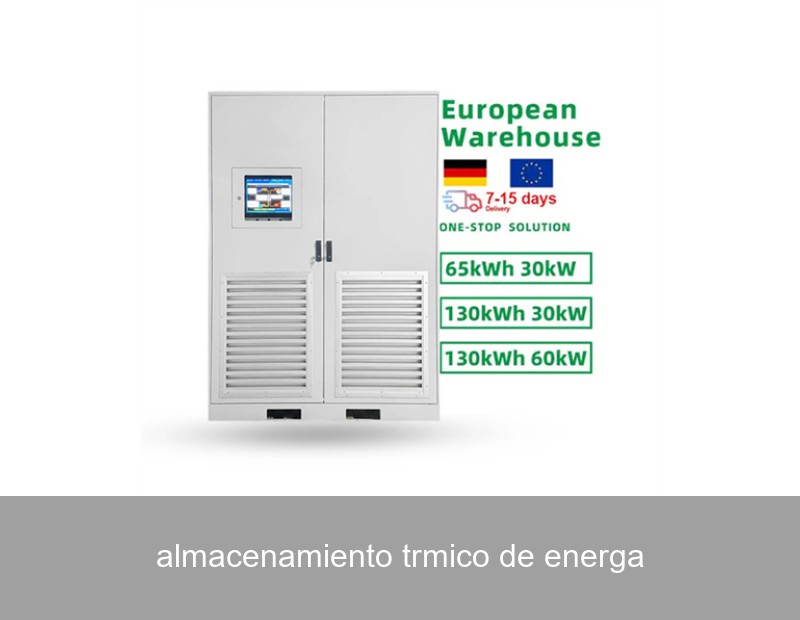
As the world accelerates its transition to wind and solar power, a critical question emerges: what happens when the sun doesn't shine, and the wind doesn't blow? While lithium-ion batteries often dominate the conversation, there's a powerful, often overlooked technology stepping into the spotlight: almacenamiento térmico de energía, or thermal energy storage (TES). This ingenious method of capturing and releasing heat energy is not just a theoretical concept; it's a practical, scalable solution already stabilizing grids and cutting costs today. For businesses, communities, and utilities in Europe and the U.S., understanding thermal storage is key to unlocking a truly resilient and sustainable energy future.
Table of Contents
- What is Thermal Energy Storage?
- How Does Thermal Energy Storage Work? The Core Technologies
- Why Thermal Storage is Critical Now: The Grid Integration Challenge
- Real-World Impact: A Case Study from California
- Beyond the Grid: Industrial and Commercial Applications
- Highjoule's Integrated Approach: Where Thermal Storage Meets Battery Innovation
- The Future Outlook for Thermal Energy Storage
What is Thermal Energy Storage?
At its core, almacenamiento térmico de energía is the practice of capturing thermal energy—heat or cold—for use at a later time. Think of it as a giant "thermos" for an entire building or power plant. This simple idea has profound implications. It decouples energy production from consumption, allowing excess renewable energy (often generated midday by solar panels) to be stored not as electrons, but as heat or ice, and then dispatched when demand peaks in the evening or during a cold snap. This flexibility is the missing link for high-renewable penetration.
How Does Thermal Energy Storage Work? The Core Technologies
Thermal storage isn't a one-size-fits-all solution. It employs several clever mechanisms, each suited for different applications:
- Sensible Heat Storage: The most common type, which involves heating or cooling a solid or liquid medium like water, molten salts, or rocks. The energy is stored as a change in the material's temperature. For example, a large insulated tank of water can be heated with excess electricity.
- Latent Heat Storage: This method uses phase change materials (PCMs) that absorb or release large amounts of energy when they change state (e.g., from solid to liquid). Paraffin wax or salt hydrates are common PCMs. They store much more energy per volume than sensible heat systems at a near-constant temperature.
- Thermochemical Storage: The most advanced form, where energy is stored in chemical bonds through reversible reactions. It offers the highest energy density and minimal heat loss over long periods, making it ideal for seasonal storage.
These systems are often paired with concentrated solar power (CSP) plants but are rapidly finding new applications in district heating, industrial processes, and commercial building HVAC.
Why Thermal Storage is Critical Now: The Grid Integration Challenge
Here's the phenomenon we're facing: grids across Europe and North America are experiencing the "duck curve." Solar generation creates a massive midday surplus, followed by a steep ramp-up demand as the sun sets. This strains conventional power plants and can lead to curtailment (wasting) of renewable energy.
Let's look at the data. The U.S. Department of Energy's Office of Energy Efficiency & Renewable Energy notes that thermal storage in CSP plants can provide over 10 hours of electricity dispatchability, rivaling traditional baseload power. In Europe, the International Renewable Energy Agency (IRENA) highlights that TES can reduce the levelized cost of electricity from CSP by up to 40% and is crucial for decarbonizing industrial heat, which accounts for about 20% of total energy consumption.
The insight is clear: almacenamiento térmico de energía provides the bulk, long-duration storage that lithium-ion batteries, which are optimal for short-duration high-power needs, cannot economically deliver alone. It's about creating a balanced storage portfolio.
Real-World Impact: A Case Study from California
Nothing illustrates the potential of thermal storage better than a concrete example. Let's travel to Crescent Dunes, Nevada (a project supplying power to California). While this project has faced challenges, its core design showcases the technology's promise.
 Image: The Crescent Dunes Solar Energy Project uses molten salt for thermal energy storage. Source: Wikimedia Commons (Public Domain)
This 110-megawatt concentrated solar power plant uses a field of mirrors to focus sunlight onto a central tower, heating molten salt to over 565°C. This hot salt is then stored in a massive insulated tank. The key figure? 10 hours of full-load storage. This means the plant can generate electricity at full capacity for over 10 hours after sunset, directly addressing the evening peak demand. At its peak, it was designed to power 75,000 homes with clean, dispatchable energy, day or night. This case teaches us that thermal storage can transform intermittent solar into a firm, reliable power source.
Beyond the Grid: Industrial and Commercial Applications
The story doesn't end with utility-scale power plants. Almacenamiento térmico de energía is making waves closer to home and work.
- Commercial HVAC: Ice storage systems are a proven success. Buildings like universities and large offices use cheap off-peak electricity at night to freeze water. During the hot afternoon, the ice melts to provide cooling, drastically reducing peak demand charges—which can constitute up to 50% of a commercial electricity bill.
- Industrial Process Heat: Industries like food & beverage, chemicals, and manufacturing require constant, high-temperature heat. TES can capture excess renewable or waste heat, providing a clean, consistent supply and reducing reliance on fossil fuels.
- District Heating & Cooling: Cities like Copenhagen and Stockholm use large-scale thermal storage (often in underground aquifers) to store summer heat for winter use and winter cold for summer cooling, dramatically increasing system efficiency.
Highjoule's Integrated Approach: Where Thermal Storage Meets Battery Innovation
At Highjoule, we see almacenamiento térmico de energía as a vital component in a holistic energy ecosystem. Since 2005, we've been at the forefront of intelligent storage solutions, and our perspective is that no single technology holds all the answers. Our strength lies in integrating the right technologies for the specific need.
For instance, while we specialize in advanced battery energy storage systems (BESS) for commercial, industrial, and microgrid applications, we recognize that projects with large thermal loads—like manufacturing plants or district energy systems—can benefit enormously from a hybrid approach. Our smart energy management platforms can orchestrate a combination of lithium-ion battery storage for immediate grid services and frequency regulation, alongside a thermal storage system for long-duration load shifting and process heat.
Imagine a food processing plant: Highjoule's system could store midday solar power in batteries to handle short-term machinery spikes, while simultaneously directing surplus energy to a thermal store that provides the 24/7 low-grade heat needed for sterilization and cleaning processes. This synergy maximizes self-consumption of renewables, minimizes demand charges, and ensures operational resilience. We provide the intelligent control layer that makes these complex, multi-technology systems simple and profitable to operate.
The Future Outlook for Thermal Energy Storage
The trajectory for TES is promising. Innovation is driving down costs and improving efficiency. We're seeing advancements in new materials like ceramic particles that can reach higher temperatures, and the exploration of almacenamiento térmico de energía for seasonal storage, which could address the summer-winter imbalance in renewable generation. As carbon pricing mechanisms strengthen and the demand for 24/7 clean energy from corporations grows, thermal storage's economic and environmental case will only solidify.
It's not a question of "batteries vs. thermal storage." The future grid will require both, along with other storage forms, working in concert. The goal is a balanced, resilient, and fully decarbonized energy system.
So, as you evaluate your organization's or community's path to energy independence and sustainability, consider this: What unique combination of thermal and electrochemical storage could solve your most persistent energy cost and reliability challenges? The answer might just be the key to unlocking a new level of efficiency.
 Inquiry
 Online Chat