


Adding Battery Storage to Existing Solar: Unlock Your System's Full Potential
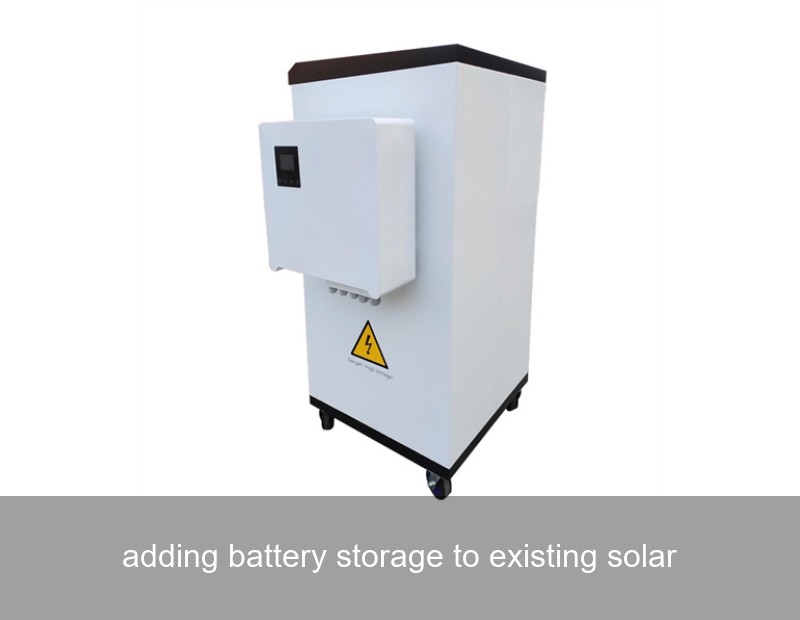
So, you've made the smart move to solar. Your panels have been diligently converting sunlight into savings, and you're proud of your contribution to a cleaner grid. But have you ever watched the sun set and wondered where all that excess daytime energy goes? Or felt a twinge of concern during a power outage, despite having a roof full of panels? If this sounds familiar, you're not alone. A growing number of solar owners are discovering the next logical step in their energy journey: adding battery storage to existing solar systems. This isn't just an upgrade; it's a transformation that turns your solar array from a cost-saver into a resilient, intelligent, and truly independent power asset.
Why Consider Adding Battery Storage to Your Existing Solar System?
The primary appeal of solar is simple: generate your own power. However, traditional grid-tied systems have a fundamental quirk—they operate in sync with the utility's rhythm, not necessarily yours. You generate the most power in the middle of the day when you might be at work, and you draw power from the grid in the evening when the sun is down. Adding battery storage changes this dynamic entirely. It allows you to capture that surplus solar energy and use it on your own schedule.
Think of your solar panels as a prolific water spring. Without a storage tank (the battery), you can only use the water when it's flowing. With a tank, you store the excess for a cloudy day or for use at night. The benefits are tangible:
- Energy Independence: Reduce your reliance on the utility grid, insulating yourself from rising electricity rates and volatile market prices.
- Backup Power: Keep your lights on, refrigerator running, and essential circuits powered during grid outages. Your solar panels alone typically cannot do this for safety reasons (a feature called "islanding").
- Maximized Self-Consumption: Use more of the clean energy you produce, sometimes increasing the share from 30-50% to over 80%.
- Grid Services & Incentives: In many regions, you can participate in utility programs that pay you for allowing your battery to support the grid during peak demand.

Caption: A modern home with solar panels and a wall-mounted battery storage unit, showcasing a complete energy solution.
The Data Don't Lie: The Financial & Grid Impact
Let's move beyond concepts and look at the numbers. The economics of adding battery storage to existing solar are becoming increasingly compelling. According to the U.S. Department of Energy's Solar Energy Technologies Office, the cost of lithium-ion batteries has fallen by nearly 90% in the last decade. Coupled with incentives like the Federal Investment Tax Credit (ITC) in the U.S. or various EU member state subsidies, the payback period is shrinking.
Furthermore, the value isn't just in bill savings. A 2023 study by Lazard highlights that the levelized cost of storage (LCOS) for residential and commercial applications continues to fall, making batteries a cost-effective tool for managing peak demand charges—a significant portion of commercial electricity bills.
| Benefit | Residential Impact | Commercial/Industrial Impact |
|---|---|---|
| Increased Self-Consumption | Can increase from ~40% to 80%+ | Shifts daytime solar to cover evening operations |
| Demand Charge Management | Minimal | Potentially 20-40% reduction on portion of bill |
| Backup Power Duration | Hours to days (essential loads) | Critical process support, data center uptime |
| Grid Incentive Revenue | Varies by utility program | Can provide significant aggregated grid services |
Real-World Case Study: A German Bakery's Recipe for Resilience
Let's bring this to life with a real example. Bäckerei Schmidt (name changed for privacy), a mid-sized bakery in Bavaria, Germany, installed a 50 kW solar PV system in 2018. While it cut their daytime energy costs, their ovens and refrigeration kicked into high gear in the early morning and evening, precisely when solar production was low. They faced high grid electricity costs and vulnerability to outages that would spoil inventory.
In 2022, they decided on adding battery storage to their existing solar setup. They partnered with Highjoule to install a 120 kWh Highjoule Cobalt-IQ commercial battery system. The results after one year were impressive:
- Self-Consumption Rate: Increased from 35% to 88%.
- Grid Import Reduction: Reduced grid electricity purchases by 68%.
- Peak Load Shaving: Eliminated 95% of their peak demand charges.
- ROI: Projected payback period of 5.2 years, factoring in the German KfW subsidy.
"The battery isn't just an expense; it's a strategic asset," said the bakery's owner. "We now have a predictable energy cost, and knowing our cold storage stays online during a storm is priceless for our business continuity."
Key Considerations Before You Add a Battery
Excited? You should be! But a successful integration requires planning. Here’s what you need to evaluate:
- System Compatibility: Will the new battery work with your existing solar inverter? You may need a new hybrid inverter or an AC-coupled battery solution that works alongside your current setup.
- Energy Audit: What are your critical loads? How much energy do you use at night? This determines the battery capacity (kWh) and power rating (kW) you need.
- Local Regulations & Incentives: Permitting, grid connection agreements, and available subsidies vary greatly. In the EU, the European Commission's energy storage framework is shaping national policies, while in the U.S., the ITC is a major driver.
- Future-Proofing: Are you planning an EV? Expanding your home or business? Choose a scalable system.
Tailored Solutions: How Highjoule Makes Integration Seamless
This is where expertise matters. At Highjoule, with nearly two decades of experience, we specialize in retrofitting intelligent storage onto existing solar installations. Our process is designed for minimal disruption and maximum benefit.
For residential clients, our Highjoule HomeVault series is a premier AC-coupled solution. It connects directly to your main electrical panel, working in harmony with your existing solar inverter. Its AI-driven energy management software learns your consumption patterns and automatically optimizes for self-consumption, cost savings, or backup readiness. You can monitor and control everything from a simple smartphone app.

Caption: A modern, wall-mounted residential battery storage system with a clean interface, similar to Highjoule's HomeVault design.
For commercial and industrial applications, our Highjoule Cobalt-IQ Modular system is the answer. Its modular design allows for capacity to be built up over time, from 50 kWh to multiple megawatt-hours. It features advanced peak shaving algorithms and can be configured to participate in grid-balancing programs, creating a potential new revenue stream. Our technical team handles the entire process—from site assessment and grid permissioning to installation and commissioning—ensuring your bakery, factory, or office building gains a reliable, revenue-grade asset.
Your Energy Future: What's the Next Step?
Adding battery storage to existing solar is more than a technical upgrade; it's a declaration of energy independence and a step towards true sustainability. It transforms your solar investment from a one-dimensional saver into a multi-faceted powerhouse that provides security, control, and intelligence.
The technology is proven, the economics are solidifying, and the need for a resilient, decentralized grid has never been clearer. Whether you're a homeowner tired of anxiety during blackouts or a business owner seeking to lock in long-term operational costs, the question is no longer "Why should I add a battery?" but rather "What is the optimal battery solution for my specific energy profile and goals?"
What would you power first during an outage, and how would transforming your solar surplus into 24/7 clean power change your relationship with energy?
 Inquiry
 Online Chat