


Hybrid Solar Battery in Poland: Your Complete Guide to Energy Independence
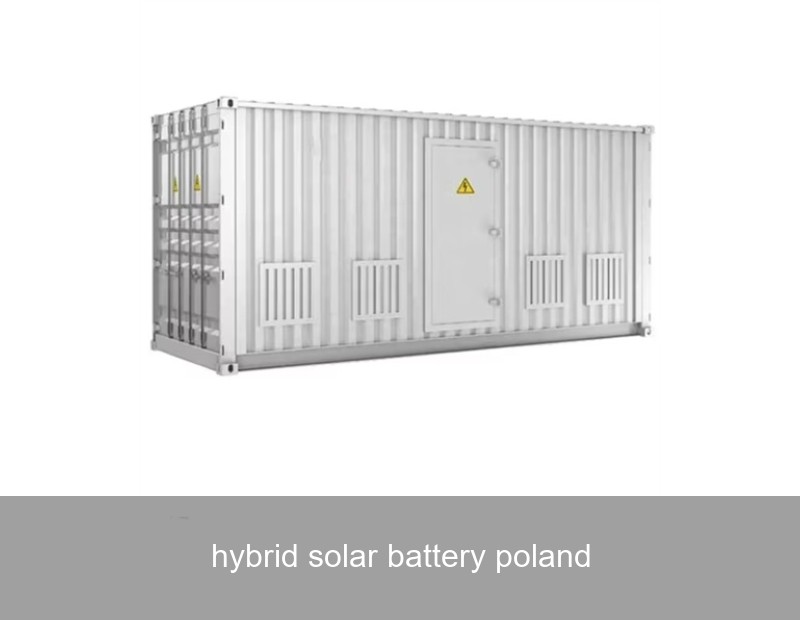
Table of Contents
- What is a Hybrid Solar Battery System?
- Why is Poland a Prime Market for Hybrid Solar Batteries?
- How Does a Hybrid System Work? A Step-by-Step Look
- Key Benefits for Polish Homeowners and Businesses
- Real-World Impact: A Case Study from Mazovia
- Choosing the Right Hybrid Solar Battery System for Your Needs
- How Highjoule Powers Poland's Energy Transition
- The Future of Energy in Poland: What's Next?
If you're in Poland and have been considering solar panels, you've likely heard the term "hybrid solar battery" more and more. But what exactly is it, and why is it becoming a game-changer for Polish households and businesses seeking true energy resilience? Simply put, a hybrid solar battery system is the intelligent bridge between solar panels, your home, the grid, and a backup battery. It allows you to maximize your self-consumption of solar energy, protect yourself from blackouts, and navigate Poland's evolving energy landscape with confidence. Let's dive into why this technology is finding such fertile ground in Poland and how it can transform your relationship with electricity.
What is a Hybrid Solar Battery System?
Unlike a simple solar setup that sends excess power directly to the grid, a hybrid system adds a crucial component: an integrated energy storage battery. Think of it as having your personal energy reservoir. The system's smart inverter is the brain, making real-time decisions. It prioritizes using your solar generation to power your appliances first. Any surplus, instead of being exported immediately, is used to charge your battery. Only when both your immediate needs and your battery are full does excess energy go to the grid. Conversely, when your solar panels aren't producing (at night or on cloudy days), you draw power from your battery before pulling from the grid. This seamless dance maximizes your independence.
Why is Poland a Prime Market for Hybrid Solar Batteries?
The rise of the hybrid solar battery in Poland is no accident. It's a direct response to a perfect storm of local factors.
- Evolving Net-Metering Policies: Poland's previous "prosumer" support scheme, which offered favorable grid credit rates, is being revised. The new "net-billing" system ties the value of exported energy to dynamic market prices, which are often lower than retail tariffs. This makes storing your own energy for later use far more economically attractive than sending it all to the grid.
- Rising Electricity Prices: Like much of Europe, Poland has experienced significant volatility and increases in electricity costs. A hybrid system acts as a financial shield, locking in a lower, predictable cost of energy from your sun and your battery.
- Desire for Energy Security: Concerns over grid stability and the geopolitical landscape have heightened the desire for self-reliance. A hybrid system with backup functionality ensures critical loads keep running during power outages—a feature simple grid-tied systems lack.
- Abundant Solar Potential: Contrary to some stereotypes, Poland receives a substantial amount of solar irradiation, comparable to parts of Germany, a solar leader. The summer months offer particularly high yields, perfect for filling a battery.
How Does a Hybrid System Work? A Step-by-Step Look
Let's break down a typical day for a hybrid system in a Polish home.
| Time of Day | Solar Production | Household Demand | System Action |
|---|---|---|---|
| Morning (6-10 AM) | Low to Medium | High (waking up, appliances) | Solar powers house directly. Shortfall is taken from the battery, not the grid. |
| Midday (10 AM - 3 PM) | High (sunny peak) | Low (often empty house) | Solar powers house, then fully charges the battery. Any further excess is exported to the grid under net-billing. |
| Evening Peak (5-9 PM) | Low or None | Very High (cooking, lighting, heating) | Battery discharges to cover household demand, minimizing expensive grid import during peak tariff hours. |
| Overnight | None | Low (baseload: fridge, etc.) | Battery supplies power until a minimum charge level, then grid takes over seamlessly. |

Image source: Unsplash (representative image of a home battery installation)
Key Benefits for Polish Homeowners and Businesses
- Maximized Self-Consumption: Increase the portion of your solar energy used directly in your home from ~30-40% (typical for non-battery systems) to 70% or more. This is your most valuable energy.
- Reduced Energy Bills: By avoiding peak grid imports, you dramatically cut your electricity costs. The savings pay for the system over time.
- Backup Power: When the grid fails, the system automatically isolates your home (or critical circuits) and powers them from the battery and solar. Peace of mind is invaluable.
- Grid Support & Stability: Advanced systems can provide services to the grid, a future-looking benefit. They also reduce strain on local transformers during peak times.
- Future-Proofing: A hybrid system is the perfect platform for adding electric vehicle charging, turning your car into another potential storage unit.
Real-World Impact: A Case Study from Mazovia
Let's look at concrete numbers. A family in a detached house near Warsaw installed a 8 kWp solar array with a Highjoule H-ESS 10 hybrid energy storage system (10 kWh usable capacity). Before installation, their annual electricity bill was approximately 8,400 PLN. In the first full year of operation:
- Self-Consumption Rate: Increased from an estimated 35% to 82%.
- Grid Import Reduction: Reduced grid electricity purchases by 78%.
- Annual Savings: Achieved net savings (after loan payments for the system) of over 3,200 PLN in Year 1. The savings will increase as electricity prices rise.
- Backup Events: The system provided seamless backup during two short grid outages, totaling 5 hours, keeping lights, internet, and refrigeration running without interruption.
This case demonstrates the tangible economic and resilience benefits driving the adoption of hybrid solar battery systems in Poland.
Choosing the Right Hybrid Solar Battery System for Your Needs
Not all systems are created equal. Key considerations include:
- Battery Chemistry & Lifecycle: Lithium Iron Phosphate (LFP) batteries, like those used in Highjoule systems, are the industry standard for safety, longevity (often 6,000+ cycles), and performance in a wide temperature range.
- Usable Capacity vs. Total Capacity: Ensure you're comparing the actual energy you can use (usable capacity). Some manufacturers quote the larger total cell capacity.
- Scalability: Can you easily add more battery modules later if your needs grow (e.g., with an EV)?
- Inverter Integration: A seamlessly integrated inverter-battery system ensures higher efficiency, smarter control, and reliable backup.
- Software & Monitoring: An intuitive app that shows your energy flows, savings, and system health is crucial for managing your new power plant.
How Highjoule Powers Poland's Energy Transition
With nearly two decades of experience since 2005, Highjoule is at the forefront of intelligent storage solutions globally. For the Polish market, we offer tailored systems that understand local challenges. Our H-ESS Series Hybrid Systems are designed for the European climate and are compliant with all relevant Polish and EU regulations. They feature:
- High-Density LFP Batteries: Safe, long-lasting, and capable of deep cycling daily.
- All-in-One Design: Integrating a hybrid inverter, battery management system (BMS), and safety features in a compact, wall-mountable unit for easy installation.
- Advanced Energy Management System (EMS): The software brain that can be configured to prioritize self-consumption, backup readiness, or even time-of-use optimization based on your utility tariff.
- Professional Support Network: We work with a certified network of Polish installers who are trained to design, commission, and service our systems, ensuring you get expert local support.
For larger commercial or industrial applications, Highjoule's containerized BESS (Battery Energy Storage Systems) can help factories, farms, and municipalities manage demand charges, integrate renewables, and create microgrids. You can learn more about global storage trends from the International Energy Agency.

Image source: Unsplash (representative image of solar panels on a home in a European setting)
The Future of Energy in Poland: What's Next?
The energy landscape is shifting from a one-way street (grid to consumer) to a dynamic network of "prosumers" who both consume and produce. Hybrid solar batteries are the cornerstone of this transition in Poland. As virtual power plants (VPPs) and more dynamic tariffs emerge, your hybrid system could become an income-generating asset by providing grid services. The technology is also converging with heat pumps and EV charging, moving us towards fully integrated, zero-emission homes.
Considering the pace of change in energy policies and prices, the question for Polish homeowners and business leaders isn't necessarily if to get a battery, but when. The sooner you install, the sooner you start building your long-term energy security and locking in savings. What specific energy goal—total independence, backup power, or maximizing financial return—would drive your decision to explore a hybrid solar battery system for your property?
 Inquiry
 Online Chat