


Solar and Storage UK 2025: The Pivotal Year for a Self-Powered Future
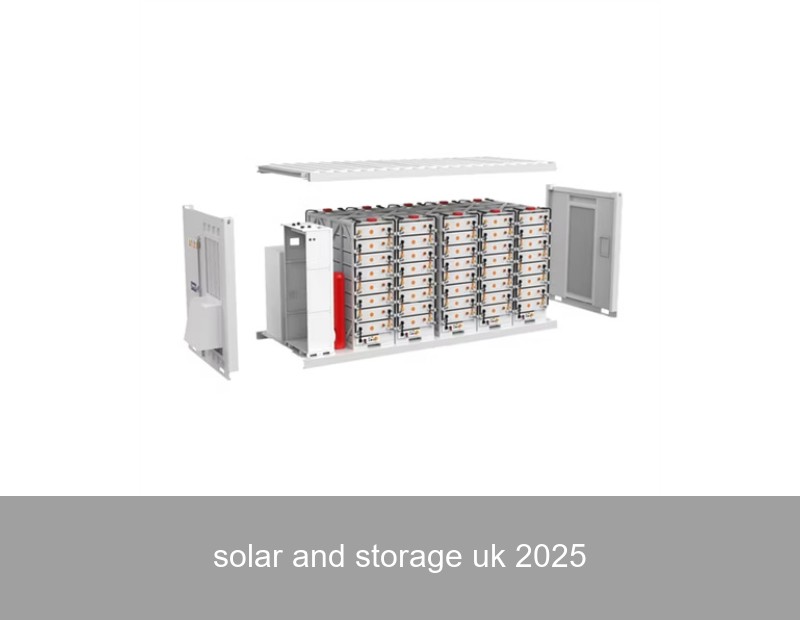
As we look towards 2025, a powerful transformation is underway across homes and businesses in the United Kingdom. The conversation is no longer just about solar panels; it's about intelligent solar and storage systems. This integrated approach is moving from a niche consideration to a mainstream necessity, driven by volatile energy prices, ambitious national net-zero targets, and remarkable technological advancements. For UK consumers and enterprises, 2025 represents a pivotal moment to harness, store, and manage clean energy like never before. Let's explore why this combination is becoming the cornerstone of a resilient and cost-effective energy strategy.
Table of Contents
- The UK Energy Phenomenon: Why 2025 is a Tipping Point
- The Data Behind the Boom: Solar and Storage by the Numbers
- A Real-World Case Study: The Manchester Manufacturing Hub
- Key Technologies for 2025: Beyond Basic Batteries
- Highjoule's Role in the UK's 2025 Energy Landscape
- Navigating Your 2025 Solar and Storage Journey
The UK Energy Phenomenon: Why 2025 is a Tipping Point
You've felt it in your energy bills and seen it in the headlines. The UK's energy landscape is at a crossroads. While the nation has made impressive strides in renewable generation—with wind power leading the charge—the intermittent nature of these sources creates a challenge. The sun doesn't always shine when we need power the most, typically during the early evening peak. This mismatch leads to a reliance on the grid, often powered by costly fossil fuels during high-demand periods.
This is where the magic of pairing solar with storage comes in. Think of it this way: your solar panels are excellent at earning energy "income" during the day. A battery storage system acts as your energy savings account, allowing you to store that surplus income and spend it when you need it most, effectively insulating you from peak-time tariffs and grid instability. By 2025, advancements in battery chemistry, smarter energy management software, and evolving policy frameworks are set to make this combination not just sensible, but supremely intelligent.
The Data Behind the Boom: Solar and Storage by the Numbers
The trend is undeniable and backed by compelling data. According to Solar Power Portal, the UK's solar capacity continues to grow steadily, with a significant portion of new installations now being specified with battery storage from the outset. The driving forces are clear:
- Economic Pressure: With the Ofgem price cap fluctuations, the financial case for self-consumption has never been stronger. Storing cheap solar energy to avoid buying expensive grid power delivers a faster return on investment.
- Technology Advancements: Lithium iron phosphate (LFP) battery chemistry, now mainstream, offers longer lifespans (often over 6,000 cycles) and enhanced safety, making them ideal for residential and commercial use.
- Policy Tailwinds: While the Feed-in Tariff (FiT) is gone, the Smart Export Guarantee (SEG) incentivizes sending excess power back to the grid. However, the real value is maximized by using that power yourself, with storage enabling 60-80% self-consumption rates versus 30-50% with solar alone.

This confluence of factors creates a perfect storm of opportunity for UK energy users. The question is no longer "if" but "how" to implement a system that meets specific needs.
A Real-World Case Study: The Manchester Manufacturing Hub
Let's move from theory to practice. Consider a real-world example: a mid-sized manufacturing hub in Manchester. Operating on two shifts, their energy demand peaked during late afternoon and early evening, precisely when grid prices were highest and solar generation was waning.
The Challenge: Reduce crippling peak-time demand charges, achieve sustainability targets, and ensure operational resilience against potential blackouts.
The 2024 Solution: A integrated 250kW rooftop solar array coupled with a 500kWh Highjoule H-Ion CUBE commercial battery storage system. The system was integrated with their existing machinery and managed by Highjoule's Adaptive Energy OS (AEOS) software.
The Results by 2025 (Projected):
| Metric | Result |
|---|---|
| Peak Grid Demand Reduction | Over 40% |
| Annual Energy Cost Savings | £28,000+ |
| On-Site Renewable Consumption | Increased from 35% to 89% |
| Backup Power for Critical Lines | Up to 4 hours |
This case exemplifies the 2025 mindset. It's not just about generation; it's about strategic consumption and resilience. The Highjoule AEOS platform intelligently decides when to charge the batteries from solar or the grid (during ultra-low overnight rates) and when to discharge to shield the business from peak costs, all while providing a seamless backup safety net.
Key Technologies for 2025: Beyond Basic Batteries
The "storage" in "solar and storage" is evolving rapidly. For a UK audience planning for 2025, understanding these components is key:
- DC-Coupled Systems: Increasingly efficient, these systems channel solar energy directly into the battery without multiple power conversions, minimizing energy loss.
- AI-Powered Energy Management: Platforms like Highjoule's AEOS use weather forecasting, usage patterns, and real-time tariff data to optimize every kilowatt-hour automatically.
- Scalable & Modular Design: The best systems allow you to start with what you need and add battery capacity as your needs grow, protecting your initial investment.
- Vehicle-to-Grid (V2G) Readiness: As EV adoption soars, forward-looking systems are being designed to integrate with bidirectional charging, turning your EV into a mobile battery asset.
Highjoule's Role in the UK's 2025 Energy Landscape
Since 2005, Highjoule has been at the forefront of this evolution, moving from a component supplier to a global provider of intelligent, integrated energy solutions. For the UK market in 2025, our approach is built on three pillars:
1. The Highjoule H-Ion Series: Our flagship battery storage solutions, like the H-Ion CUBE for commercial use and the H-Ion HOME for residences, are built with proven LFP chemistry. They are designed for the UK climate, with robust enclosures and thermal management systems ensuring performance year-round.

2. The Adaptive Energy OS (AEOS): This is the "brain" of the operation. AEOS doesn't just react; it predicts and optimizes. For a UK homeowner, it might learn your EV charging schedule and ensure the battery is full from cheap overnight grid power to cover your morning peak, saving your solar surplus for the evening. For a business, it performs automated peak shaving, dramatically reducing capacity charges.
3. Full-Spectrum Support: We provide more than hardware. Our services encompass initial consultancy and system design, seamless installation through certified UK partners, and ongoing remote monitoring and support. We ensure your solar and storage system is a performing asset, not just a static installation.
Navigating Your 2025 Solar and Storage Journey
Embarking on this path requires careful planning. Here’s a logical step-by-step approach:
- Audit & Analyze: Review at least 12 months of your energy bills. Identify your baseload and peak usage patterns. This data is gold for sizing a system correctly.
- Define Your Goals: Is your primary driver financial savings, energy independence, carbon reduction, or resilience? Your goal will shape the system design.
- Choose a Technology Partner, Not Just a Kit: Look for providers with proven UK experience, robust software, and a long-term service commitment. The technology should be adaptable to future energy market changes.
- Plan for the Future: Consider potential future loads like an EV or heat pump. A modular system from a provider like Highjoule allows for cost-effective expansion later.
The landscape of solar and storage in the UK for 2025 is one of immense promise and tangible benefits. It represents a shift from passive consumption to active, intelligent energy management.
What specific energy challenge in your home or business would you most want a smart storage system to solve first?
 Inquiry
 Online Chat