


Aerospace Lithium Ion Battery: The Power Behind Modern Aviation and Beyond
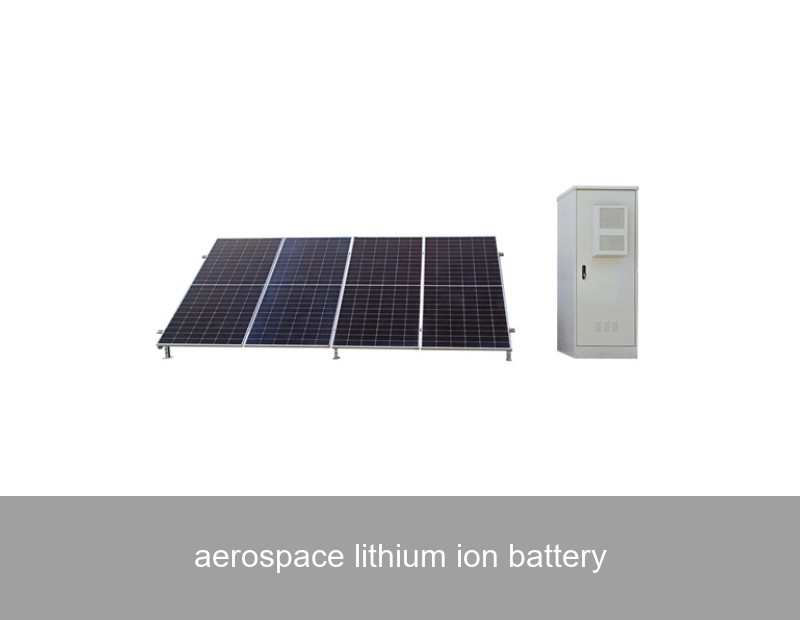
Imagine a world where aircraft are quieter, more efficient, and produce zero emissions during taxiing, takeoff, and landing. This isn't science fiction; it's the imminent future being unlocked by advanced aerospace lithium ion batteries. These aren't your everyday power cells. They are engineering marvels, pushing the boundaries of energy density, safety, and reliability to power everything from electric flight and onboard systems to the very satellites orbiting our planet. As the aerospace industry accelerates towards sustainability and innovation, the demand for smarter, more powerful energy storage has never been greater. This is where the lessons from cutting-edge aerospace technology intersect with the solutions we provide on the ground at Highjoule, a global leader in advanced energy storage systems.
Table of Contents
- The Weight of Power: Why Lithium-Ion Dominates Aerospace
- Beyond Energy Density: The Critical Pillars of Aerospace Batteries
- From Theory to Flight: A Real-World Case Study in Urban Air Mobility
- Trickle-Down Technology: How Aerospace Innovation Powers Earth-Bound Solutions
- The Future of Flight: Solid-State and What's Next
- Powering Your Vision: From the Skies to Your Operations
The Weight of Power: Why Lithium-Ion Dominates Aerospace
In aerospace, every gram matters. The primary driver for adopting lithium-ion chemistry is its exceptional specific energy (Wh/kg) and energy density (Wh/L). Compared to traditional nickel-cadmium (Ni-Cd) or lead-acid batteries, modern lithium-ion systems can store significantly more energy for the same weight and volume. This translates directly to extended range for electric aircraft, longer mission durations for satellites, and reduced fuel consumption in conventional aircraft using these batteries for auxiliary power and engine start.
Consider this: a commercial airliner reducing its weight by just 1% can lead to a 0.75% reduction in fuel consumption NASA has highlighted in studies on aircraft efficiency. For an industry with razor-thin margins and immense pressure to decarbonize, the shift to lightweight, high-power lithium-ion batteries is not just an upgrade—it's a fundamental redesign of onboard energy systems. The quest for the perfect aerospace lithium ion battery revolves around achieving the ultimate balance: maximum energy, minimum weight, absolute safety, and the ability to withstand extreme environmental stress.
Beyond Energy Density: The Critical Pillars of Aerospace Batteries
While energy density grabs headlines, building a battery for aerospace is about mastering a trifecta of challenges:
- Safety Under Extreme Conditions: Aerospace batteries must operate flawlessly from -50°C to 70°C, withstand significant vibration, pressure changes, and potential thermal events. This requires robust Battery Management Systems (BMS), advanced thermal management, and cell chemistries (like Lithium Iron Phosphate or advanced NMC) that prioritize stability.
- Power Delivery & Cycle Life: An electric vertical takeoff and landing (eVTOL) vehicle needs immense power (kW) for lift-off, while a satellite needs reliable energy (kWh) over thousands of charge-discharge cycles over 15+ years. The battery design and chemistry are optimized for these vastly different duty cycles.
- Certification and Reliability: Every component must meet rigorous standards like DO-311A for commercial aircraft or specific space-grade qualifications. Failure is not an option at 30,000 feet.

Image Source: Unsplash (Representative image of advanced battery engineering)
These pillars—safety, power, longevity—are not exclusive to aerospace. At Highjoule, we apply this same rigorous systems-engineering philosophy to our commercial and industrial battery energy storage systems (BESS). While our Highjoule H-Series batteries for microgrids aren't destined for orbit, they are built with the same core principles: unparalleled safety through proprietary thermal management, exceptional cycle life for maximum ROI, and intelligent control via our AI-driven Highjoule Energy Operating System (EOS).
From Theory to Flight: A Real-World Case Study in Urban Air Mobility
Let's ground this technology in a tangible example. The emerging Urban Air Mobility (UAM) market, with its eVTOL "air taxis," is a perfect testbed for aerospace lithium ion battery technology. These aircraft are 100% battery-electric and require power systems that are incredibly energy-dense, powerful, and fast-charging.
Case Study: The Beta Technologies ALIA-250 eVTOL. This aircraft, which has completed extensive flight testing under FAA oversight, utilizes a custom high-voltage lithium-ion battery pack. According to public flight test data, a standard mission profile for such an aircraft might involve:
- Range: Up to 250 nautical miles (460 km) Battery Capacity: Estimated to be in the range of 400-500 kWh.
- Charging: Designed to recharge in under an hour using a megawatt-class charging system.
This isn't just a prototype. Companies like Beta are working with logistics giants like UPS and healthcare networks to move cargo and organs. The battery is the heart of this operation. Its performance dictates the viable routes, payload, and economic model. The success of this sector hinges entirely on continuous improvements in battery safety, energy density, and charging speed—advancements that Highjoule closely monitors and adapts into its own R&D for high-performance stationary storage.
Trickle-Down Technology: How Aerospace Innovation Powers Earth-Bound Solutions
The technological spillover from aerospace battery development is significant. The advanced Battery Management Systems (BMS) that meticulously monitor thousands of cells in a satellite battery pack have paved the way for smarter, more reliable BMS in grid-scale storage. Similarly, the compact, lightweight thermal management solutions used in aircraft are informing the design of more efficient cooling for densely packed containerized BESS.
At Highjoule, we bridge this gap between high-altitude innovation and ground-level reliability. Our Industrial I-Series battery storage solutions, for example, incorporate lessons in system integrity and monitoring from aerospace principles. They provide critical backup power for data centers (as vital as a black box recorder) and enable peak shaving for large manufacturing plants, ensuring operational continuity and financial efficiency. By leveraging the core advancements pioneered for aerospace—in safety architecture, cycle durability, and system intelligence—we deliver storage solutions you can trust for your most critical commercial and industrial energy needs.
| Aerospace Battery Requirement | Parallel Highjoule Product Feature | Benefit to Customer |
|---|---|---|
| Ultra-Stable Thermal Management | Patented Liquid Cooling in H-Series | Enhanced safety, longer lifespan, consistent performance in all climates |
| Precise State-of-Charge (SOC) Monitoring | AI-Powered Predictive BMS in Energy OS | Accurate performance forecasting, optimal charge/discharge cycles, maximized ROI |
| Extreme Environmental Durability | IP55 Rated Enclosures for Outdoor Installation | Reliable operation in rain, dust, and wide temperature ranges, reducing site constraints |
The Future of Flight: Solid-State and What's Next
The horizon for aerospace lithium ion battery technology points toward solid-state batteries. By replacing the flammable liquid electrolyte with a solid one, these promise even higher energy densities and drastically improved safety—a game-changer for aviation. Major aerospace players and automakers are investing billions in this technology. However, challenges remain in scaling production and ensuring performance over thousands of cycles.
This relentless pursuit of "what's next" mirrors our ethos at Highjoule. We are actively researching next-generation chemistries and system designs to bring ever-more efficient, safe, and sustainable storage to the market. Whether it's integrating our systems with on-site solar for a carbon-neutral factory or creating a resilient microgrid for a remote community, we are committed to applying the forefront of energy storage technology to solve real-world energy challenges today.

Image Source: Unsplash (Representative image of a solar farm with battery storage)
Powering Your Vision: From the Skies to Your Operations
The journey of the aerospace lithium ion battery is a testament to human ingenuity, pushing the limits to achieve the extraordinary. But you don't need to launch a satellite to benefit from this level of engineering excellence. The same principles of resilience, intelligence, and performance are now available for your business, facility, or community energy project.
What could a reliable, high-performance energy storage system, built with aerospace-grade rigor, do for your operational costs, your energy independence, or your sustainability goals? At Highjoule, we're ready to help you explore that answer. What's the most critical energy challenge your organization is facing as we move towards a more electrified future?
 Inquiry
 Online Chat