


Understanding Battery Voltage in Energy Storage Cabinets: The Heart of Modern Power Systems
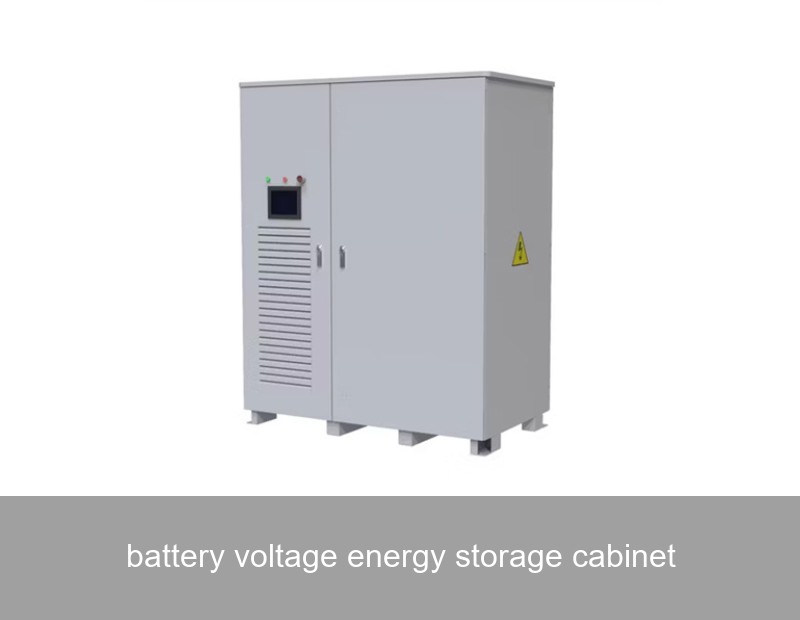
Have you ever wondered what makes a modern energy storage system tick? While features like capacity and software get a lot of attention, seasoned engineers know that the true pulse of any system is its battery voltage energy storage cabinet. This critical component is far more than just a metal box; it's the intelligent nexus where electrochemical potential is managed, converted, and safely delivered as reliable power. For businesses and communities navigating the energy transition, grasping the importance of cabinet-level voltage management is key to unlocking resilience, efficiency, and a faster return on investment. Let's delve into why this specific parameter is so fundamental and how companies like Highjoule are engineering solutions around it.
Table of Contents
- The Voltage Imperative: More Than Just a Number
- Data Drives Design: The Technical Landscape of Battery Voltage
- Case Study: Voltage Stability for a German Manufacturing Plant
- The Highjoule Approach: Intelligent Cabinets for Complex Needs
- The Future of Battery Voltage Management
The Voltage Imperative: More Than Just a Number
In an energy storage cabinet, the system voltage isn't a static figure you set and forget. It's a dynamic indicator of health, state-of-charge, and power capability. Think of it like blood pressure in the human body—a vital sign that requires constant, precise monitoring. An improperly managed voltage can lead to a cascade of issues: reduced efficiency, accelerated battery degradation, safety hazards, and even system-wide failure.
This is where the design philosophy behind the cabinet becomes paramount. A well-engineered battery voltage energy storage cabinet doesn't just house cells; it actively balances them, protects them, and ensures the entire stack operates at its optimal voltage window. For commercial and industrial (C&I) applications, this precision translates directly to operational uptime and cost savings. At Highjoule, with nearly two decades of experience, we've built our reputation on designing cabinets where voltage stability is the non-negotiable foundation for every other intelligent feature.
Key Voltage-Related Challenges in C&I Storage
- Partial Shading & Cell Imbalance: In large battery strings, minor cell inconsistencies can cause voltage drift, reducing usable capacity.
- High-Power Demand Spikes: Sudden loads can cause voltage sag, potentially tripping protective equipment and disrupting processes.
- Thermal Runaway Risk: Over-voltage during charging or under-voltage during deep discharge can increase thermal stress and safety risks.
- Grid Interaction Complexity: Maintaining stable DC bus voltage is crucial for the inverter to seamlessly support the grid or an off-grid microgrid.

Image Source: Unsplash (Professional technical photography)
Data Drives Design: The Technical Landscape of Battery Voltage
Let's talk numbers. While residential systems often operate at voltages like 48V or 400V, C&I and utility-scale energy storage cabinets are a different beast. Here, system voltages typically range from 600V to over 1500V DC. Why the push for higher voltages? The physics is compelling: for the same power output, a higher voltage system draws lower current. This means reduced energy losses (which scale with the square of the current, I²R), thinner and less expensive copper wiring, and higher overall system efficiency.
According to analysis from the National Renewable Energy Laboratory (NREL), moving to higher voltage architectures in battery storage can reduce balance-of-system costs significantly. However, this advantage comes with a heightened need for advanced insulation, arc-fault protection, and meticulous voltage management—all core competencies in cabinet design.
| Application Tier | Typical DC Voltage Range | Key Design Focus | Highjoule Product Example |
|---|---|---|---|
| Commercial & Light Industrial | 600V - 800V | Modularity, Serviceability, Peak Shaving | Highjoule H-Cube 800 Series |
| Large Industrial & Microgrid | 800V - 1200V | Grid Stability, Black Start Capability, High C-Rates | Highjoule H-Grid 1200 Platform |
| Utility-Scale Front-of-Meter | 1200V - 1500V+ | Maximum Efficiency, Long-Duration Storage, Fleet Management | Highjoule H-Utility 1500 System |
Case Study: Voltage Stability for a German Manufacturing Plant
Let's make this concrete. A major automotive parts manufacturer in Bavaria faced a dual challenge: volatile energy costs and the need for flawless power quality for its robotic assembly lines. Any voltage dip exceeding 10% could trigger a costly production line halt. Their goal was to install an on-site storage system for peak shaving and voltage support.
The challenge wasn't just storing energy; it was delivering it *instantaneously* to correct grid sags. This requires the battery energy storage cabinet to maintain a rock-solid DC voltage with millisecond-level response, so the inverter can inject precise reactive power.
The Highjoule Solution & Results: A 2 MWh/1.5 MW system using our H-Grid 1200 cabinets was deployed. The cabinets' proprietary Battery Management System (BMS) performs per-module voltage monitoring and balancing at an unprecedented speed. More importantly, the cabinet-level controller communicates directly with the plant's energy management system, anticipating load spikes.
- Data Point: In the first year, the system mitigated 47 recorded voltage dip events from the grid, preventing an estimated €280,000 in production losses.
- Data Point: Through peak shaving and frequency regulation services, the plant achieved a 22% reduction in its annual net energy costs.
- Key Insight: The project's success was attributed not just to the batteries, but to the cabinet's ability to act as a "voltage shock absorber," a feature designed right into the power conversion and control architecture of the H-Grid platform.

Image Source: Unsplash (Industrial installation photography)
The Highjoule Approach: Intelligent Cabinets for Complex Needs
So, what differentiates a superior battery voltage energy storage cabinet? At Highjoule, we believe it's the deep integration of electrochemistry, power electronics, and data intelligence. Our cabinets, such as the H-Cube and H-Grid series, are built from the ground up with voltage as the central design parameter.
Our proprietary BMS goes beyond basic protection. It employs adaptive algorithms that learn the unique voltage curve and impedance of each cell pack over time, allowing for predictive balancing that minimizes stress. The cabinet's environmental control isn't just about cooling; it's calibrated to maintain an ideal temperature that ensures optimal voltage stability across all cells, whether discharging at peak power or sitting idle.
For system integrators and end-users, this translates to tangible benefits: extended battery life (often beyond warranty projections), higher round-trip efficiency, and the peace of mind that comes with a system designed to the highest international safety standards (like UL 9540 and IEC 62619). We provide not just hardware, but a full suite of monitoring and optimization services through our Highjoule OS, giving operators a clear window into the real-time voltage health of every cabinet in their fleet.
Core Features of a Highjoule Voltage-Optimized Cabinet
- Predictive Voltage Balancing: Algorithmic balancing that pre-empts cell divergence, reducing wear.
- Dynamic Voltage Ramp Control: Softens the impact of high-current surges on the DC bus, prolonging component life.
- Granular, Per-Module Monitoring: Voltage and temperature sensing at the smallest replaceable unit for pinpoint diagnostics.
- Grid-Forming Readiness: Cabinet architecture that supports advanced inverters capable of creating stable voltage waveforms in off-grid scenarios.
The Future of Battery Voltage Management
The landscape is evolving rapidly. With the advent of new cell chemistries like Lithium Iron Phosphate (LFP) and emerging solid-state batteries, voltage profiles and management requirements will shift. Furthermore, the push for long-duration energy storage will place new demands on how voltage is maintained over extended discharge cycles. The next generation of battery energy storage cabinets will need to be chemistry-agnostic and software-upgradable.
At Highjoule, our R&D is already focused on these frontiers. We're developing cabinet-level systems that can dynamically adjust their management strategy based on the detected cell chemistry, ensuring optimal performance whether using today's LFP or tomorrow's anode-free cells. The goal is to make the cabinet the adaptable, future-proof brain of the storage asset.
As you consider an energy storage investment for your business or community, the critical question isn't just "how many megawatt-hours?" but rather, **"how will the system safeguard and leverage every volt to deliver unwavering reliability and value over the next two decades?"** What specific voltage stability challenge is your operation facing today?
 Inquiry
 Online Chat