


Affordable Power Station Solutions: Your Key to Energy Independence and Lower Bills
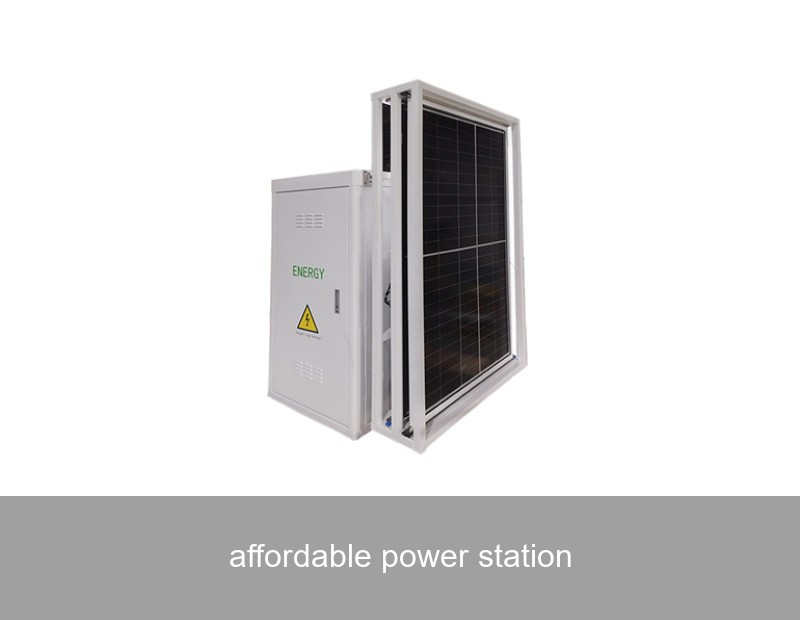
Let's talk about a common modern dilemma: the rising cost of electricity and the growing desire for energy resilience. For many homeowners and businesses in Europe and the US, the idea of a personal or commercial affordable power station—a reliable battery energy storage system (BESS)—has shifted from a luxury to a serious consideration. But can "affordable" truly deliver on the promise of backup power and savings? The answer is a resounding yes, thanks to significant advancements in battery technology and smart energy management. This guide will demystify how accessible energy storage works and how it can transform your relationship with the grid.
Table of Contents
The Rise of the Home Power Station
a storm knocks out power in your neighborhood. While others are in the dark, your lights, refrigerator, and internet stay on. This isn't magic; it's a modern affordable power station at work. Traditionally, backup meant loud, polluting diesel generators. Today, it's a silent, wall-mounted unit in your garage or basement, storing solar energy or cheap grid electricity for when you need it most. The driving forces are clear: volatile energy prices, increased grid instability in some regions, and the global push for decarbonization. Homeowners are no longer just consumers; they are becoming "prosumers," both producing and managing their own energy.
The Simple Economics: Payback Periods & ROI
The core question is financial. How does an upfront investment become an affordable power station solution? The model is built on two pillars: avoidance and arbitrage.
- Peak Shaving (Avoidance): Utility companies often charge significantly higher rates during "peak" hours (e.g., 4 PM to 9 PM). A smart battery system discharges during these expensive hours, avoiding peak tariffs.
- Load Shifting (Arbitrage): The system charges itself when electricity is cheapest (often at night) and uses that stored power during the day. You buy low, use high.
According to data from the U.S. Department of Energy, pairing solar with storage can maximize self-consumption of solar power to over 80%, dramatically reducing grid dependence. In markets like California or Germany with high electricity prices and favorable regulations, the payback period for a well-sized system can now be within 5-8 years, on a system with a lifespan of 15+ years.

A modern, sleek home energy storage unit, representing the new face of the affordable power station.
A Real-World Case Study: The Berlin Bakery
Let's move from theory to practice. Consider "Brotzeit," a mid-sized artisan bakery in Berlin. Their challenge: high energy costs from running ovens and refrigeration, and vulnerability to even short grid outages that could ruin production.
In 2023, they installed a 50 kWh commercial battery storage system paired with an existing rooftop solar array. The results over 12 months were compelling:
| Metric | Before Installation | After Installation |
|---|---|---|
| Monthly Grid Peak Demand | 45 kW | 28 kW |
| Grid Electricity Consumption | 72% of total need | 35% of total need |
| Self-Consumed Solar | 30% | 85% |
| Estimated Annual Savings | — | €8,400 |
The system provided critical backup for refrigeration during two brief grid failures, preventing thousands of euros in lost inventory. For Brotzeit, the affordable power station was not an expense but a strategic investment that protected their business and improved its bottom line.
What Makes a Power Station "Affordable"?
Affordability isn't just about the sticker price. It's about total value over the system's lifetime. Key factors include:
1. Battery Chemistry & Longevity
Lithium Iron Phosphate (LFP) batteries have become the standard for affordable power station solutions. They are safer, have longer cycle life (often over 6,000 cycles), and are less prone to degradation than older chemistries, ensuring your investment lasts.
2. Intelligent Energy Management System (EMS)
The real brain of the operation. A smart EMS learns your consumption patterns, weather forecasts, and utility rate schedules to automatically optimize charge/discharge cycles for maximum savings. Without it, a battery is just a simple backup.
3. Scalability and Modular Design
True affordability means you can start with what you need and expand later. Modular systems allow you to add battery capacity as your needs grow or budget allows, future-proofing your investment.
The Highjoule Approach: Smart, Scalable, Sustainable
This is where Highjoule's expertise comes into play. Since 2005, we've been at the forefront of making advanced energy storage accessible. Our philosophy is that an affordable power station must be intelligent, integrated, and built to last.
For residential clients, our HomeHub Series exemplifies this. It's a modular LFP-based system with an AI-driven EMS that seamlessly integrates with solar inverters. The intuitive app lets you monitor your energy flows in real-time, set preferences, and even participate in grid-balancing programs like virtual power plants (VPPs) where available, creating an additional revenue stream.

Industrial-scale storage, like Highjoule's GridMax systems, bring stability and affordability to larger operations.
For commercial and industrial applications, our GridMax C&I solutions are engineered for demanding environments. They offer higher power capabilities and advanced grid-support functions. A bakery like the one in our case study would use a system like this to perform peak shaving, demand charge reduction, and provide uninterrupted power for critical processes. We work closely with businesses to model their energy usage and design a system with a clear, attractive return on investment.
Our systems are designed and tested to meet the rigorous safety and performance standards of both the European and North American markets, giving our customers peace of mind.
Looking Ahead: Your Energy Future
The energy landscape is changing rapidly. Policies like the EU's Green Deal and the U.S. Inflation Reduction Act (IRA) are making affordable power station technology even more accessible through tax credits and incentives. The International Energy Agency consistently highlights storage as a cornerstone of the clean energy transition.
The question is no longer if battery storage will become a standard part of our energy infrastructure, but when you will choose to make it part of yours. Will you wait for the next major rate hike or grid outage to act, or will you start exploring your options today to take control of your energy costs and security?
What's the first energy-dependent appliance in your home or business you'd want to secure with your own reliable power source?
 Inquiry
 Online Chat