


How to Achieve 1000 kWh per Month with a Solar Energy Kit: A Practical Guide
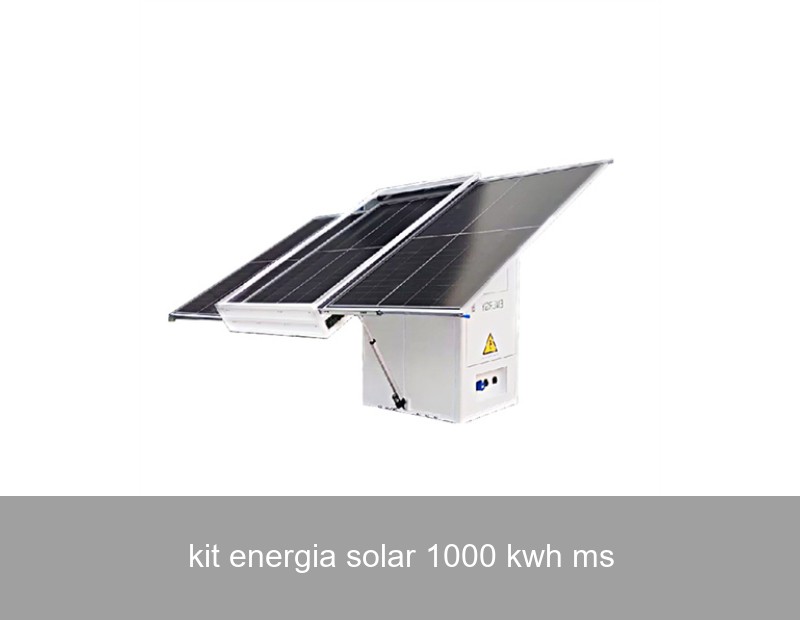
So, you're looking at your energy bill and wondering if a solar energy kit could realistically cover a significant chunk of your consumption—say, 1000 kWh per month. It's a common benchmark for many households and small businesses, representing a substantial step towards energy independence. The good news? It's not just possible; it's a well-trodden path for those with the right plan and components. In this guide, we'll demystify exactly what it takes to design a system that consistently delivers 1000 kWh per month, moving from the initial concept to real-world performance, and explore how modern solutions like those from Highjoule make this goal more accessible and intelligent than ever.
Table of Contents
Understanding the 1000 kWh/Month Goal
First, let's ground this figure. A monthly consumption of 1000 kilowatt-hours (kWh) translates to roughly 33 kWh per day. To put that in perspective, the average U.S. household uses about 900 kWh per month, while energy-intensive homes in Europe with electric heating or pools can easily exceed 1500 kWh. Targeting 1000 kWh/month means you're aiming to power a moderately large home or a small commercial operation entirely with solar for a significant portion of the year.
The critical question isn't just "Can a solar kit generate this much?" but "Can it generate this much consistently across seasons, and can I use the energy when I need it?" This is where system sizing and, crucially, energy storage become non-negotiable.
Key Components of Your 1000 kWh/Month Solar Kit
A system designed for this output is more than just panels on a roof. It's a carefully integrated energy ecosystem. Let's break it down:
- Solar Panels (PV Array): This is your fuel factory. To produce 1000 kWh monthly, you need sufficient panel capacity. The exact size depends heavily on your location's solar irradiance. In sunny Southern California, you might need a smaller array than in Northern Germany.
- Simplified Calculation: A common rule of thumb: (Monthly kWh goal) / (Average peak sun hours per day * 30 days). For example, in a region with 4.5 daily peak sun hours: 1000 kWh / (4.5 * 30) = ~7.4 kW DC system size.
- Solar Inverters: These are the brains of the operation, converting the DC electricity from your panels into usable AC power for your home. For a system this size, you'd likely look at a robust string inverter or optimize with microinverters for complex roof layouts.
- Battery Energy Storage System (BESS): This is the game-changer. A solar-only system exports excess daytime production to the grid, leaving you reliant on it at night. A battery allows you to store that excess for self-use, dramatically increasing your energy independence. For a 1000 kWh/month profile, a storage capacity of 10-20 kWh is often a practical starting point.
- Energy Management System (EMS): The orchestra conductor. An intelligent EMS, like the one embedded in Highjoule's systems, decides when to charge the battery, power your home, or export to the grid based on weather forecasts, usage patterns, and tariff rates, maximizing your economic return and system efficiency.
Image source: Unsplash. A modern home solar and storage installation.
The Storage Imperative: Beyond Daily Generation
Why is storage so critical for hitting a reliable 1000 kWh/month target? Solar generation is inherently variable. A bright July day might produce 40 kWh, while a cloudy December day might yield only 8 kWh. Without storage, you're forced to pull from the grid during low-production periods, undermining your self-consumption goal.
With a high-quality BESS, you bank the July surplus to offset the December deficit. This "seasonal shifting" is the pinnacle of energy independence. It also provides invaluable backup power during grid outages—a feature whose value is immeasurable during severe weather events, which data shows are increasing in frequency. For instance, the U.S. experienced a record number of billion-dollar weather disasters in 2023, many of which involved prolonged power outages.
Real-World Case Study: A German Bed & Breakfast
Let's look at a concrete example from Bavaria, Germany. A family-run Bed & Breakfast with an annual consumption of approximately 12,000 kWh (averaging 1000 kWh/month) wanted to achieve 80% self-sufficiency.
| System Component | Specification |
|---|---|
| Solar PV Array | 9.8 kWp (28 high-efficiency panels) |
| Battery Storage | 15.4 kWh usable capacity (LiFePO4 chemistry) |
| Inverter/System | Hybrid inverter with integrated energy management |
- Total Generation: 10,850 kWh
- Self-Consumption Rate: Increased from 35% (solar-only) to 82% (with storage)
- Grid Import Reduction: Over 75% compared to the previous year.
- Financials: Despite lower feed-in tariffs, the increased self-use slashed their energy bill by over €1,800 annually, projecting a payback period of under 9 years.
This case highlights that the right solar energy kit isn't just about generation; it's about smart consumption. The battery was key to capturing and utilizing their own production, making the 1000 kWh/month target a consistent reality across seasons.

Image source: Unsplash. A modern lithium-ion battery storage unit.
Tailored Solutions: How Highjoule's Expertise Comes In
This is where our experience at Highjoule, built since 2005, directly addresses your 1000 kWh/month challenge. We understand that an off-the-shelf kit rarely delivers optimal results. Our approach is to provide intelligent, integrated systems.
For a goal like yours, we would likely recommend our HPS Series (Hybrid Power System). It's an all-in-one unit combining a high-efficiency hybrid inverter, grid management, and built-in energy management software. Paired with our modular HES (Highjoule Energy Storage) batteries, which use stable and long-life LiFePO4 cells, you can scale storage from 10 kWh upwards. The system's AI-driven EMS learns your consumption patterns and weather data to optimize every kilowatt-hour, ensuring your stored solar energy is used in the most cost-effective way possible.
For commercial or microgrid applications with a 1000 kWh/month need, our C&I ESS (Commercial & Industrial Energy Storage Systems) offer higher voltage, three-phase power, and advanced features like peak shaving—reducing demand charges that form a large part of business electricity bills. Whether for a home, a farm, or a small factory, we provide not just hardware, but a guarantee of performance through expert design and smart technology.
Making It Happen: Your Next Steps
Designing your perfect system starts with data. Before thinking about specific panels or batteries, gather 12 months of your electricity bills to understand your true consumption pattern. Then, consider these factors:
- Roof/Space Audit: Do you have unshaded, structurally sound space facing south (in the Northern Hemisphere)?
- Local Climate & Incentives: What are your average peak sun hours? Are there state or federal tax credits (like the U.S. ITC) or rebates (common in Europe) available?
- Future-Proofing: Are you planning an electric vehicle or a heat pump? Factor in future load increases.
Achieving 1000 kWh per month with solar is a tangible and rewarding goal. It represents a major commitment to sustainability, resilience, and long-term cost control. With the integration of intelligent storage and management, it's an engineering problem that has been solved—it's now a matter of precise execution.
 Inquiry
 Online Chat