


Almacenamiento Eléctrico: The Key to Unlocking a Stable, Renewable-Powered Future
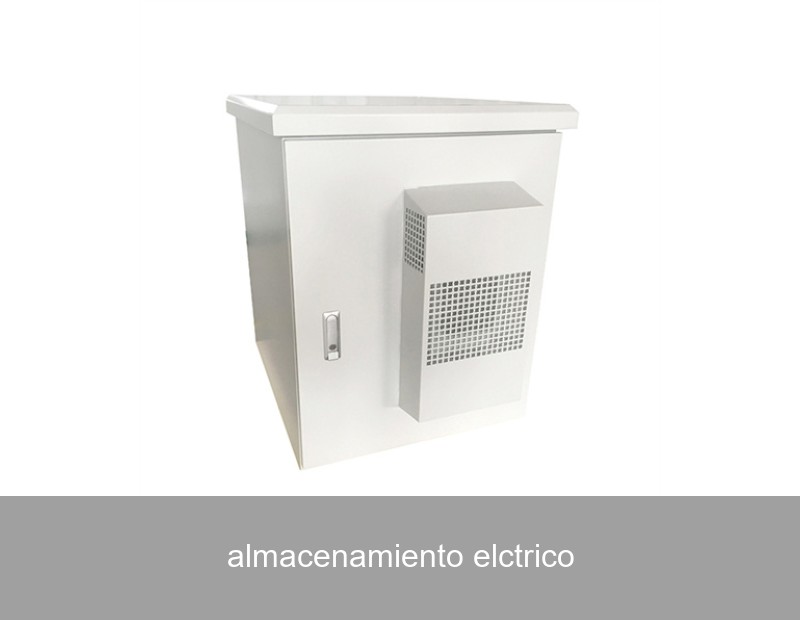
Table of Contents
- The Grid's New Challenge: Too Much of a Good Thing?
- What is Almacenamiento Eléctrico? More Than Just a Battery
- The Benefits Unleashed: From Bill Savings to Grid Resilience
- A Real-World Case: California's Duck Curve and the Storage Solution
- Choosing the Right System for Your Needs
- How Highjoule Powers the Storage Revolution
- The Future Outlook: What's Next for Energy Storage?
Have you ever wondered how we can keep the lights on when the sun doesn't shine and the wind doesn't blow? As Europe and the U.S. rapidly adopt solar and wind power, this question is at the forefront of the energy transition. The answer lies in a transformative technology: almacenamiento eléctrico, or electrical energy storage. It's not just an accessory for renewables; it's the linchpin that will make a clean, reliable, and independent energy future possible for homes, businesses, and entire communities.
The Grid's New Challenge: Too Much of a Good Thing?
Let's paint a picture. It's a sunny, windy afternoon in Germany. Solar panels and wind turbines are generating massive amounts of clean electricity—sometimes even more than the grid can immediately use. Conversely, on a calm winter evening, demand soars while renewable generation plummets. This mismatch between when energy is produced and when it's needed creates a volatile balancing act for grid operators. Traditionally, this gap was filled by firing up fossil-fuel "peaker" plants, but that undermines decarbonization goals. This is the core problem modern grids face, and it's where electrical storage systems step in as the ultimate mediator.
What is Almacenamiento Eléctrico? More Than Just a Battery
When we say almacenamiento eléctrico, most people think of lithium-ion batteries. And while they are a dominant player, the ecosystem is broader. At its heart, energy storage is about capturing energy produced at one time for use at a later time. Think of it as a savings account for your electricity.
- Chemical Storage (Batteries): This includes lithium-ion, lead-acid, and emerging flow batteries. They are highly responsive and ideal for short to medium-duration storage (hours to a day).
- Mechanical Storage: Like pumped hydro, where water is pumped uphill to a reservoir with excess energy and released to generate power when needed. This is great for large-scale, long-duration storage.
- Thermal Storage: Storing energy as heat or cold in materials like molten salt or ice, often used in industrial or district cooling/heating applications.
For most commercial, industrial, and residential applications today, advanced battery energy storage systems (BESS) are the go-to solution due to their scalability, falling costs, and rapid response times.
The Benefits Unleashed: From Bill Savings to Grid Resilience
So, why should a business in Ohio or a homeowner in Spain care about this? The benefits are tangible and multi-layered:
| For Homeowners & Businesses | For the Grid & Society |
|---|---|
|
|
A Real-World Case: California's Duck Curve and the Storage Solution
The theory comes alive with the famous "Duck Curve" in California. The California Independent System Operator (CAISO) has documented the deepening dip in midday net demand (thanks to solar) and the steep evening ramp-up when solar fades. This creates a shape resembling a duck—a challenging scenario for grid operators.
The Data & The Response: In 2022, California had over 5,000 MW of utility-scale battery storage online. During a critical heatwave in September 2022, these batteries delivered a record over 3,300 MW to the grid at peak evening hours—that's equivalent to the output of several large nuclear power plants, activated in milliseconds. This massive injection of stored solar energy was critical in preventing blackouts and demonstrated storage's role as a reliable capacity resource. It’s a powerful precedent for European markets facing similar intermittency challenges.

Image Source: Wikimedia Commons, illustrating the evolution of California's Duck Curve from 2012 to 2020.
Choosing the Right System for Your Needs
Not all storage solutions are created equal. The right choice depends on your primary goal:
- For Peak Shaving (Commercial/Industrial): You need a system with high power output and intelligent software that predicts your load and discharges strategically to cut demand charges, which can be a huge portion of your electricity bill.
- For Solar Self-Consumption (Residential): Focus on a system with sufficient daily cycle capacity (kWh) and seamless integration with your existing solar inverter.
- For Critical Backup (All Sectors): Prioritize system reliability, seamless transfer switch technology, and enough capacity to support your essential loads for the required duration.
How Highjoule Powers the Storage Revolution
This is where expertise and reliable technology become non-negotiable. Since 2005, Highjoule has been at the forefront of designing and deploying intelligent storage solutions that address these exact challenges. We don't just sell hardware; we provide a complete almacenamiento eléctrico ecosystem.
Our HPS Series for commercial and industrial applications is a prime example. It's a containerized, all-in-one battery storage system that integrates industry-leading battery cells, a sophisticated thermal management system, and our proprietary GridSynergy AI software platform. This platform is the brain of the operation, enabling multiple revenue streams or savings strategies—from automated peak shaving and frequency response services to optimizing behind-the-meter solar consumption.
For residential and smaller commercial projects, our EcoCell Wall Mount systems offer scalable, safe, and user-friendly storage. Paired with our energy management gateway, users can monitor, control, and optimize their energy flow via a simple smartphone app, truly democratizing energy independence. Whether it's a factory in Texas, a supermarket chain in Italy, or a microgrid on a remote island, Highjoule's solutions are engineered for intelligence, safety, and longevity.

Image Source: Unsplash, depicting a modern industrial battery energy storage system installation.
The Future Outlook: What's Next for Energy Storage?
The innovation race is accelerating. We're moving beyond lithium-ion into technologies like solid-state batteries for higher density and safety, and long-duration storage (LDES) solutions like iron-air or compressed air that can store energy for days or even weeks. According to the International Energy Agency (IEA), global energy storage capacity is set to multiply exponentially this decade, with grids and renewables driving the majority of growth.
The future grid will be a dynamic network of millions of "prosumers"—homes and businesses that both produce and store energy. Virtual power plants (VPPs), which aggregate distributed storage resources like those from Highjoule systems, will play a crucial role in balancing the wider grid, as highlighted by research from institutions like The National Renewable Energy Laboratory (NREL).
The journey to a resilient, low-carbon energy system is underway. Almacenamiento eléctrico is no longer a futuristic concept; it's the practical, available technology solving today's energy problems. The question is no longer "if" you need storage, but "how" and "when" you will integrate it into your energy strategy. What specific energy challenge—be it unpredictable costs, reliability concerns, or sustainability targets—could a smart storage system solve for you in the next 12 months?
 Inquiry
 Online Chat