


Unlocking the Full Potential of Renewable Energy Sources and Storage Devices
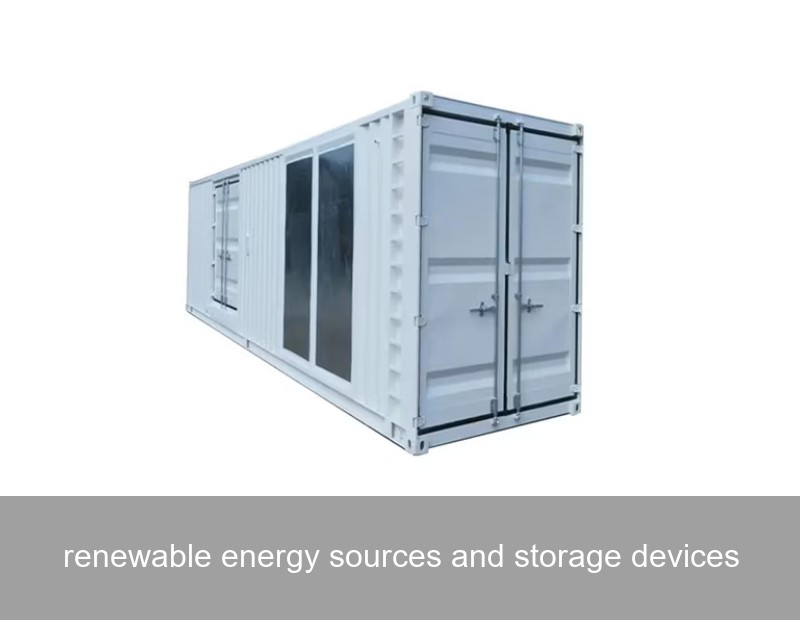
Imagine a world where the sun always powers our homes, and the wind consistently fuels our industries. It's a compelling vision, but as many homeowners and businesses in Europe and the US have discovered, renewable energy sources like solar and wind have a fundamental trait: they are intermittent. The sun sets, and the wind calms. This is where the critical partnership between renewable energy sources and storage devices comes into play. Without storage, excess clean energy is wasted, and grid stability can be challenged. With the right storage solution, this energy can be captured, managed, and dispatched precisely when needed, transforming renewables from a supplemental power source into a reliable, 24/7 foundation for our energy needs.
Table of Contents
- The Intermittency Challenge: More Than Just a Cloudy Day
- Storage: The Essential Bridge in the Energy Transition
- The Rise of Advanced Battery Energy Storage Systems (BESS)
- From Theory to Reality: A European Industrial Case Study
- Choosing the Right Storage System for Your Needs
- The Future of Renewable Energy and Storage
The Intermittency Challenge: More Than Just a Cloudy Day
Let's talk about the elephant in the room. We all love the idea of solar panels on our roofs, but what happens during a week of winter storms in Munich or a calm, hot summer night in Texas? The power generation plummets just when demand might be spiking for heating or cooling. This isn't a minor flaw; it's the central puzzle of the clean energy transition. Grid operators traditionally rely on predictable, dispatchable power sources like gas or coal plants. The variable nature of renewables, without a buffer, can lead to frequency fluctuations, voltage dips, and even the need to curtail (waste) perfectly good renewable energy because the grid can't absorb it all at once.
Storage: The Essential Bridge in the Energy Transition
Think of energy storage as a high-tech reservoir. Instead of holding water, it holds electrons. When your solar panels are producing more than your home or business can consume, the excess doesn't vanish. A storage device captures it. Later, when the panels are idle and energy prices are high, you can draw from your personal energy reservoir. This simple "charge and discharge" cycle is the cornerstone of energy independence and grid resilience. For utilities, large-scale storage acts as a shock absorber, smoothing out the peaks and valleys of renewable generation and providing critical grid services that keep the lights on for everyone.
The Core Benefits of Pairing Renewables with Storage
- Energy Independence: Reduce reliance on the volatile grid and protect against rising electricity prices.
- Maximized Self-Consumption: Use more of the clean energy you generate, sometimes increasing the value of your solar investment by 50% or more.
- Backup Power: Provide seamless, instantaneous power during grid outages, keeping essential loads running.
- Grid Support: Large systems help stabilize the grid, integrating more renewables and delaying costly infrastructure upgrades.
The Rise of Advanced Battery Energy Storage Systems (BESS)
While various storage technologies exist, lithium-ion battery energy storage systems have become the dominant solution for both residential and commercial applications. Why? Their high energy density, rapidly declining costs, and excellent efficiency make them ideal. But not all BESS are created equal. The true value lies in the intelligence of the system—the software and power electronics that manage not just charging and discharging, but also safety, longevity, and integration with multiple energy sources.
This is where companies with deep expertise, like Highjoule, make a defining difference. Since 2005, Highjoule has been at the forefront of designing and deploying intelligent storage solutions. Our systems, such as the Highjoule H-Series Commercial BESS and the integrated Home Energy Hub, are built with a core philosophy: storage must be smart, safe, and sustainable. We don't just provide batteries; we provide an ecosystem that includes advanced battery management systems (BMS), hybrid inverters, and AI-driven energy management software. This allows our customers to automate their energy use, participate in grid-balancing programs where available, and future-proof their investment.

Image Source: Unsplash - A modern Battery Energy Storage System (BESS) installation.
From Theory to Reality: A European Industrial Case Study
Let's move beyond theory and look at a real-world application. A mid-sized manufacturing plant in Northern Germany faced a dual challenge: skyrocketing energy costs and a corporate mandate to reduce its carbon footprint. The facility had a 500 kW rooftop solar array, but much of its production occurred in the early morning and evening, missing the solar peak. They were exporting excess solar energy at low feed-in tariffs only to import expensive grid power later.
The Solution: Highjoule partnered with the manufacturer to deploy a 750 kWh / 500 kW containerized BESS. The system was integrated with their existing solar PV and factory energy management system.
The Results (Data after 12 months of operation):
| Metric | Before Highjoule BESS | After Highjoule BESS |
|---|---|---|
| Solar Self-Consumption | 35% | 89% |
| Grid Energy Consumption | 1,850 MWh/year | 1,050 MWh/year |
| Peak Demand Charge | €45,000 per month (avg.) | €28,000 per month (avg.) |
| CO2 Emissions Reduction | Baseline | ~320 tonnes/year |
The system paid for itself in under 5 years through direct savings alone. Furthermore, by participating in Germany's primary control reserve market (a grid-balancing service), the system generates additional revenue, improving the ROI. This case perfectly illustrates the triple win: financial savings, enhanced sustainability, and direct support for grid stability.
Choosing the Right Storage System for Your Needs
Whether you're a homeowner in California or a factory manager in Poland, selecting a storage solution requires careful consideration. Here are key factors:
- Capacity & Power: How much energy do you need to store (kWh), and at what rate do you need to discharge it (kW)? A home needs fewer kWh than a hospital.
- Depth of Discharge & Cycle Life: A quality BESS from a provider like Highjoule will allow for deep discharge without significantly degrading battery life, ensuring a longer system lifespan (often 10+ years).
- Integration & Intelligence: Can the system seamlessly integrate with your existing solar, generator, or grid connection? Is the software intuitive and capable of automated, cost-based optimization?
- Safety & Warranty: Look for robust safety certifications (UL, IEC) and a comprehensive warranty that covers performance over time. Highjoule systems are built with multi-layer safety protocols and backed by strong warranties.

Image Source: Unsplash - Intelligent energy management is key to optimizing storage.
The Future of Renewable Energy and Storage
The trajectory is clear. As noted by the International Energy Agency (IEA), global energy storage capacity is set to multiply exponentially this decade, driven largely by solar and wind expansion. Innovations are ongoing, from solid-state batteries to flow batteries for long-duration storage. However, the immediate future belongs to intelligent lithium-ion-based systems that can provide both energy shifting and grid services.
For businesses and communities, the next step is moving from single-site storage to interconnected microgrids. Highjoule is actively developing solutions for these resilient energy networks, which can operate independently from the main grid, combining solar, storage, and backup generation. This is the ultimate expression of the renewable energy sources and storage devices partnership: creating self-sustaining, efficient, and clean local energy ecosystems.
Ready to Explore Your Potential?
The journey to energy resilience starts with a question. What specific energy challenge is your home or business facing—is it high bills, unreliable power, or sustainability goals? How could controlling the flow of your own clean energy transform your operations and your bottom line?
 Inquiry
 Online Chat