


Why an Aluminium Cabinet Outdoor is the Smart Choice for Your Energy Storage System
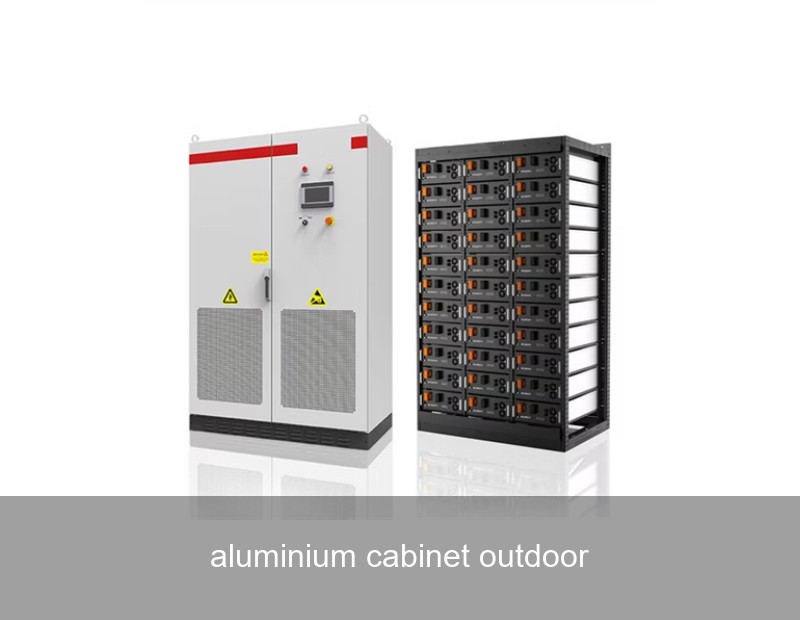
If you're considering an outdoor battery energy storage system (BESS), you've likely encountered a crucial decision point: the enclosure. It's not just a box; it's the first and most vital line of defense for your significant investment. While steel and plastic have their places, the industry's leading choice for durability, safety, and longevity is increasingly the aluminium cabinet outdoor enclosure. Let's explore why this specific housing solution is becoming the non-negotiable standard for residential and commercial storage from California to Bavaria, and how it directly impacts your system's performance and total cost of ownership.
Table of Contents
- The Outdoor Challenge: More Than Just Weather
- Aluminium vs. The Rest: A Data-Driven Comparison
- Engineering Excellence: What Makes a High-Quality Aluminium Cabinet
- Case Study: A German Industrial Park's Resilience Upgrade
- Future-Proofing Your Investment with Smart Enclosures
- Choosing Your Outdoor Storage Partner
The Outdoor Challenge: More Than Just Weather
Placing sensitive battery and power electronics outdoors is a demanding proposition. An enclosure must be a fortress against a multi-frontal assault:
- Corrosion: Coastal salt spray, industrial pollutants, and road salts can eat away at metal.
- Thermal Management: Batteries perform best within a strict temperature range. An enclosure must aid, not hinder, precise climate control.
- Physical Integrity: It must resist impacts, UV degradation, and the constant stress of thermal expansion and contraction.
- Safety & Security: It must contain potential thermal events and protect against unauthorized access.
A standard steel cabinet, even with a powder coat, can succumb to rust at scratch points or welds. Plastics can become brittle or warp. This is where the inherent material science of aluminium creates a decisive advantage.
Aluminium vs. The Rest: A Data-Driven Comparison
Let's break down the key performance indicators. The following table illustrates why aluminium consistently outperforms alternatives for permanent outdoor installations.
| Feature | Aluminium Cabinet | Galvanized Steel Cabinet | Polymer/Plastic Cabinet |
|---|---|---|---|
| Corrosion Resistance | Excellent. Forms a self-healing oxide layer. Ideal for coastal & harsh environments. | Good, but vulnerable at cut edges and scratches, leading to rust creep. | Excellent, but can be degraded by certain chemicals or prolonged UV exposure. |
| Weight | ~35% lighter than steel. Reduces shipping costs and simplifies foundation requirements. | Heavy, increasing logistical and structural costs. | Lightweight, but may lack rigidity for larger systems. |
| Thermal Conductivity | High. Helps dissipate heat from internal components, reducing cooling system load. | Low. Acts more as an insulator, potentially creating hot spots. | Very Low. Traps heat, a significant disadvantage for battery thermal management. |
| Strength-to-Weight Ratio | Superior. Provides robust protection without excessive mass. | Strong but heavy. | Variable; often requires thick walls to achieve required strength. |
| Lifecycle & Maintenance | Virtually maintenance-free, 25+ year lifespan with minimal degradation. | May require touch-up painting and rust monitoring over time. | Color can fade; material can chalk or become brittle after 10-15 years. |
As you can see, aluminium offers a balanced, superior portfolio of attributes. This isn't just theory; it's born out in real-world applications and standards. For instance, the National Renewable Energy Laboratory (NREL) emphasizes the critical role of enclosure design in overall system safety and reliability.
Engineering Excellence: What Makes a High-Quality Aluminium Cabinet
Not all aluminium enclosures are created equal. At Highjoule, our Outdoor PowerHub series embodies the engineering principles that transform a good material into a great product. Here’s what we integrate:
- Marine-Grade Alloys: We use specific aluminium alloys with enhanced corrosion resistance, far exceeding standard grades.
- Monocoque Construction: Seamless, welded body design minimizes joints where moisture can ingress, unlike bolt-together designs.
- Integrated Thermal Management: The cabinet is designed as part of the cooling system. Its thermal properties work in concert with our liquid cooling or forced-air systems to maintain a perfect 25°C ±3°C operating environment for the batteries, regardless of the outdoor ambient temperature.
- IP55 Rating as Standard: Fully protected against dust and low-pressure water jets from any direction, ensuring resilience in storms and dusty conditions.
- Passive Safety Features: The cabinet includes venting channels and barriers designed to manage off-gassing in the extremely rare event of a cell thermal event, enhancing overall safety.

Image: A Highjoule Outdoor PowerHub unit, showcasing its sleek, durable aluminium cabinet design. (Source: Unsplash, illustrative)
This holistic approach ensures the enclosure isn't just a shell, but an active, intelligent component of the storage system itself.
Case Study: A German Industrial Park's Resilience Upgrade
Let's look at a concrete example. A mid-sized manufacturing park in North Rhine-Westphalia, Germany, faced two challenges: high demand charges from their utility and an unreliable grid that caused costly micro-outages. They needed a large-scale BESS (500 kWh) to provide peak shaving and backup power. The space constraints meant it had to be installed outdoors, in an area with significant industrial airborne particulates and high humidity.
The Solution & Outcome: The park selected a Highjoule system, largely due to the resilience of our aluminium cabinet outdoor design. The installation was completed in 2022.
- Data Point: The system has achieved 99.8% availability since commissioning.
- Data Point: It successfully shaves peak demand by an average of 22%, translating to annual savings of over €28,000.
- Key Insight: During a regional grid fluctuation, the system seamlessly transitioned to backup power for 4 hours, preventing an estimated €120,000 in production line stoppages. The facility manager specifically noted the "zero-maintenance" and "pristine condition" of the aluminium enclosure despite two harsh winters, unlike their other steel-clad outdoor equipment which showed signs of surface corrosion. This real-world performance underlines the value proposition outlined by institutions like the U.S. Department of Energy's Solar Energy Technologies Office, which funds research into durable, long-life storage hardware.
Future-Proofing Your Investment with Smart Enclosures
The next evolution is already here. The enclosure is becoming a smart node. Highjoule's latest generation includes:
- Embedded Environmental Sensors: Continuously monitoring for humidity, internal condensation, and particulate matter.
- Proactive Alerts: The system can notify our global monitoring center or the site manager if conditions trend outside norms, enabling preventative action.
- Design for Circularity: Aluminium is 100% recyclable without loss of quality. At end-of-life, our cabinets can be fully recycled, supporting the sustainable ethos of the energy transition.

Image: Close-up view of advanced monitoring and thermal management systems inside a modern energy storage cabinet. (Source: Unsplash, illustrative)
Choosing Your Outdoor Storage Partner
Selecting an aluminium cabinet outdoor solution is a wise first step, but the manufacturer's expertise is paramount. You need a partner who views the enclosure as a critical system component. Highjoule's 19 years of experience across thousands of global installations have taught us that true reliability is built from the outside in. Our Outdoor PowerHub series, with its robust aluminium architecture, is the foundation for our intelligent, software-driven storage solutions for homes, businesses, and microgrids.
When evaluating providers, ask them: "Can you detail the specific aluminium alloy used, the ingress protection rating tested to independent standards, and how the enclosure design actively contributes to battery thermal management and lifespan?" The answers will separate the true experts from the simple assemblers.
Given the 20+ year lifespan expected of a modern BESS, does the initial cost savings of a less robust enclosure truly outweigh the risk of premature failure, reduced performance, and potential safety compromises in year 10 or 15?
 Inquiry
 Online Chat