


One on Inverter How Much? Decoding the True Cost of Your Solar Brain
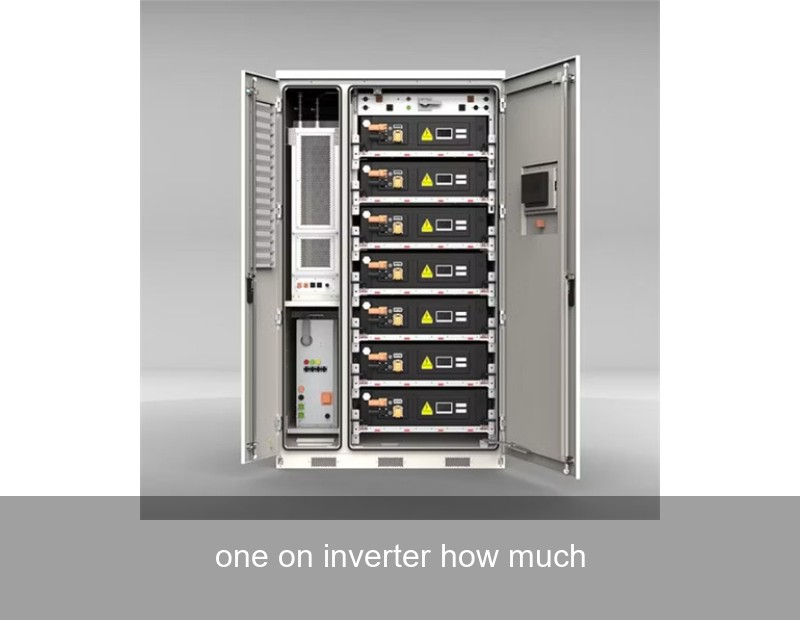
So, you're planning a solar or solar-plus-storage system, and you've hit the inevitable question: "One on inverter, how much?" It's a fair starting point. But as a seasoned professional in the renewable energy space, let me tell you—that simple question is like asking "How much does a brain cost?" for your power system. The inverter is the intelligent core, the command center that converts raw solar DC power into usable AC electricity for your home or business. Focusing solely on its upfront price tag can lead you to overlook what truly matters: long-term performance, reliability, and the total value it brings over its 10-15+ year lifespan.
In markets like Europe and the U.S., where energy prices are volatile and self-consumption is key, the right inverter decision impacts your wallet for years. Let's move beyond the basic quote and explore what you're really investing in.
The Real Cost Breakdown: More Than a Unit Price
The sticker price you get for "one inverter" is just the beginning. A holistic cost analysis includes several layers, both direct and indirect.
Direct (Upfront) Costs
- The Inverter Unit Itself: Prices vary by type (string, micro, hybrid/battery-ready) and power rating (e.g., 5kW, 10kW). A standard residential string inverter might range from $1,000 to $3,000, while sophisticated hybrid models cost more.
- Installation & Labor: This depends on system complexity, wiring, and mounting. It can often match or even exceed the hardware cost.
- Additional Hardware: Does it need a separate energy meter, specific monitoring hardware, or upgraded electrical panels?
Indirect (Long-term) Costs & Savings
| Factor | Potential Cost | Potential Savings/Value |
|---|---|---|
| Efficiency (%) | Lower efficiency means more wasted solar energy. | A 98% vs. 96% efficient inverter can yield hundreds more kWh per year, directly boosting savings. |
| Reliability & Warranty | Premature failure leads to replacement costs + lost production. | A robust 10+ year warranty and proven reliability (like Highjoule's 15-year warranty options) provide peace of mind and lower lifetime cost. |
| Grid Services & Software | Basic inverters cannot generate additional revenue. | Advanced inverters with grid-support functions can participate in utility programs. Highjoule's GridSync™ technology enables future-ready grid interaction. |
| Battery Readiness | Needing to replace the inverter to add storage later is a major cost. | Investing in a hybrid inverter from the start, like Highjoule's HPS Series, protects your investment and simplifies future battery addition. |
Looking Beyond the Price Tag: The True Value of Your Inverter
Think of your inverter as the conductor of an energy orchestra. A cheap conductor might keep time, but a great one optimizes every instrument for a harmonious, powerful performance.
Efficiency is King, But Where is it Measured? Peak efficiency (e.g., 98.5%) looks great on a datasheet, but what about performance under partial load or on a cloudy day? The weighted efficiency (CEC or EU efficiency) is a more realistic metric. Highjoule inverters are engineered for exceptional real-world performance, maximizing yield across all conditions, not just in perfect lab tests.
Software is the Silent Hero. The real "brain" is in the software. Can it provide detailed, actionable energy insights? Does it allow for remote updates and troubleshooting? Can it intelligently manage between solar, battery, grid, and loads to minimize your bills? This digital intelligence is where leaders separate themselves. Our Highjoule Energy Hub platform turns raw data into savings strategies, allowing homeowners in California or businesses in Germany to set preferences and let the system optimize autonomously.

Image Source: Unsplash (Representative image of a modern inverter)
Case Study: A German Bakery's Recipe for Savings with Highjoule
Let's ground this with a real example from Bavaria, Germany. Schmidt's Family Bakery faced soaring energy costs and wanted to stabilize operations. Their primary question wasn't just "one on inverter how much?" but "how can we maximize self-consumption of our solar power and ensure our ovens never stop?"
- Challenge: High daytime energy consumption with significant usage before sunrise and after sunset. A standard solar system would export excess midday power at low feed-in tariffs.
- Solution: A Highjoule integrated system featuring a 30kW HPS Hybrid Inverter and a 40kWh CellSafe™ Lithium-Iron-Phosphate (LFP) battery.
- Result: The system's intelligent energy management was configured to prioritize using solar power directly, then charging the battery with any excess. During early morning bake times and evening hours, the bakery draws from the battery, minimizing grid imports.
- Data Point: Self-consumption of solar energy increased from an estimated 35% to over 85%.
- Data Point: Grid electricity costs were reduced by approximately 70% in the first year.
- Key Insight: The slightly higher initial investment in the smart hybrid system versus a basic setup had a payback period of under 5 years, thanks to Germany's high energy prices and the system's optimization. The inverter's brain was the critical factor in unlocking these savings.
The Highjoule Solution: Integrated Intelligence, Not Just an Inverter
At Highjoule, we don't just sell inverters; we deliver optimized energy ecosystems. For over 18 years, we've understood that resilience and savings come from seamless integration.
Our HPS Series Hybrid Power Station is the cornerstone of this approach. It's a multi-mode inverter charger designed from the ground up to be the heart of a storage-first system. It's not merely "battery-ready"; it's built to orchestrate them. Coupled with our CellSafe™ LFP battery packs, known for their safety and long cycle life, and managed by the Energy Hub software, you get a unified solution that thinks ahead.
Why does this integration matter? Because compatibility issues between disparate components can lead to inefficiencies, finger-pointing between suppliers, and failed promises. With Highjoule's single-vendor system, everything is designed to work in concert. This is crucial for commercial and industrial applications where uptime is revenue, and for homeowners seeking worry-free energy independence. You can learn more about the importance of grid-forming inverters for resilience from resources like the National Renewable Energy Laboratory (NREL).

Image Source: Unsplash (Representative diagram of energy flow)
Making Your Decision: Key Questions to Ask Beyond "How Much?"
When evaluating quotes, arm yourself with these questions:
- Is this a hybrid (multi-mode) inverter, or will I need a costly upgrade to add batteries later?
- What is the weighted (CEC/EU) efficiency, not just the peak?
- What does the monitoring software offer? Can I set goals (like max self-consumption) and does it provide actionable insights?
- What is the standard warranty, and what does it cover? Are extended warranties available? (Highjoule offers industry-leading warranties because we build for longevity).
- How does this inverter perform during grid outages? Does it require a critical loads panel, or can it back up the whole home (whole-home backup solutions)?
- Is the manufacturer a specialist in storage, and do they offer a complete, tested ecosystem?
For further reading on solar technology costs and trends, reputable sources like the International Renewable Energy Agency (IRENA) provide excellent market analyses.
Final Thought: An Open Question for You
Given that your inverter will be the workhorse of your energy system for the next decade or more, what matters more to you: the lowest possible entry price today, or the highest possible savings and reliability every single day for the life of the system?
 Inquiry
 Online Chat