


Finding the Right Amp Solar Panel for Sale: A Guide to Smarter Energy Independence
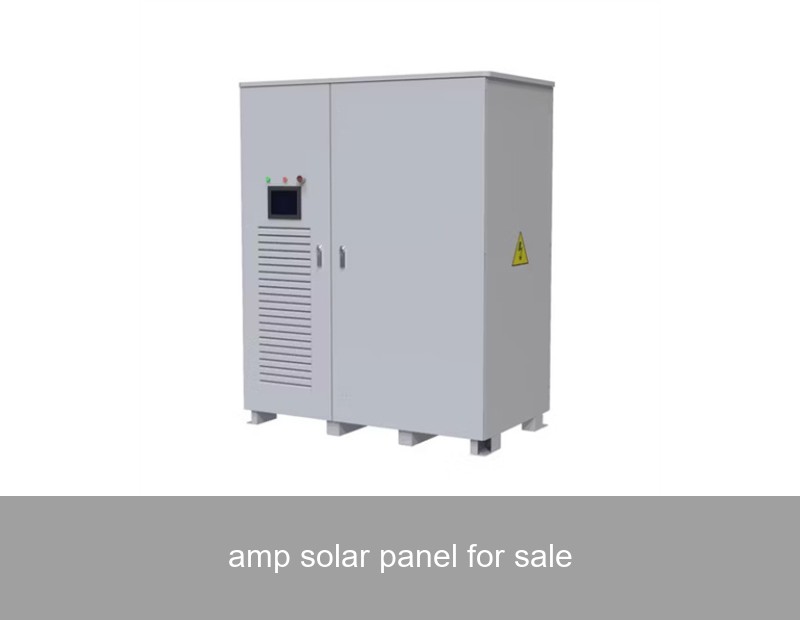
You're ready to take control of your energy. You've seen the bills climb and heard about the benefits of renewable power. Now, you're searching for an amp solar panel for sale. But here's the thing: buying solar panels based on amperage (amps) alone is like buying a car based only on its speedometer's maximum reading. It's one piece of a much larger, more important puzzle: building a system that reliably powers your home or business. The real goal isn't just panels; it's a complete, intelligent energy ecosystem that generates, stores, and manages power seamlessly. This is where understanding the full picture, from panel specs to system integration, becomes critical for true energy independence and savings.
Table of Contents
The Amp Misconception: Why Panel Specs Are Just the Start
When browsing an amp solar panel for sale, you'll encounter terms like Imp (Current at Maximum Power), Isc (Short Circuit Current), voltage, and wattage. While amperage is important for sizing wiring and inverters, it's the panel's wattage (volts x amps) that tells you its power generation capacity. More crucially, solar panels are intermittent sources. They produce power when the sun shines, often peaking in the middle of the day when your home's demand might be lower. Without a way to capture that surplus, it's sent back to the grid, often for minimal credit, leaving you dependent on the grid at night and on cloudy days.
This is the fundamental limitation of a solar-only setup. The modern energy challenge isn't just generation—it's time-shifting. How do you use your solar energy when you actually need it? The answer transforms your system from a partial solution into a robust energy asset.
The Data Reality: How Solar Intermittency Demands Storage
Let's look at the numbers. According to the U.S. Department of Energy, solar can meet a significant portion of daytime demand. However, residential and commercial energy consumption often spikes in the early morning and evening, creating a generation-demand mismatch.
| Time of Day | Typical Solar Generation | Typical Home/Business Demand | Result without Storage |
|---|---|---|---|
| Midday (12 PM - 3 PM) | High | Moderate to Low | Surplus exported to grid |
| Evening (6 PM - 9 PM) | Low/None | High (Lighting, Cooking, HVAC) | Deficit imported from grid |
| Overnight | None | Base Load | 100% grid-dependent |
This table illustrates the "duck curve" effect, a well-documented challenge for grid operators. For you, the consumer, it means your shiny new panels aren't maximizing your self-sufficiency or financial return. A battery energy storage system (BESS) bridges this gap, storing that midday surplus for use during high-demand, high-cost periods.

Image Source: Unsplash - A complete home energy system integrates generation and storage.
Case Study: A California Brewery's Journey to Resilience
Consider the real-world example of "Coastal Hops Brewery" in California. They installed a large 100kW solar array, significantly cutting daytime operational costs. However, they faced two major issues: 1) Their energy-intensive brewing and cooling processes often ran into the evening, relying on expensive grid power, and 2) They were vulnerable to the region's public safety power shutoffs (PSPS), risking spoilage of entire batches.
Their solution wasn't to buy more panels. Instead, they integrated a Highjoule Cobalt-Ion Commercial Battery System with 250 kWh of storage capacity. The results were transformative:
- Energy Cost Reduction: They shifted 85% of their evening load to stored solar energy, reducing their grid electricity purchases by an additional 40% beyond solar alone.
- Resilience Achieved: During a 12-hour grid outage, the system kept critical refrigeration and brewing controls online, preventing an estimated $25,000 in product loss.
- ROI: The combined solar-plus-storage system achieved a payback period of under 6 years, factoring in state incentives and avoided losses.
This case underscores that the value is in the system, not just the components. The brewery didn't just search for "high amp solar panels"; they sought a guarantee of power.
Beyond the Panel: The Highjoule Integrated System Approach
At Highjoule, with nearly two decades of experience since 2005, we view the solar panel as the first step in a sophisticated energy journey. Our philosophy is to provide intelligent, integrated systems that think and adapt. When you choose a Highjoule solution, you're getting more than an amp solar panel for sale; you're getting a harmonious energy ecosystem.
Our Highjoule Energy Hub is the brain of this operation. It doesn't just connect solar panels and batteries; it actively manages energy flow based on your usage patterns, real-time electricity rates, and weather forecasts. For residential clients, our HomeStack modular battery systems offer scalable storage, from 10 kWh to 30+ kWh, that seamlessly pairs with virtually any solar array. For commercial and industrial applications, our Industrial PowerPack series provides containerized or skid-mounted solutions for demand charge management, backup power, and microgrid formation.
What sets our systems apart is the software intelligence. Imagine a system that learns your habits, knows when a storm is coming, and automatically conserves energy to ensure your essentials stay on, all while maximizing economic savings. That's the Highjoule difference.
Image Source: Unsplash - Advanced software is crucial for system optimization.
Making the Right Choice: Key Considerations for Your Project
So, how should you approach your search? Shift your focus from component shopping to solution design. Here are the critical questions to ask:
- What is my primary goal? (Bill reduction, backup power, sustainability, all of the above?)
- What is my critical load? (What appliances or operations must stay on during an outage?)
- How does my utility bill me? (Look for time-of-use rates, demand charges for businesses, net metering policies.)
- Is the system expandable? Can I easily add more storage or panels later?
These questions guide a proper system design far more effectively than starting with panel amperage. A reputable provider like Highjoule will conduct a detailed energy assessment to answer these questions with data, creating a model of your projected generation, consumption, and savings. We also stay at the forefront of technology, incorporating insights from leading research bodies like the National Renewable Energy Laboratory (NREL) on storage performance and lifecycle.
The Future-Proof Investment
The energy landscape is shifting rapidly. Grid instability, as noted by sources like the U.S. Energy Information Administration, and evolving rate structures make a passive solar setup increasingly less optimal. Your investment should be resilient to these changes. An integrated solar-plus-storage system with intelligent management is that future-proof solution. It turns your property into a personal microgrid, giving you control, predictability, and peace of mind.
As you see those ads for an amp solar panel for sale, remember the bigger picture. What kind of energy independence are you truly seeking? Is it merely a daytime discount, or is it the confidence that your home or business can weather a storm, a blackout, and rising costs?
What would you power first if the grid went down tonight, and how would that priority shape the design of your ideal energy system?
 Inquiry
 Online Chat