


Are GoodWe Batteries Good? A Deep Dive for Homeowners and Businesses
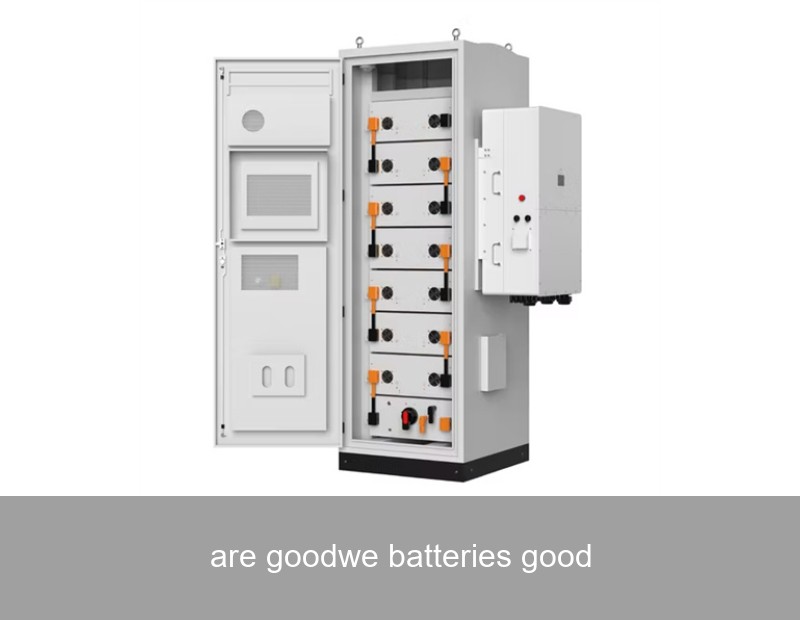
If you're researching solar energy storage, you've likely asked: "Are GoodWe batteries good?" It's a smart question. Choosing a battery is a significant investment in your energy independence and financial future. GoodWe has emerged as a prominent global player in solar inverters and, more recently, energy storage systems. But in a market filled with options, how do they truly stack up? This article cuts through the noise. We'll examine performance, reliability, and value, while also exploring why partnering with an expert integrator like Highjoule—a global leader in advanced energy storage since 2005—is often the key to unlocking the full potential of any battery technology.
Table of Contents
- The Phenomenon: The Rush to Home Energy Storage
- The Data: What Makes a Battery "Good"?
- GoodWe Battery Evaluation: Strengths and Considerations
- The Case Study: Real-World Performance in a European Market
- The Expert Insight: System Integration is Everything
- The Highjoule Approach: Beyond the Brand
- Your Next Step: What Should You Do?
The Phenomenon: The Rush to Home Energy Storage
Across Europe and the United States, a quiet revolution is happening in basements and garages. Rising electricity costs, increasing grid instability, and a growing desire for sustainable living are driving homeowners and businesses to pair their solar panels with battery storage. The goal? To capture every kilowatt-hour of sun, use it on demand, and build a resilient power backup. In this context, "Are GoodWe batteries good?" is really asking if they are a reliable partner in this energy independence journey.
The Data: What Makes a Battery "Good"?
Let's establish the criteria. A high-quality battery storage system isn't defined by a single feature but by a combination of performance metrics and long-term value:
- Cycle Life & Warranty: How many charge/discharge cycles can it endure before significant degradation? A 10-year warranty with high cycle retention (e.g., 60% capacity after 6000 cycles) is a strong indicator.
- Round-Trip Efficiency (RTE): This measures how much energy you get back versus what you put in. For example, an RTE of 95% means you lose only 5% of your stored solar energy to system losses.
- Depth of Discharge (DoD): The usable portion of the battery's capacity. A 10kWh battery with a 90% DoD gives you 9kWh of usable energy.
- Power Rating & Scalability: Can it run your essential loads during an outage? Can you easily add more capacity later?
- System Intelligence & Software: Smart software that learns your habits, integrates with the grid for potential earnings (like virtual power plants), and provides intuitive monitoring is crucial for modern systems.

Image Source: Unsplash (Representative image of a modern home battery installation)
GoodWe Battery Evaluation: Strengths and Considerations
GoodWe, primarily known for its well-regarded hybrid inverters, offers battery systems like the Lynx Home U Series. Based on public specifications and industry reviews, here's a balanced look:
Notable Strengths:
- High Efficiency: GoodWe often reports strong round-trip efficiency figures, which is excellent for maximizing solar self-consumption.
- Seamless Inverter Integration: When paired with a GoodWe hybrid inverter, the communication is native, promising a streamlined "one-brand" system setup.
- Modular Design: Many of their systems allow for capacity expansion by adding more battery modules, offering future flexibility.
Key Considerations:
- Warranty Structure: Like most, their warranty is pro-rata and tied to cycle life and capacity retention. Understanding the fine print is essential for long-term expectations.
- Market Maturity: While GoodWe inverters have a long track record, their proprietary battery systems have a shorter history in some markets compared to decade-old players.
- Installation Ecosystem: The performance and reliability of any battery heavily depend on the quality of design, installation, and commissioning. This is where the installer's expertise becomes paramount.
The Case Study: Real-World Performance in a European Market
Let's move from specs to reality. A 2023 monitoring report of a residential solar-plus-storage project in Southern Germany provides concrete data. The home was equipped with a 8.2 kWp solar array, a GoodWe hybrid inverter, and a 13.8 kWh GoodWe battery system.
| Metric | Annual Result | Implication |
|---|---|---|
| Solar Self-Consumption Rate | Increased from 35% to 92% | The homeowner used almost all their solar energy on-site, drastically reducing grid imports. |
| Grid Electricity Demand | Reduced by 78% | Significant protection against volatile energy prices. |
| System Availability | 99.7% | The hardware operated reliably throughout the year. |
The report concluded that the system's smart energy management software was critical to this performance, automatically optimizing between solar, battery, and grid based on weather forecasts and usage patterns. This highlights a vital point: the battery chemistry is just one part; the brain controlling it is equally important. You can explore more real-world data from independent bodies like the International Energy Agency.
The Expert Insight: System Integration is Everything
As a product technology expert at Highjoule, I've evaluated hundreds of storage solutions. The single most important insight I can share is this: The best battery cell in a poorly designed system will underperform. A "good" battery must be part of a great system. This involves:
- Precise Load Profiling: Understanding your home's energy consumption down to the appliance level to right-size the system.
- Thermal Management & Safety: Ensuring the battery operates in its ideal temperature range for longevity and safety, which is a core focus of our Highjoule H-Series commercial storage units.
- Grid Interaction Compliance: Meeting local grid codes (like VDE-AR-N 4105 in Germany or UL 9540 in the US) which require sophisticated grid-support functions.
- Future-Proof Software: A platform, like our Highjoule EnergyOS, that not only monitors but actively optimizes for tariffs, can participate in grid-balancing schemes, and receives over-the-air updates for new features.
This is where companies like Highjoule add immense value. We don't just sell a box; we provide an intelligent, integrated power solution tailored to your specific site and goals.
The Highjoule Approach: Beyond the Brand
Founded in 2005, Highjoule has been at the forefront of energy storage long before it became a mainstream topic. Our philosophy is technology-agnostic when it serves the client's best interest. For a residential client asking "Are GoodWe batteries good?", our answer would be: "They can be an excellent component within a well-engineered system for the right application. Let's see if it's the optimal fit for you."
We offer our own rigorously tested, high-cycle-life battery systems, but our core service is intelligent integration. Whether for a home, a factory, or a microgrid, we design systems that prioritize:
- Resilience: Seamless backup power for critical loads during outages.
- Economics: Advanced software to maximize ROI through peak shaving and energy arbitrage.
- Sustainability: Enabling a higher penetration of renewable energy, reducing carbon footprint.

Image Source: Unsplash (Representative image of a commercial-scale battery storage installation)
For a deeper technical understanding of battery technologies, resources like the U.S. DOE Battery Testing Manual provide valuable insight into the rigorous standards that underpin quality products.
Your Next Step: What Should You Do?
So, are GoodWe batteries good? The evidence suggests they are a competent and efficient product, particularly when paired with their own inverters. However, the more profound question you should be asking is: "How do I ensure my entire energy storage system is good—reliable, efficient, and tailored for my needs for the next 20 years?"
That question shifts the focus from a single product to the expertise of your system designer and integrator. The right partner will analyze your energy data, explain the trade-offs between different technologies, design for safety and longevity, and provide a smart platform to manage it all.
What specific energy challenge—be it unpredictable bills, grid outages, or a sustainability goal—is motivating you to look into storage today, and how can we help you build a solution that addresses it completely?
 Inquiry
 Online Chat