


Is a 10 kW Solar Panel System the Right Choice for Your Home? A Comprehensive Guide
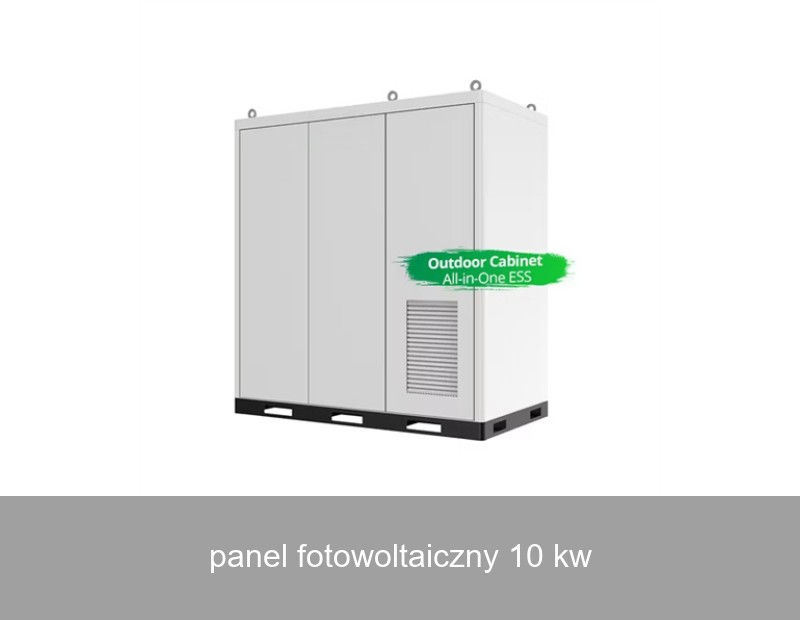
If you're exploring solar energy for your home, you've likely encountered the term "panel fotowoltaiczny 10 kW" (10 kW photovoltaic panel system). This size has become a sweet spot for many European and American households seeking energy independence. But what does it really mean for your energy bills, your property, and our planet's future? As energy costs fluctuate and the desire for sustainable living grows, understanding the real impact of a 10 kW solar installation is more crucial than ever. This guide will break down the data, share real-world results, and explore how pairing it with modern storage unlocks its full potential.
Table of Contents
- What Exactly is a 10 kW Solar Panel System?
- The Energy Potential: How Much Power Can You Generate?
- A Real-World Case Study: The Johnson Family Home
- Beyond the Panels: The Critical Role of Energy Storage
- Highjoule's Integrated Approach: Smart Solar + Storage
- Making the Decision: Is a 10 kW System Right for You?
What Exactly is a 10 kW Solar Panel System?
A "panel fotowoltaiczny 10 kW" refers to a photovoltaic array with a peak power output of 10 kilowatts under standard test conditions. In practical terms, this system typically consists of 24 to 30 high-efficiency solar panels, depending on the wattage of each module. It's considered a medium-to-large residential system, designed to significantly offset, or even eliminate, a household's electricity consumption from the grid.
Why is this size so popular? It strikes an optimal balance between available roof space, upfront investment, and energy output for a typical single-family home with moderate to high energy usage. It's powerful enough to cover daily needs, run major appliances, and, crucially, produce surplus energy that can be stored or fed back to the grid.
The Energy Potential: How Much Power Can You Generate?
The annual output of a 10 kW system isn't a fixed number; it's a story written by your local climate. Let's look at some data:
| Region | Estimated Annual Production (kWh)* | Key Factors |
|---|---|---|
| Southern Europe (e.g., Spain, Italy) | 14,000 - 16,000 | High solar irradiance, more sunny days |
| Central Europe (e.g., Germany, Poland) | 9,500 - 11,000 | Moderate climate, seasonal variation |
| Northern USA (e.g., New York) | 11,000 - 13,000 | Cold, sunny winters can boost performance |
| Southwestern USA (e.g., Arizona) | 16,000 - 18,000 | Exceptional solar resources |
*Estimates based on typical performance ratios and assume optimal roof orientation and tilt. Source data compiled from industry tools and European Commission PVGIS tool.
This production can translate into substantial savings. For a household consuming 12,000 kWh annually, a well-situated 10 kW system in Central Europe could cover 80-90% of its needs directly. But here's the catch: solar production peaks during midday, while home consumption often peaks in the morning and evening. This mismatch is the central challenge of solar economics today.

Image Source: Unsplash - A modern home with a solar installation similar to a 10 kW system.
A Real-World Case Study: The Johnson Family Home
Let's move from theory to practice. The Johnson family in Hamburg, Germany, installed a 10.2 kW rooftop system in early 2022. Their goal was to reduce their carbon footprint and hedge against rising energy prices.
- System Specs: 28 bifacial panels, south-facing, 30-degree tilt.
- Annual Production: 10,400 kWh (as monitored in their first year).
- Household Consumption: Approximately 11,200 kWh/year.
Initially, without storage, their grid feed-in tariff was low, and they still bought expensive power in the evenings. The "self-consumption rate" – the portion of solar energy used directly in the home – was only around 35%. This is a common phenomenon. To truly capitalize on their investment, they needed to store the midday sun for later use.
Beyond the Panels: The Critical Role of Energy Storage
This is where the modern energy story evolves. A solar panel system alone is a one-trick pony. Pair it with a battery energy storage system (BESS), and it becomes a 24/7 personal power plant. Storage allows you to:
- Maximize Self-Consumption: Use your solar energy at night, boosting the rate from ~35% to over 70% or more.
- Provide Backup Power: Keep essential circuits running during grid outages—a growing concern in many regions.
- Enhance Grid Stability: Advanced systems can even support the local grid, a key feature for future energy networks.
Integrating storage requires intelligent energy management. This isn't just about connecting a battery; it's about sophisticated software that learns your consumption patterns, weather forecasts, and electricity tariffs to optimize every kilowatt-hour.
Highjoule's Integrated Approach: Smart Solar + Storage
At Highjoule, with nearly two decades of experience since 2005, we view a "panel fotowoltaiczny 10 kW" as just the beginning of a comprehensive energy solution. Our philosophy is that solar generation and intelligent storage must be designed as one cohesive system.
For a 10 kW solar array, we typically recommend pairing it with our HES Series (Home Energy Stack) battery system. A configuration like our 10 kW solar + 13.8 kWh HES unit is a common and highly effective pairing for families like the Johnsons. The HES system features:
- Scalable storage from 6.9 kWh to 27.6 kWh.
- Hybrid inverter compatibility, seamlessly managing solar, battery, and grid power.
- Highjoule's EnergyOS™ software platform, which uses AI-driven forecasting to automatically shift energy usage to the most economical and sustainable times.
Let's revisit the Johnsons. Six months after their initial installation, they added a Highjoule HES system. The result? Their self-consumption rate jumped to 82%, reducing their annual grid electricity purchase by an additional 65%. They now have backup power for essential loads, and their overall system payback period improved significantly.

Image Source: Unsplash - A sleek, modern battery storage unit similar to Highjoule's HES Series.
Making the Decision: Is a 10 kW System Right for You?
Choosing the right system size is a balance of art and science. Ask yourself these questions:
- What is your annual electricity consumption? (Check your utility bills). A 10 kW system is often ideal for consumption above 8,000 kWh/year.
- Do you have suitable, unshaded roof space? You'll need approximately 50-60 m² of south, east, or west-facing roof.
- What are your future energy needs? Planning an electric vehicle, heat pump, or pool? A 10 kW system with storage provides the capacity to grow into.
- What are your local incentives? Research tax credits, rebates, and net metering policies, which vary greatly by country and state. The U.S. Department of Energy and local European energy agencies are good starting points.
The Highjoule Advantage: From Hardware to Holistic Service
Our role extends beyond supplying equipment. As a global provider, we offer tailored support for the European and North American markets, including:
- Pre-sale Energy Audits: Our partners can analyze your consumption and propose an optimized system size.
- Integrated System Design: Ensuring solar inverters, batteries, and management software communicate flawlessly.
- Remote Monitoring & Support: Proactive system health checks and updates via EnergyOS™.
- Warranty & Performance Guarantees: Long-term peace of mind for your investment.
So, while the "panel fotowoltaiczny 10 kW" is a powerful tool, its true value is unlocked when it's part of a smarter, more resilient home energy ecosystem. The goal isn't just to generate energy, but to manage it with intelligence for maximum savings, security, and sustainability.
What would a day with your own personal power plant look like for your home, and how would you prioritize between energy independence, cost savings, and environmental impact?
 Inquiry
 Online Chat