


How to Assign a Solar Supplier for Your Energy Independence Project
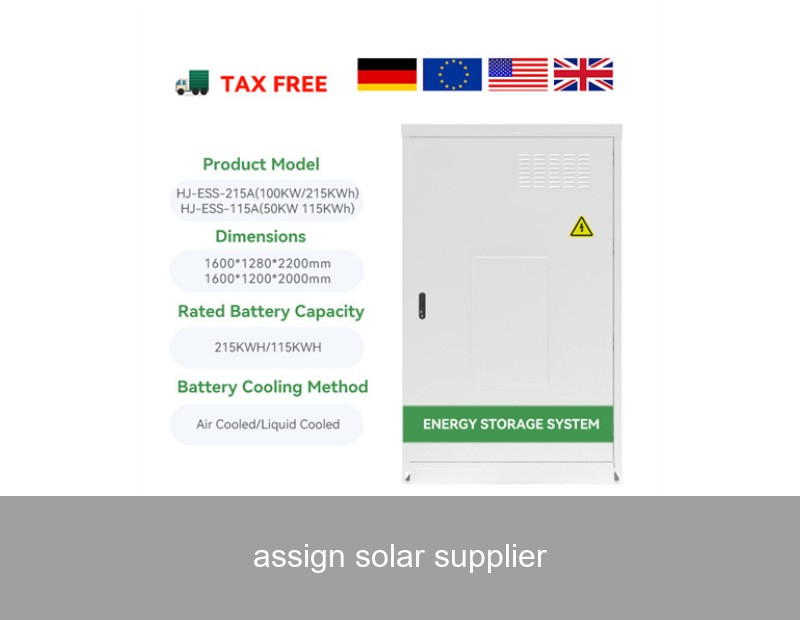
So, you've made the exciting decision to go solar. Congratulations! This move towards clean, self-generated power is a significant step for any homeowner or business. But now, a crucial question arises: how do you effectively assign a solar supplier to bring your vision to life? This isn't just about picking a panel installer; it's about selecting a strategic partner for your long-term energy resilience. In today's landscape, the most forward-thinking approach integrates solar generation with intelligent battery storage from the outset. Let's navigate the key considerations together.
Table of Contents
- The Phenomenon: Beyond Just Panels on the Roof
- The Data: Why Storage is Non-Negotiable
- The Case Study: A German Bakery's Recipe for Resilience
- The Framework: 5 Steps to Assign Your Ideal Solar Supplier
- The Highjoule Advantage: Your Partner in Complete Energy Solutions
- Your Next Step Towards Energy Autonomy
The Phenomenon: Beyond Just Panels on the Roof
Traditionally, assigning a solar supplier meant focusing almost exclusively on photovoltaic (PV) panel efficiency and installation cost. While these remain important, the energy world has evolved. The modern challenge isn't just generation—it's management. You generate power when the sun shines, but what about during peak evening demand, power outages, or cloudy days? Without a storage solution, a significant portion of your solar investment and generated clean energy goes underutilized, often fed back to the grid at low rates. The true goal of a modern solar project is energy independence, and that requires a system designed to capture, store, and dispatch power intelligently.

Image: A modern energy-independent home. Credit: Unsplash
The Data: Why Storage is Non-Negotiable
Let's look at the numbers. According to the U.S. Department of Energy's Solar Futures Study, solar could provide up to 40% of the nation's electricity by 2035. This growth is intertwined with storage. The levelized cost of solar PV has fallen dramatically, but the value of a kilowatt-hour is time-dependent.
| Scenario | Solar-Only System | Solar + Storage System |
|---|---|---|
| Self-Consumption | Typically 30-50% | Can exceed 80-90% |
| Grid Outage Resilience | None (systems shut off for safety) | Seamless backup power for critical loads |
| Bill Management | Reduces daytime consumption costs | Avoids peak-time tariffs, enables arbitrage |
The data is clear: pairing solar with storage maximizes financial return and operational security. Therefore, when you assign a solar supplier, you must assess their expertise and offerings in integrated storage solutions.
The Case Study: A German Bakery's Recipe for Resilience
Consider the real-world example of "Bäckerei Schmidt" (name changed for privacy), a mid-sized artisan bakery in Bavaria, Germany. Their challenge was twofold: high, fluctuating energy costs for ovens and refrigeration, and a need for uninterrupted power to prevent spoilage and production halts.
Initial Approach: They initially sourced quotes from several traditional solar installers. The proposals focused on maximizing rooftop PV to offset daytime grid use.
The Insight: A consultant pointed out that their energy peaks occurred early morning (before peak solar production) and that local grid fees were rising. A solar-only system would only partially address their costs and offered zero backup.
The Solution: They decided to assign a solar supplier with deep storage integration capabilities. The chosen partner designed a 100 kWp solar array coupled with a 240 kWh battery energy storage system (BESS). The BESS was programmed for intelligent load-shifting: storing midday solar excess to cover the morning baking peak and keeping refrigeration online overnight.
The Results (12-month post-installation):
- Grid electricity consumption reduced by 92%.
- Annual energy cost savings: €28,000.
- Protected against 3 brief grid outages with no operational impact.
- Estimated payback period: Under 7 years, enhanced by a German KfW storage incentive.
This case underscores that the right supplier thinks in terms of a system, not just components.
The Framework: 5 Steps to Assign Your Ideal Solar Supplier
Use this logical framework to guide your selection process.
1. Audit Your True Energy Profile
Don't just look at your total monthly bill. Request hourly consumption data from your utility. Identify your baseload and peak demand periods. This data is the blueprint for sizing both solar and storage correctly.
2. Evaluate System Design Philosophy
When interviewing potential suppliers, ask: "How will you design my system to maximize self-consumption and provide backup?" Listen for their approach to software-driven energy management, not just hardware specs. A good partner will model different generation and storage scenarios for you.
3. Scrutinize Storage Technology & Software
The battery is the brain of your new energy system. Inquire about:
- Battery Chemistry: Lithium Iron Phosphate (LFP) is now the leading standard for safety, longevity, and performance.
- Scalability: Can storage capacity be easily expanded later?
- Software Intelligence: Can the system learn consumption patterns, respond to grid signals, or participate in virtual power plants (VPPs)?
4. Verify Long-Term Partnership Capabilities
Your relationship with your supplier doesn't end at installation. Confirm their long-term service offerings: performance monitoring, warranty support, and software updates. A 10+ year system needs a partner that will be there for the long haul.
5. Analyze Total Lifetime Value
Compare quotes on total cost of ownership over 15-20 years, not just upfront installation cost. A slightly higher initial investment in a superior, integrated system often yields a far higher return through greater efficiency, durability, and adaptability to future energy rates.
The Highjoule Advantage: Your Partner in Complete Energy Solutions
This is where Highjoule's mission aligns perfectly with your search. Since 2005, we have evolved from a battery innovator to a global provider of complete, intelligent energy storage systems. When you choose to assign Highjoule as your solar and storage solutions partner, you're not just buying hardware; you're gaining a strategic ally for energy independence.
Our H-series residential and commercial battery systems are built with LFP chemistry and feature our proprietary EnergyOS™ platform. This software doesn't just monitor—it optimizes. It automatically decides when to store solar energy, when to power your home or business, and when to draw from the grid, all based on your usage patterns and real-time electricity costs.
For larger commercial and industrial projects, our Megapack-scale BESS solutions offer utility-grade performance. We work directly with developers and EPCs to design systems that manage demand charges, provide backup power for critical operations, and even generate revenue through grid services, all while integrating seamlessly with new or existing solar PV arrays.
Our approach is holistic. We help you assign the solar generation component as part of a perfectly balanced ecosystem with storage at its core, ensuring every kilowatt-hour of solar energy you produce is used to its maximum potential.

Image: Advanced battery storage system control. Credit: Unsplash
Your Next Step Towards Energy Autonomy
The journey to energy independence is a detailed process, but it begins with a single, informed decision. The old model of simply installing solar panels is giving way to a smarter, more resilient future built on intelligent storage.
As you prepare to assign your solar supplier, ask yourself this final, pivotal question: Are you looking for a vendor to install equipment, or a long-term technology partner to architect and manage your complete energy ecosystem?
We invite you to explore what a true partnership looks like. What specific energy challenge for your home or business would you like to solve first?
 Inquiry
 Online Chat