


Unlocking Grid Resilience: A Deep Dive into the Asterion Energy Storage Cabinet
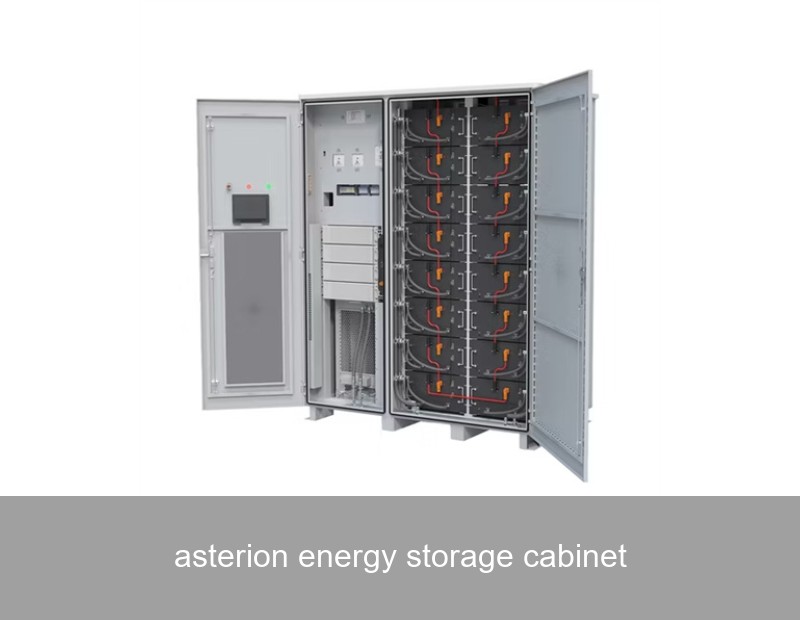
Table of Contents
- The Modern Grid Challenge: More Renewables, More Volatility
- What is an Asterion Energy Storage Cabinet?
- Core Benefits: Beyond Just Backup Power
- A Real-World Case: Asterion in Action at a German Logistics Hub
- Highjoule's Role: Engineering Intelligence into the Asterion Cabinet
- The Future Outlook for Energy Storage
If you're managing a commercial facility, a factory, or even a community microgrid, you've likely felt the pinch of rising energy costs and growing concerns over reliability. The push for renewables is fantastic, but it introduces a new variable: intermittency. This is where advanced, containerized solutions like the Asterion energy storage cabinet come into play, transforming passive power consumption into active, intelligent energy management. Let's explore how this technology is becoming a cornerstone for a sustainable and resilient energy future.
The Modern Grid Challenge: More Renewables, More Volatility
Across Europe and the United States, the energy landscape is shifting at an unprecedented pace. Solar and wind are now often the cheapest sources of new electricity. However, the sun doesn't always shine, and the wind doesn't always blow. This creates a mismatch between when energy is generated and when it's needed most. According to the International Energy Agency (IEA), the global capacity of grid-scale storage needs to expand dramatically to support net-zero goals, with a particular emphasis on battery storage systems.
For businesses, this volatility translates directly to the bottom line. Peak demand charges can constitute up to 30-50% of a commercial electricity bill. Furthermore, extreme weather events are making grid outages more frequent. The question is no longer if you need a backup plan, but how sophisticated that plan should be. This is the precise problem domain that modular, high-capacity energy storage cabinets are designed to solve.
What is an Asterion Energy Storage Cabinet?
Think of the Asterion energy storage cabinet not just as a big battery, but as a fully integrated, plug-and-play power hub. It's a self-contained unit that houses lithium-ion battery modules, a built-in battery management system (BMS), thermal conditioning, and safety mechanisms—all within a robust, typically containerized enclosure. Unlike fragmented systems, the Asterion cabinet arrives pre-assembled and tested, significantly reducing on-site installation complexity and time.
Its primary function is to store electrical energy when it's abundant and cheap (or from on-site solar panels), and discharge it when it's scarce and expensive, or during a grid outage. But the real magic lies in the software that controls it.

Image: A modern containerized energy storage system, similar in concept to the Asterion cabinet, provides scalable power for industrial applications.
Core Benefits: Beyond Just Backup Power
The value proposition of a system like the Asterion cabinet extends far beyond emergency backup. Here’s how it delivers a tangible return on investment:
- Peak Shaving: The system intelligently discharges power during periods of high grid demand, slashing peak demand charges. This is often the fastest path to payback.
- Energy Arbitrage: Buy and store electricity when rates are low (often at night), and use it during high-rate periods.
- Renewables Integration: Smooth out the intermittent output from solar or wind installations, maximizing self-consumption of clean energy.
- Grid Services: For larger installations, systems can provide frequency regulation or voltage support to the local utility grid, creating a potential new revenue stream.
- Enhanced Resilience: Provide seamless, instantaneous backup power for critical loads, ensuring business continuity.
A Real-World Case: Asterion in Action at a German Logistics Hub
Let's move from theory to practice. A major logistics and distribution center in North Rhine-Westphalia, Germany, faced a dual challenge: skyrocketing energy costs and a corporate mandate to reduce carbon emissions. They had a 1.2 MW rooftop solar array, but a significant portion of its midday generation was being exported to the grid at low feed-in tariffs, while they purchased expensive grid power in the early evening during peak operational hours.
Their solution was the deployment of a Highjoule Asterion energy storage cabinet system with a capacity of 800 kWh and a power rating of 500 kW. Integrated with the site's energy management system, the Asterion cabinet was programmed with a simple, yet powerful logic: store excess solar generation during the day, and release it during the evening peak period (4 PM to 9 PM).
| Metric | Before Asterion | After Asterion Deployment |
|---|---|---|
| Solar Self-Consumption | ~35% | ~85% |
| Peak Demand from Grid | 950 kW | 450 kW |
| Estimated Annual Energy Cost Savings | Baseline | €68,000 |
| CO2 Emission Reduction | Baseline | Additional 12% |
This case, documented in a Fraunhofer ISE study on battery storage economics, illustrates the compound benefits. The Asterion cabinet didn't just save money; it made their renewable investment more effective and accelerated their sustainability goals.
Highjoule's Role: Engineering Intelligence into the Asterion Cabinet
Since 2005, Highjoule has been at the forefront of making advanced energy storage practical and reliable. Our approach to the Asterion energy storage cabinet is defined by three core principles:
- Safety by Design: The Asterion cabinet features a multi-layered safety architecture, including active cell-level monitoring, passive fire suppression, and robust thermal management that operates in a wide range of climates, crucial for both European winters and American summers.
- Intelligent Control: At its heart is the Highjoule Harmony OS™. This proprietary software platform doesn't just react; it forecasts. By analyzing weather patterns, load profiles, and utility rate schedules, it optimizes the charge/discycle cycles to maximize financial and operational outcomes.
- Scalability and Service: Starting from a single cabinet, the system can be scaled modularly to meet growing needs. Highjoule supports this with global remote monitoring and predictive maintenance services, ensuring the system performs optimally over its entire 15+ year lifespan.

Image: Intelligent control software, like Highjoule's Harmony OS™, is critical for optimizing the performance of energy storage cabinets.
The Future Outlook for Energy Storage
The trajectory is clear. As noted by the U.S. Department of Energy, energy storage is a key enabler for a decarbonized, reliable, and equitable grid. The technology, exemplified by systems like the Asterion cabinet, is evolving from a niche application to a standard component of smart infrastructure for factories, warehouses, hospitals, and residential communities.
We are moving towards ecosystems where fleets of distributed storage units can act in concert as a "virtual power plant," providing stability to the grid while generating value for their owners. The question for decision-makers is shifting from "Why storage?" to "What is the optimal storage strategy for my specific load profile, sustainability targets, and local utility landscape?"
 Inquiry
 Online Chat