


Understanding Solar Power Plant Cost Per kW: A Guide to Smart Investment
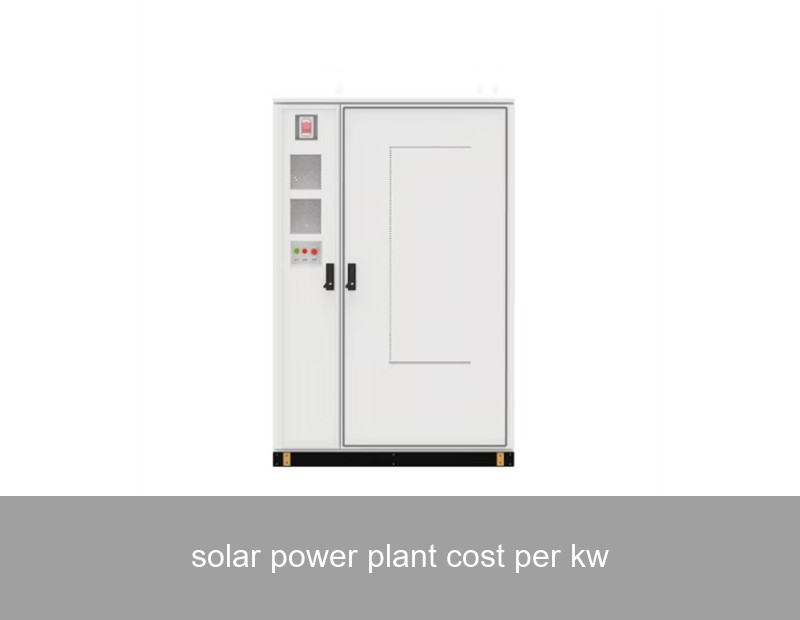
If you're exploring solar energy for your business, community, or large-scale project, one metric is unavoidable: the solar power plant cost per kW. It's the foundational number that shapes budgets, ROI calculations, and ultimately, the decision to go solar. But here's a reality many discover: the upfront hardware cost is just one piece of the puzzle. The true value and long-term cost-effectiveness of a solar installation are profoundly influenced by what happens after the sun shines – specifically, how you store and manage that energy. As a global leader in advanced energy storage, Highjoule has seen how integrating smart storage transforms the economics of solar, making that initial cost per kW an investment in decades of resilient, low-cost power.
Table of Contents
The Modern Solar Cost Breakdown: More Than Just Panels
When we talk about the cost per kilowatt (kW) for a solar power plant, we're typically referring to the installed cost, divided by the system's capacity. For utility-scale projects in the U.S. and Europe, this figure has dropped dramatically over the past decade. According to the National Renewable Energy Laboratory (NREL), the average installed cost for utility-scale solar PV in the U.S. was around $1.35 per watt DC ($1,350 per kW) in 2022. But what does this actually include?
- Hardware (Modules, Inverters, Racking): This is the "visible" cost, and solar panels themselves are now highly commoditized.
- Soft Costs (Permitting, Interconnection, Engineering): These can vary wildly by region and project complexity.
- Installation Labor & Balance of System: Wiring, transformers, and skilled labor to bring it all together.
- Financing & Overhead: The cost of capital and project development.
However, this traditional view is becoming outdated. The most forward-thinking developers and commercial operators are now factoring in grid integration costs and energy arbitrage potential from day one. This is where the conversation shifts from simple cost per kW to value per kWh delivered.

Image Source: Unsplash - A modern utility-scale solar plant. The panels are just the beginning of the value chain.
The Hidden Game-Changer: Energy Storage's Role in Cost Per kW
Let's address the elephant in the room: solar alone is intermittent. Without storage, a solar plant's output must be used immediately or fed to the grid, often at low, wholesale rates. This can cap its financial return and limit its reliability. By adding a Battery Energy Storage System (BESS), you fundamentally alter the project's economics.
Think of it this way: the initial solar cost per kW is your ticket to the game. The storage system is what allows you to play strategically and win. It enables:
- Peak Shaving: Store cheap solar energy at noon and use it during expensive evening peak rates, dramatically reducing demand charges for commercial/industrial users.
- Energy Arbitrage: Buy/store low-cost energy (from your solar or the grid) and sell/dispatch it when prices are high.
- Grid Services: In many markets, storage can provide frequency regulation or capacity reserves, creating new revenue streams.
- Enhanced Resilience: Provide backup power during outages, adding value that isn't captured in simple $/kW metrics.
So, while adding storage increases the initial capital expenditure, it drastically increases the lifetime revenue and savings of the solar asset. The levelized cost of energy (LCOE) for a solar-plus-storage plant can be more competitive and valuable than solar alone, especially in markets with time-of-use rates or volatile energy prices.
Real-World Math: A Case Study from California
Let's look at a concrete example. A mid-sized food processing facility in California's Central Valley was facing an average electricity cost of $0.28/kWh, with crippling demand charges during peak hours. They evaluated two options:
- A 500 kW solar-only system.
- A 500 kW solar + 750 kWh battery storage system.
| Metric | Solar-Only | Solar + Storage (with Highjoule BESS) |
|---|---|---|
| Estimated System Cost | $1.1 million | $1.7 million |
| Annual Energy Bill Savings | $85,000 | $210,000 |
| Demand Charge Reduction | Minimal | >60% |
| Simple Payback Period | ~13 years | ~8 years |
| Grid Independence During Outages | None | 6+ hours for critical loads |
The data is telling. The integrated Highjoule system, while having a higher upfront "cost per kW," delivered more than double the annual savings and slashed the payback period by 5 years. The storage system turned their solar array from a passive cost-saver into an active grid asset and resilience hub. This holistic approach to project design is what defines the new era of solar economics.
Highjoule Solutions: Optimizing Your Solar Investment
At Highjoule, we don't just sell battery containers; we provide intelligent energy platforms that maximize the return on every dollar you put into your solar cost per kW. Our systems are engineered for the specific demands of commercial, industrial, and microgrid applications.
For a solar developer or plant owner, integrating a Highjoule BESS means:
- Advanced Energy Management System (EMS): Our AI-driven platform automatically optimizes dispatch, deciding in real-time whether to store solar power, sell it, or use it on-site based on weather forecasts, price signals, and load patterns.
- Unmatched Cycle Life & Warranty: Our lithium-iron-phosphate (LFP) based systems are built for decades of daily cycling, ensuring the storage asset outlives its payback period and continues generating pure profit.
- Scalable Architecture: From a containerized 500 kWh unit to a multi-MW system, our modular design allows you to scale storage in step with your solar capacity.
- Global Support: With projects across Europe and North America, our team provides localized support for grid compliance, interconnection, and long-term maintenance.
By partnering with Highjoule, you're not just adding a component; you're installing the brain of your power plant. This transforms a static solar installation into a dynamic, revenue-maximizing energy asset.

Image Source: Unsplash - A technician inspecting a modern battery storage system, a critical component for solar ROI.
Future-Proofing Your Cost: Trends and Considerations
As you evaluate your solar project, looking ahead is crucial. The International Energy Agency (IEA) consistently highlights the synergistic growth of solar and storage. Here are key factors that will impact your cost per kW calculation in the coming years:
Policy & Incentives
In the U.S., the Inflation Reduction Act (IRA) provides standalone investment tax credits (ITC) for storage, making solar-storage hybrids even more attractive. Similar mechanisms exist across European markets. A smart developer will design with these incentives in mind from the outset.
Grid Demands
Grid operators are increasingly requiring new renewable plants to have "firm" capacity. Storage is the most cost-effective way to meet this requirement, avoiding costly grid upgrade fees or curtailment of your solar output.
Technology Advancements
While solar panel efficiency gains are incremental, storage is seeing rapid improvements in energy density, safety, and cost per cycle. Choosing a forward-compatible platform like Highjoule's ensures your plant can benefit from future software updates and potentially hardware upgrades.
The Essential Question for Your Project
So, the next time you see a quote for a solar power plant cost per kW, ask yourself and your provider this critical question: "Does this price reflect a system designed for the grid of yesterday, or does it include the intelligence and flexibility needed to thrive in the dynamic, decentralized energy market of tomorrow?" The difference in the answer could mean millions in lifetime value.
What specific challenge in your project's location – be it volatile energy prices, grid instability, or ambitious sustainability goals – could be turned into an opportunity with the right storage strategy?
 Inquiry
 Online Chat