


Powering Precision: Why a Dedicated Solar Panel for RTK Reference Station is Non-Negotiable
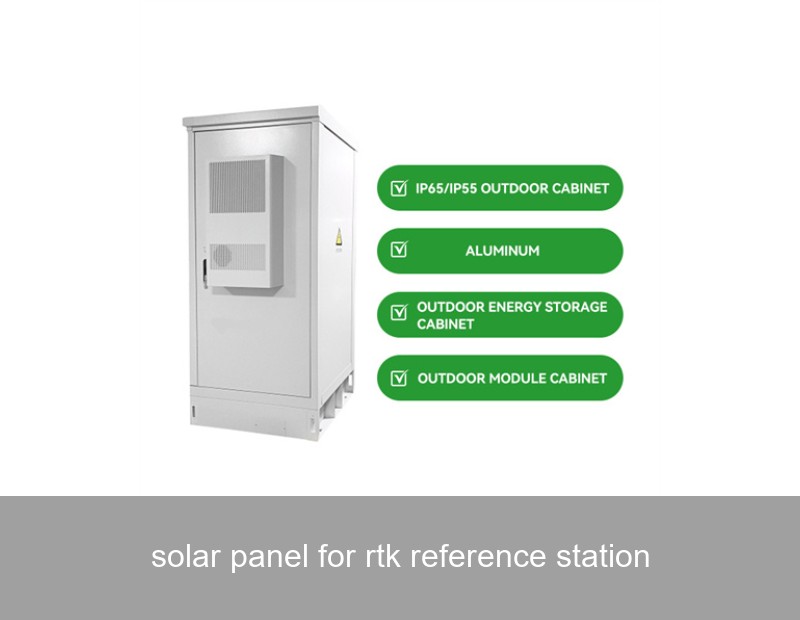
Imagine you're surveying a site for a new wind farm or guiding an autonomous agricultural vehicle. The accuracy you rely on, often down to the centimeter, hinges on a silent workhorse: the Real-Time Kinematic (RTK) reference station. But what happens when this critical source of precision loses power? The answer is costly downtime and data corruption. This is where the choice of a solar panel for RTK reference station moves from an afterthought to a core component of system integrity. For remote, off-grid installations common across Europe and the US, a robust, intelligent solar energy solution isn't just convenient—it's essential for uninterrupted, reliable operation.
Table of Contents
The Silent Guardian: RTK's Power Hunger
An RTK base station is a 24/7 operation. It continuously receives satellite signals, computes correction data, and broadcasts it to rovers in the field. This constant processing, especially in harsh environments with temperature swings, demands a steady, clean power supply. A simple power blip can cause a reboot, interrupting service for all connected users. In remote locations, running grid power is prohibitively expensive, and relying solely on a large battery bank means frequent, costly maintenance trips for replacement. The solution? A sustainable, autonomous power system built around a purpose-designed solar panel for RTK reference station.
Beyond Watts: What Makes a Solar Panel Ideal for RTK?
Not all solar panels are created equal, especially for mission-critical infrastructure. The key is not just peak wattage, but performance in real-world conditions.
- Durability Over Decoration: These panels face hail, snow loads, high winds, and UV degradation for years. Robust, corrosion-resistant frames and tempered glass are mandatory.
- Low-Light & High-Temp Efficiency: Monocrystalline cells with high efficiency ratings perform better during cloudy days, early mornings, and late evenings—crucial for maintaining battery charge in winter. They also handle heat better, preventing significant power drops on hot days.
- Voltage Match is Critical: The panel must be correctly sized to charge your specific battery bank (typically 12V or 24V) through a charge controller, ensuring efficient energy harvest and battery longevity.
Think of it this way: the solar panel for RTK reference station is the primary fuel pump. If it fails or underperforms, the entire system—no matter how good the battery or radio—grinds to a halt.

Credit: Unsplash - A robust solar installation in a remote setting, similar to RTK station requirements.
The Data Don't Lie: Reliability in Numbers
Let's talk specifics. According to a 2022 report by the National Renewable Energy Laboratory (NREL), well-designed off-grid photovoltaic (PV) systems can achieve reliability rates exceeding 99.9%. For an RTK station, this translates to less than 9 hours of potential downtime per year, most of which can be planned for low-usage periods. Conversely, a basic or undersized system might see reliability drop below 95%, leading to over 400 hours of unplanned outages—a nightmare for any project relying on continuous positioning data.
| System Design Quality | Estimated Uptime | Potential Annual Downtime | Impact on RTK Operations |
|---|---|---|---|
| Professional, Correctly Sized | > 99.9% | < 9 hours | Minimal, manageable disruption |
| Basic/Undersized | < 95% | > 400 hours | Frequent, costly service interruptions |
Case Study: Securing an Alpine Reference Network in Switzerland
A geospatial service provider in Switzerland operated a network of RTK reference stations across the Alps for surveying and environmental monitoring. Their stations, powered by ad-hoc solar setups, suffered frequent winter failures. Deep snow covered panels, and low light led to battery depletion, causing network gaps.
The Solution: They partnered with Highjoule to redesign the power systems. We deployed our HJ-SOLAR-RUGGED 180W panels, known for their excellent snow-shedding surface and high low-light output, paired with our HJ-BATT-LFP 100Ah lithium iron phosphate batteries. These batteries offer a 95% depth of discharge and perform flawlessly in sub-zero temperatures, unlike traditional lead-acid.
The Result: After one year, the network uptime across all alpine stations improved from 89% to 99.7%. Maintenance visits were reduced from monthly checks to biannual inspections, slashing operational costs by an estimated 60%. The client now confidently guarantees service availability to their customers year-round.
Building a Resilient System: More Than Just a Panel
A reliable off-grid power solution is an integrated system. The solar panel for RTK reference station is the cornerstone, but it needs the right support team:
- Smart Charge Controller: This is the brain. It regulates the power from the panel to the battery, preventing overcharging (which kills batteries) and optimizing charge cycles. Maximum Power Point Tracking (MPPT) controllers are highly recommended for their efficiency gains.
- The Right Battery Chemistry: Lithium Iron Phosphate (LiFePO4) batteries are revolutionizing remote power. They are lighter, last 5-10x longer than lead-acid, handle deeper discharges, and operate in a wider temperature range. For a "fit and forget" installation, they are the superior choice.
- Power Management & Monitoring: Advanced systems offer remote monitoring. You can check battery voltage, solar input, and system health from your desk, enabling proactive maintenance.

Credit: Unsplash - A modern battery bank and power management system, core to off-grid reliability.
Your Partner in Precision: Highjoule's Tailored Solutions
At Highjoule, we understand that the integrity of your geospatial data starts with unwavering power. Since 2005, we've been designing intelligent, integrated energy systems for the world's most demanding applications. For RTK networks, we don't just sell a solar panel for RTK reference station; we provide a complete, optimized power ecosystem.
Our Off-Grid Guardian Series is engineered for telecommunications and critical monitoring infrastructure. It combines our high-efficiency, durable solar panels with our industry-leading LiFePO4 battery storage and intelligent controllers. The system can be pre-configured to match your station's exact load profile and environmental conditions, whether it's the deserts of the US Southwest or the coastlines of Northern Europe. With Highjoule, you gain a partner committed to maximizing your uptime and minimizing your total cost of ownership.
Learn more about the science of battery longevity from experts at the U.S. Department of Energy.
Ready to Eliminate Power-Related Downtime?
What's the true cost of just one hour of lost precision data for your operations or your clients? Let's calculate the ROI of an unshakeable power foundation. Contact Highjoule's expert team today for a free, site-specific assessment of your RTK reference station power needs.
 Inquiry
 Online Chat