


What is an Autonomous Photovoltaic System and How Can It Power Your Energy Independence?
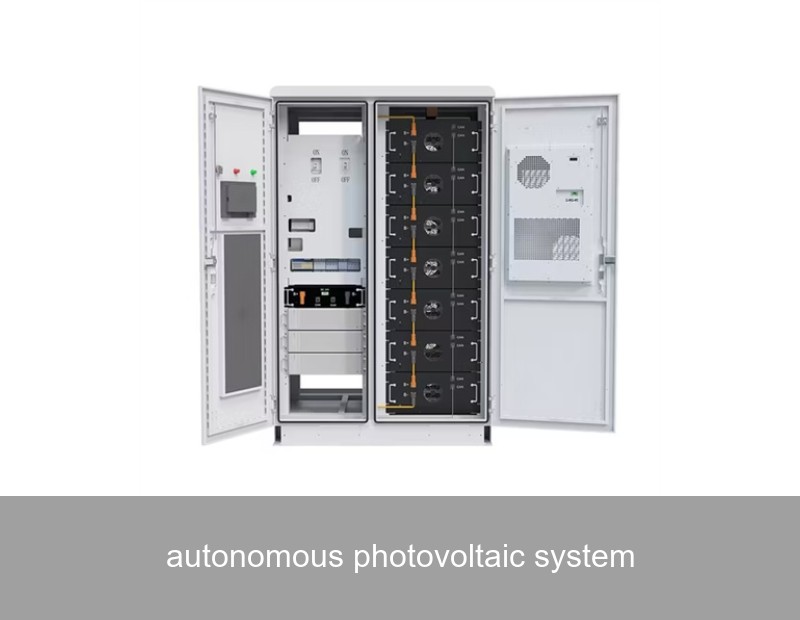
Imagine a home or business that generates its own electricity, stores it for a rainy day (or a calm night), and manages it all intelligently—completely independent from the grid. This isn't a distant future concept; it's the reality offered by an autonomous photovoltaic system. For homeowners and businesses across Europe and the U.S., rising energy costs and increasing grid instability are more than just talking points; they're pressing concerns hitting the bottom line. An autonomous PV system, also known as an off-grid solar system, is the ultimate answer for true energy self-sufficiency. It combines solar panels, advanced battery storage, and smart energy management to create a self-sustaining power ecosystem. As a leader in this field since 2005, Highjoule designs and delivers these integrated systems, turning the dream of reliable, clean, and independent power into a daily experience for commercial, industrial, and residential clients.
Article Navigation
- The Grid Dependency Phenomenon: Why Go Autonomous?
- Anatomy of Autonomy: Core Components of a Self-Sufficient System
- Data Drives the Decision: The Tangible Benefits
- Case Study: A Californian Winery's Journey to Energy Independence
- Highjoule's Role: Crafting Your Custom Autonomous Power Solution
- Is an Autonomous Photovoltaic System Your Next Strategic Move?
The Grid Dependency Phenomenon: Why Go Autonomous?
We've grown accustomed to flipping a switch and receiving instant power. Yet, this convenience comes with vulnerabilities. From extreme weather events causing prolonged blackouts in California and Texas to volatile energy prices in Europe exacerbated by geopolitical tensions, the traditional centralized grid model is showing its strain. The U.S. Energy Information Administration (EIA) reports that the average U.S. customer experienced just over 7 hours of power interruptions in 2021, with major events being a primary driver. This isn't just an inconvenience; for businesses, it means lost revenue and operational downtime, and for homeowners, it can mean safety risks and discomfort.
This phenomenon drives a powerful shift towards decentralization. People are no longer content being passive consumers. They want control, resilience, and predictability. An autonomous photovoltaic system directly addresses this by removing single points of failure. It's a proactive investment in continuity, turning your property into its own miniature, resilient power station.
Anatomy of Autonomy: Core Components of a Self-Sufficient System
Building a truly autonomous system requires more than just solar panels. It's a sophisticated symphony of components working in harmony. Let's break down the essentials:
- High-Efficiency Photovoltaic (PV) Panels: These are the primary energy harvesters. Modern monocrystalline or bifacial panels capture maximum sunlight, even in less-than-ideal weather conditions common in parts of Northern Europe or the Pacific Northwest.
- Advanced Battery Energy Storage System (BESS): This is the heart of autonomy. While solar panels work during the day, the BESS stores excess energy for use at night, during cloudy periods, or grid outages. Not all batteries are created equal. Systems like Highjoule's H-Joule Cell Matrix utilize lithium iron phosphate (LFP) chemistry, renowned for its long lifespan (often over 6,000 cycles), enhanced safety, and stable performance across a wide temperature range.
- Smart Hybrid Inverter/Charger: This is the brain. It performs the critical tasks of converting DC power from the panels and batteries to AC power for your appliances, managing the charging and discharging cycles of the battery to optimize lifespan, and seamlessly switching between power sources without a flicker in your lights.
- Intelligent Energy Management System (EMS): This is the nervous system. A sophisticated EMS, such as the software integrated into Highjoule's platforms, uses weather forecasting, load consumption patterns, and tariff data (if partially grid-connected) to make real-time decisions. It ensures energy is allocated where and when it's needed most, maximizing self-consumption and system efficiency.

Image Source: Unsplash (Representative image of a residential solar and storage installation)
Data Drives the Decision: The Tangible Benefits
Moving to an autonomous system is a significant decision. The benefits, however, are quantifiable and compelling:
| Benefit | Impact | Quantifiable Example |
|---|---|---|
| Energy Independence & Resilience | Immunity from grid outages and price spikes. | Continuous operation during a 24-hour blackout, powering critical loads (refrigeration, servers, medical equipment). |
| Long-Term Cost Stability | Fixed electricity costs after system payback period. | Elimination of 90-100% of utility bills, locking in energy costs for 20+ years despite rising market rates. |
| Maximized Self-Consumption | Using your own clean energy first, minimizing waste. | Smart EMS can increase self-consumption of solar power from ~30% to over 70%, drastically reducing grid reliance. |
| Sustainability & Carbon Reduction | Direct contribution to decarbonization goals. | A typical 10kW autonomous system can offset ~10-12 tons of CO2 annually, equivalent to planting over 200 trees. |
Case Study: A Californian Winery's Journey to Energy Independence
Let's look at a real-world application. A premium winery in Sonoma County, California, faced a critical challenge: frequent Public Safety Power Shutoffs (PSPS) during fire season threatened not only daily operations but also the precise temperature control essential for fermentation and barrel aging. A multi-day outage could ruin an entire vintage.
The Solution: Highjoule engineered and deployed a fully autonomous microgrid system. The installation included a 250kW rooftop solar array coupled with a 500kWh Highjoule H-Joule Cell Matrix battery storage system. A smart hybrid inverter and EMS were configured to prioritize critical loads (refrigeration, fermentation tanks, and tasting room essentials) and ensure seamless transition during grid failures.
The Data & Outcome: In the first year post-installation:
- The winery achieved 99.8% uptime, navigating through 14 separate grid outage events without disruption.
- They reduced their annual energy costs by 78%, with a projected payback period of under 7 years.
- The system provided peak shaving during high-tariff hours, further optimizing costs.
- Marketing their wine as "100% solar-powered and resilient" became a unique selling proposition, enhancing brand value. This case exemplifies how an autonomous system transcends backup power—it becomes a core, value-generating asset.

Image Source: Unsplash (Representative image of commercial solar installation in agriculture)
Highjoule's Role: Crafting Your Custom Autonomous Power Solution
Designing a reliable autonomous system is not an off-the-shelf endeavor. It requires deep expertise in system sizing, component compatibility, and local climate and regulatory conditions. This is where Highjoule's nearly two decades of experience becomes critical. Our process is consultative and engineering-led:
- Needs Analysis & Simulation: We start by understanding your load profiles, resilience requirements, and site specifics. Using advanced modeling tools, we simulate thousands of hourly scenarios to right-size the PV array and battery storage.
- Integrated Product Ecosystem: We provide a cohesive, high-performance ecosystem. From our proprietary LFP battery modules and smart hybrid inverters to the intuitive Highjoule Horizon EMS platform, all components are designed to work together flawlessly, ensuring system efficiency and longevity.
- Turnkey Implementation & Support: Highjoule manages the entire project lifecycle—permitting, installation, grid interconnection (if applicable), and commissioning. Our global service network provides ongoing monitoring, maintenance, and support, guaranteeing your system performs for decades.
Whether for a remote off-grid residence in Scandinavia, a critical industrial facility seeking uninterrupted production, or a community microgrid, Highjoule tailors the autonomous photovoltaic system to be the robust, intelligent, and sustainable foundation of your energy strategy.
Is an Autonomous Photovoltaic System Your Next Strategic Move?
The trend towards distributed, resilient energy is accelerating. With technologies maturing and costs declining, the question is shifting from "Can I afford it?" to "Can I afford to wait?" Each grid disruption or price hike underscores the value of taking control. What would energy certainty and independence mean for your peace of mind, your operational security, or your sustainability commitments? We invite you to explore what a future powered by your own sun could look like.
 Inquiry
 Online Chat