


Autonoom Zonnepaneel Systeem: Your Complete Guide to Energy Independence
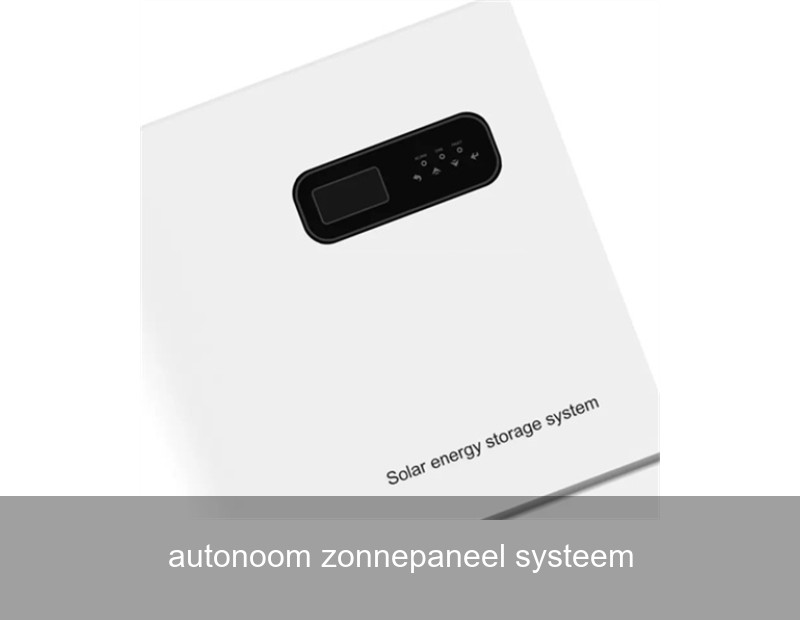
Imagine a home that powers itself, rain or shine, day or night. No anxiety over grid outages or volatile energy prices. This isn't science fiction; it's the reality enabled by a fully autonoom zonnepaneel systeem (autonomous solar panel system). For homeowners and businesses across Europe and the US, this concept is rapidly shifting from a niche ideal to a mainstream solution for security, sustainability, and smart financial management. But what exactly transforms a standard solar setup into a truly "autonomous" one? Let's demystify the technology and explore how it's reshaping our relationship with energy.
What is an Autonoom Zonnepaneel Systeem?
An autonoom zonnepaneel systeem is a self-sufficient energy ecosystem. Unlike grid-tied systems that shut down during power cuts, or simple solar-plus-battery setups that merely shift usage, a fully autonomous system is designed for long-term, off-grid independence. It intelligently generates, stores, manages, and dispatches solar power to meet your specific load profile, 24/7, with little to no reliance on the public electricity grid. The key differentiator is intelligent energy management and oversized resilience, ensuring power is available even during prolonged periods of low sunlight.
Image Source: Unsplash - A modern home equipped for energy autonomy.
The Energy Independence Imperative: Why Now?
The drive towards autonomous solar systems is fueled by a powerful convergence of factors. It's a response to a clear phenomenon: increasing grid instability and energy uncertainty.
Consider the data: In the US, major power outages caused by weather events have doubled in the last two decades (source: NOAA Climate.gov). Meanwhile, in Europe, electricity prices have experienced extreme volatility, pushing households and businesses to seek predictable alternatives. The financial equation has also flipped. The levelized cost of solar PV has fallen by over 80% in the last decade, while advanced battery storage costs continue their steady decline.
This creates a compelling case for the individual. Whether it's a remote farm in Spain, a tech startup in Berlin, or a suburban home in California, the ability to control one's energy destiny is now both technologically feasible and economically rational.
The Core Components of a True Autonomous System
Building a robust autonoom zonnepaneel systeem requires more than just panels and a battery. It's a symphony of integrated components:
- High-Efficiency Solar Panels: The primary fuel source. Maximizing yield per square meter is critical for off-grid scenarios, especially in winter months.
- Advanced Battery Energy Storage System (BESS): The heart of autonomy. This is where energy is banked for use when the sun isn't shining. Not all batteries are created equal for this demanding application.
- Smart Hybrid Inverter/Charger: The system's brain. It must seamlessly manage multiple energy flows: DC from panels, DC to/from batteries, and AC to your home loads. It also handles grid connection (if present) as a backup, not a crutch.
- Intelligent Energy Management System (EMS): The strategic commander. This software forecasts weather, learns consumption patterns, and decides when to charge, discharge, or conserve energy to ensure continuous power.
This is where specialized providers like Highjoule make the difference. Since 2005, Highjoule has engineered integrated storage solutions that are the cornerstone of autonomy. Our EverFlow series of modular battery systems, paired with our Neuron energy management platform, are specifically designed for the rigorous duty cycle of off-grid and resilient microgrid applications. We don't just supply components; we provide the intelligent core that makes autonomy reliable and effortless.
From Theory to Practice: A Dutch Case Study
Let's ground this in a real-world case study from the Netherlands, a country with ambitious climate goals but also a constrained grid.
The Challenge: A medium-sized horticultural business (greenhouse operation) near Amsterdam wanted to eliminate its reliance on natural gas for heating and reduce peak demand charges from the grid. Their existing solar array was largely going to waste during sunny afternoons, as local grid feed-in limits were reached.
The Solution: They deployed an autonoom zonnepaneel systeem centered around a large-scale battery buffer. The system included:
| Component | Specification | Role |
|---|---|---|
| Solar PV Capacity | 850 kWp (existing) | Primary Generation |
| Highjoule EverFlow BESS | 500 kWh / 250 kW | Energy Storage & Peak Shaving |
| Highjoule Neuron EMS | AI-driven forecasting | Optimizes heat pump & battery dispatch |
The Results & Data: Within the first year of operation:
- Grid Independence: Achieved 92% energy self-consumption rate, up from 35%.
- Cost Savings: Reduced peak demand charges by 78% and cut overall energy costs by over €60,000 annually.
- Emission Reduction: Enabled the shutdown of two gas boilers, reducing onsite CO2 emissions by an estimated 180 tonnes per year.
This insight is powerful: autonomy isn't just for remote cabins. For businesses, it's a strategic tool for operational cost control and decarbonization, turning an energy cost center into a predictable, managed asset.

Image Source: Unsplash - Commercial solar application in agriculture.
The Highjoule Approach: Intelligence at the Core
As a global leader in advanced energy storage, Highjoule understands that an autonoom zonnepaneel systeem is defined by its resilience. Our products and services are engineered for this mission-critical role.
For residential and small commercial clients, our EverFlow Home system features lithium iron phosphate (LFP) battery chemistry, renowned for its safety and long cycle life—essential for daily, deep-cycling autonomy. It integrates with most major inverter brands, offering flexibility.
For larger commercial, industrial, and microgrid projects, our EverFlow Industrial modular racks can be scaled from hundreds of kWh to multiple MWh. Coupled with the Highjoule Neuron Platform, the system performs predictive energy balancing. For instance, if the EMS forecasts three cloudy days ahead, it will strategically conserve battery state-of-charge today, ensuring critical loads remain powered throughout the low-generation period.
This level of foresight is what separates a system that merely has batteries from one that is truly intelligent and autonomous.
The Future Horizon of Autonomous Energy
The evolution of the autonoom zonnepaneel systeem is moving towards even greater integration and community-scale applications. We're seeing the rise of energy-sharing microgrids, where clusters of autonomous homes can trade excess power peer-to-peer, creating resilient community networks. Furthermore, advancements in vehicle-to-home (V2H) technology will see electric vehicles become mobile battery assets, further bolstering household energy security during outages.
The journey to energy independence is deeply personal. It depends on your location, energy profile, and resilience goals. So, we leave you with this question to consider: What is the first load you would want to secure during a prolonged power outage, and how would that priority shape the design of your own autonomous energy system?
 Inquiry
 Online Chat