


Why Your Business Needs a Reliable Back Up Energy Storage Cabinet System
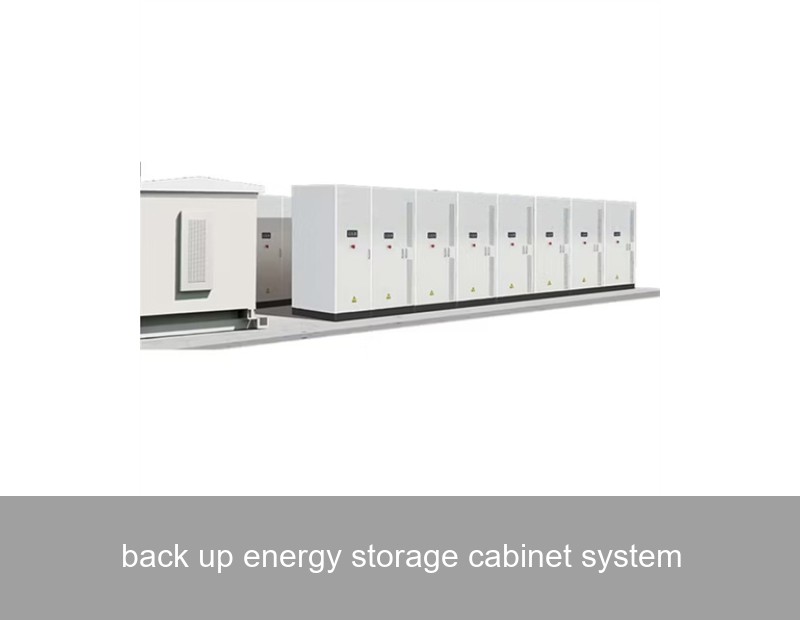
Imagine this: a critical manufacturing process grinds to a halt, a data center's servers flicker off, or a grocery store's refrigerators lose power. For businesses and homeowners across Europe and the U.S., grid outages are more than an inconvenience—they are a direct threat to operations, safety, and revenue. The solution is no longer just a diesel generator; it's the intelligent, silent, and sustainable back up energy storage cabinet system. This isn't just a battery in a box; it's an integrated power resilience hub that keeps your lights on and your business running.
Table of Contents
- The Unstable Grid: A Modern Business Reality
- What Exactly is a Back Up Energy Storage Cabinet System?
- Key Components of a High-Performance System
- Beyond Backup: The Multi-Revenue Advantage
- Case Study: Proven Resilience in Action
- Choosing the Right System for Your Needs
- The Future of Energy Resilience is Here
The Unstable Grid: A Modern Business Reality
Let's face it, our electrical grids are under unprecedented strain. In the U.S., a report by the Department of Energy highlights increasing frequency of extreme weather events as a major threat to grid reliability. Similarly, Europe faces its own challenges with energy security and price volatility. The phenomenon is clear: outages are becoming more common, more unpredictable, and more costly.
The data speaks volumes. According to research, a single one-hour outage can cost a small commercial facility thousands of dollars in lost productivity and spoiled inventory. For critical infrastructure like hospitals or water treatment plants, the stakes are immeasurably higher. The old response—diesel generators—comes with its own baggage: noise, emissions, fuel storage concerns, and a delayed startup time.

Image Source: Unsplash. A modern facility integrating renewable energy and robust electrical infrastructure for resilience.
This is where the modern back up energy storage cabinet system enters the stage. It's the digital-age answer to a century-old problem, offering instantaneous response, clean operation, and, as we'll see, a surprising range of financial benefits.
What Exactly is a Back Up Energy Storage Cabinet System?
Think of it as your personal, on-site power plant, but smarter. At its core, a back up energy storage cabinet system is a pre-engineered, containerized unit that stores electrical energy, typically from the grid or paired renewable sources like solar, and discharges it when needed. Unlike a simple battery pack, these are all-in-one solutions housed in secure, weather-resistant cabinets, integrating batteries, advanced power conversion systems (PCS), thermal management, and sophisticated control software.
Companies like Highjoule have pioneered these systems, moving beyond basic components to deliver intelligent energy storage cabinets designed for seamless integration. Highjoule's CubeSeries Commercial ESS, for example, is a prime specimen. It's a modular, scalable cabinet system built with lithium iron phosphate (LFP) battery cells, renowned for their safety and long cycle life. It doesn't just wait for an outage; it actively manages energy flow to optimize costs and performance every single day.
Key Components of a High-Performance System
Not all cabinets are created equal. A top-tier system, such as those developed by Highjoule, integrates several critical components:
- Battery Modules (The "Fuel Tank"): Using safe, durable chemistry like LFP, these store the electrical energy. Highjoule uses automotive-grade cells with robust Battery Management Systems (BMS) for maximum safety and longevity.
- Power Conversion System (PCS) (The "Engine & Translator"): This bidirectional inverter converts stored DC battery power to AC power for your building, and vice-versa for charging. It's the heart of the system's responsiveness.
- Energy Management System (EMS) (The "Brain"): This is what makes the system smart. Highjoule's AI-driven EMS can predict usage patterns, automate charging during low-cost periods, and ensure seamless transition during a grid failure—all without human intervention.
- Thermal Management & Safety Enclosure (The "Protector"): A dedicated cooling/heating system maintains optimal battery temperature. The cabinet itself is an IP-rated, rugged enclosure designed for indoor or outdoor installation.
Beyond Backup: The Multi-Revenue Advantage
Here's the game-changer: a modern backup energy storage cabinet is not a cost center; it's an asset. While providing peace of mind during blackouts is its primary duty, its daily value comes from intelligent energy arbitrage and grid services.
| Function | How It Works | Direct Benefit |
|---|---|---|
| Peak Shaving | The system discharges during periods of high grid demand (and high electricity prices), reducing your peak power draw. | Lowers demand charges, which can constitute up to 50% of a commercial utility bill. |
| Time-of-Use (TOU) Optimization | It charges from the grid when rates are cheap (e.g., at night) and powers your facility when rates are high. | Direct reduction in energy consumption costs. |
| Renewable Integration | Stores excess solar PV generation for use at night, maximizing self-consumption. | Increases ROI on solar investments, enhances sustainability. |
| Grid Services (Future-Proofing) | In some markets, systems can provide frequency regulation or capacity services to the utility grid. | Creates a potential new revenue stream. |
This is the core of Highjoule's value proposition: delivering a back up energy storage cabinet system that pays for itself over time through operational savings, while guaranteeing resilience. Their systems are designed for C&I (Commercial & Industrial) applications where both uptime and the bottom line are critical.
Case Study: Proven Resilience in Action
Let's look at a real-world application in California, USA—a region familiar with Public Safety Power Shutoffs (PSPS) due to wildfire risk. A mid-sized winery, reliant on precise temperature-controlled fermentation tanks, faced catastrophic financial and product loss from even a short outage.
Challenge: Provide 48+ hours of backup power for critical cooling and process loads, integrate with existing solar PV, and reduce peak demand charges.
Solution: Highjoule deployed a tailored 500 kWh / 250 kW CubeSeries ESS cabinet system. The system was configured for:
- Seamless transition to backup power in < 20 milliseconds during grid failures.
- Automatic peak shaving, targeting the facility's highest 15-minute demand each month.
- Storing excess solar energy produced during the day for use in the evening.
- Resilience: Successfully navigated 7 grid outages, with the longest lasting 34 hours, with zero process interruption.
- Financial Savings: Achieved a 28% reduction in monthly demand charges and increased solar self-consumption by 40%, leading to a projected ROI period of under 5 years.
- Sustainability: Displaced the need for a proposed diesel generator, eliminating ~15 tons of potential CO2 emissions annually.
This case underscores that a back up energy storage cabinet system is a strategic investment, not just an insurance policy. You can read more about grid challenges in similar climates from the California ISO (CAISO).

Image Source: Unsplash. A technician servicing a modern, cabinet-style battery energy storage system.
Choosing the Right System for Your Needs
So, how do you select the right partner and product? It goes beyond just kWh and kW ratings. Here’s a quick guide:
- Safety First: Insist on UL 9540 certified systems (or equivalent regional standards) and stable battery chemistry like LFP.
- Intelligence is Key: The EMS software should be user-configurable and offer remote monitoring and control. Highjoule's platform, for instance, provides real-time dashboards and actionable insights.
- Scalability & Service: Can you add more cabinets later? What is the warranty (10+ years is standard), and what is the provider's service network like? Highjoule's global presence ensures support in Europe and North America.
- Total Cost of Ownership (TCO): Evaluate based on cycle life, efficiency, and expected savings, not just upfront cost. A cheaper system with a shorter lifespan is often more expensive in the long run.
The Future of Energy Resilience is Here
The transition from passive backup to active, intelligent energy management is already underway. The back up energy storage cabinet system sits at the center of this shift, empowering businesses and communities to take control of their energy destiny. It turns a vulnerability—dependence on the grid—into a strength, creating a more resilient, efficient, and sustainable operation.
As you consider the growing risks to your power supply, ask yourself this: Is your current backup plan a relic of the past, or is it an intelligent asset ready for the energy challenges and opportunities of tomorrow? What would the true cost of a 24-hour outage be for your business, and could that capital be better spent on a solution that protects you *and* pays you back?
 Inquiry
 Online Chat