


Hunan Yuneng New Energy Battery Material Co Ltd and the Quiet Revolution in Energy Storage
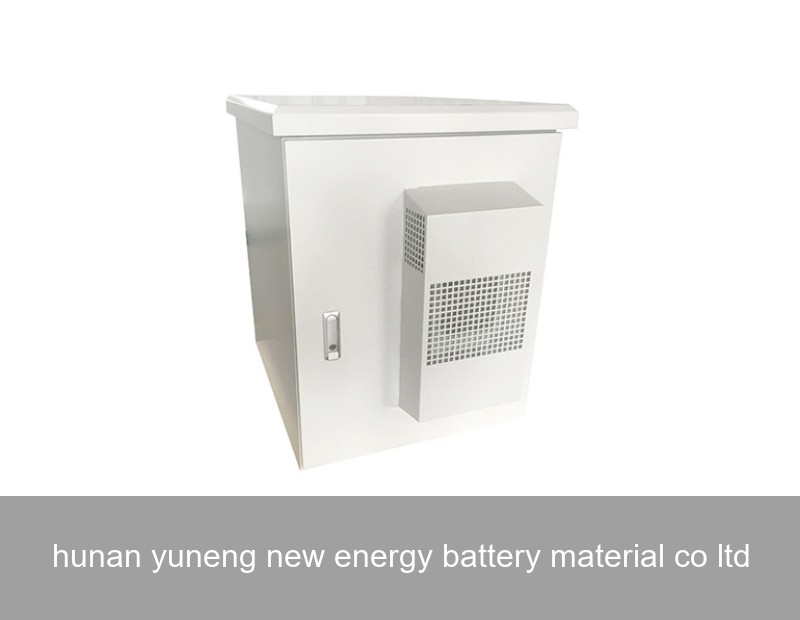
If you follow the renewable energy space, you've heard the mantra: "solar and wind are intermittent; we need storage." It's true. But the conversation often jumps straight to massive battery farms without asking a crucial question: what are these batteries actually made of, and who makes the materials that determine their safety, lifespan, and cost? This is where a quiet revolution is happening, led by specialized material science companies. One key player in this foundational layer of the energy transition is Hunan Yuneng New Energy Battery Material Co Ltd, a leading force in producing lithium iron phosphate (LFP) cathode materials.
Think of battery materials like the flour in a bakery. You can have the world's best oven (the battery management system) and a brilliant chef (the system integrator), but if your flour is inconsistent or low-quality, the final loaf—or in our case, the energy storage system—will be compromised. The performance of any battery, from your EV to a grid-scale storage unit, is fundamentally dictated by the quality and chemistry of its core materials.
Beyond Lithium-Ion: The Rise of LFP
For years, the energy storage world was dominated by lithium-ion batteries using nickel-manganese-cobalt (NMC) cathodes. They offered high energy density, perfect for electric vehicles needing long range. However, for stationary energy storage—where space is less critical than safety, longevity, and cost—a different chemistry has surged ahead: Lithium Iron Phosphate (LFP).
Why the shift? Let's break down the data:
- Safety: LFP batteries are thermally and chemically more stable, significantly reducing fire risk. The phosphate bonds are robust, making them less prone to thermal runaway.
- Cycle Life: A high-quality LFP battery can achieve 6,000 to 10,000 charge/discharge cycles before reaching 80% of its original capacity. That's nearly double or triple the lifecycle of many traditional NMC batteries.
- Cost: By eliminating expensive and volatile metals like cobalt and nickel, LFP chemistry benefits from lower and more stable raw material costs.
This is where companies like Hunan Yuneng New Energy Battery Material Co Ltd become pivotal. They are not assembling battery packs; they are producing the high-purity, consistent LFP cathode material that enables these advantages. Their expertise lies in sophisticated synthesis processes that ensure the crystalline structure of the LFP powder is optimal for long-term lithium-ion movement, which directly translates to the battery's performance and lifespan.
Key Players in the Global Supply Chain
The global push for decarbonization has created a complex, international supply chain for battery materials. For Western integrators and end-users, understanding this landscape is key to ensuring supply security and quality.
| Material/Component | Primary Producers/Region | Importance for System Integrators |
|---|---|---|
| LFP Cathode Powder | China (e.g., Hunan Yuneng, BYD), growing capacity in US/EU | Determines core safety, cycle life, and cost of the cell. |
| Battery Cells | Global (CATL, BYD, LG, Panasonic, etc.) | Manufacturers source cathode/anode materials to build standardized cells. |
| Battery Management System (BMS) | Specialized tech firms (e.g., in US, Germany, Israel) | The "brain" that manages charging, discharging, and health of the cells. |
| Full System Integration & Software | Companies like Highjoule (Global) | Combines cells, BMS, thermal management, and grid software into a reliable, warrantied solution. |
As a global system provider, Highjoule meticulously vets its cell suppliers, who in turn partner with leading material producers. This multi-tiered supply chain ensures that when we deliver a Highjoule Hive commercial storage system or a Highjoule Hub for industrial applications, the foundational chemistry—often sourced from leaders like Hunan Yuneng—is of the highest grade, giving our customers peace of mind for decades of operation.
From Material to System: Why the Source Matters
You might wonder, "If I'm buying a complete system, why should I care about a material supplier?" The answer lies in total cost of ownership (TCO) and risk mitigation. Inferior cathode material can lead to faster degradation, meaning your storage system's capacity will fade sooner than projected, jeopardizing your return on investment. It can also pose a greater safety hazard.
At Highjoule, our engineering philosophy starts with the fundamentals. By selecting cell partners who use premium LFP materials, we build systems that deliver on their promised 15-20 year lifespan. Our intelligent energy management software then optimizes every cycle to further extend that life. This vertical awareness—from material science to grid interaction—is what differentiates a true technology provider from a simple pack assembler.

Image Source: Unsplash (Representative image of a modern C&I battery storage system)
Case Study: Grid Stability with Superior Materials
Let's look at a real-world application where material quality is non-negotiable: providing Frequency Regulation Services for a national grid.
The Challenge: A utility in Central Europe needed to install a 20 MW / 40 MWh battery storage facility to provide fast-frequency response (FFR). The grid operator's requirements were extreme: the system had to respond to signals in under a second and be capable of hundreds of partial charge/discharge cycles per day. This brutal cycling regime would destroy a battery with poor cycle life.
The Solution: The project developer selected Highjoule's utility-scale Highjoule Matrix platform. A key factor in the decision was the proven cycle life of the LFP cells used, which trace their performance back to high-stability cathode materials. The system was commissioned in 2022.
The Data & Outcome: In its first 18 months of operation:
- The facility has executed over 250,000 grid response cycles.
- Capacity degradation has tracked at less than 2%, well below the projected curve, confirming the longevity of the underlying cell chemistry.
- It has helped stabilize the grid during several major intermittent generation events, preventing potential blackouts.
This case underscores that for high-duty-cycle applications, the investment in quality materials, integrated into a robust system like Highjoule's, pays dividends in reliability and sustained revenue generation.
The Future of Energy Storage is Built on Quality
The innovation race isn't slowing down. Companies like Hunan Yuneng New Energy Battery Material Co Ltd are continuously researching improvements, such as doping LFP with other elements to enhance its conductivity or developing novel manufacturing techniques for better consistency. The next frontier, solid-state batteries, will also rely on a new generation of material scientists.
For businesses and communities in Europe and the US looking to invest in energy storage, the lesson is clear: look beyond the spec sheet. Ask your provider about the cell chemistry, the expected degradation rate, and the provenance of the core materials. A reputable integrator will have these answers and will partner with suppliers who prioritize long-term performance over short-term cost savings.
Image Source: Unsplash (Representative image of battery module assembly)
As we move towards a grid powered by renewables, the unsung heroes of this transition are the companies providing the stable, safe, and durable materials that make large-scale storage possible. When you choose a partner like Highjoule, you're leveraging nearly two decades of expertise in selecting these foundational technologies and wrapping them in smart, grid-responsive software to maximize your investment.
What specific performance guarantee does your energy storage provider offer on cycle life and capacity retention after 10 years, and how is that linked to their choice in cell chemistry?
 Inquiry
 Online Chat