


Base Inverters: How Much Should You Really Budget for Your Energy System's Heart?
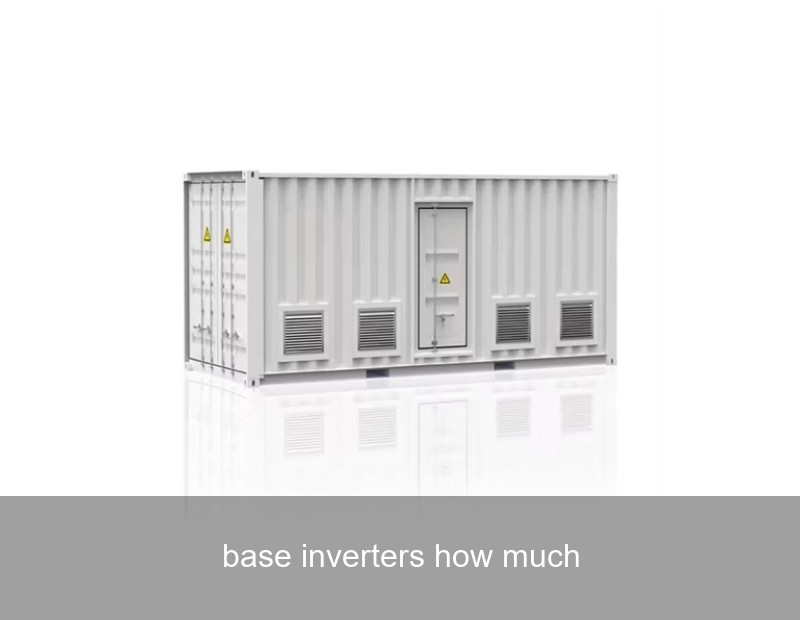
If you're exploring solar or a battery storage system, you've likely encountered a pivotal component: the inverter. Often called the "brain" or the "heart" of the system, it's responsible for converting direct current (DC) from your panels or batteries into the alternating current (AC) that powers your home or business. But when you ask, "base inverters how much?" you're quickly met with a wide range of prices. A simple online search might show figures from $1,000 to over $5,000. This variance isn't random; it's a signal that you're not just buying a piece of hardware—you're investing in the efficiency, reliability, and intelligence of your entire energy setup.
The initial sticker price is just the tip of the iceberg. To make an informed decision, you need to understand what goes into that cost, the long-term value it delivers, and how it integrates with other components. As a global leader in advanced energy storage since 2005, Highjoule has seen countless projects where the right inverter choice made the difference between a good investment and a great one.
The Real Cost Breakdown: More Than Just the Box
Thinking of an inverter as a standalone purchase is the first common pitfall. In reality, the "base inverter" cost is part of a broader system investment. Let's dissect what you're actually paying for.
- The Hardware Itself: This includes the power rating (e.g., 5kW, 10kW), the type (string, microinverter, hybrid), brand reputation, and built-in features like advanced cooling or monitoring ports.
- Essential "Balance of System" (BOS): You'll need disconnects, wiring, conduit, mounting hardware, and a critical component—the AC combiner panel or distribution board. This panel safely brings together the output from multiple inverters or strings, a non-negotiable for safety and code compliance.
- Professional Installation & Labor: This is significant. A certified electrician must handle the electrical wiring, grid interconnection, and ensuring the system meets all local utility and building codes (like NEC in the US or IEC standards in Europe). Complex installations or older electrical panels can increase labor costs.
- Soft Costs: Permits, interconnection fees, engineering reviews, and system design. These administrative and regulatory steps are crucial for a lawful, safe, and insurable installation.

Image: Professional installation is a key part of the total system cost. Source: Unsplash
Key Factors Influencing Your Base Inverter Investment
Several technical and market factors directly answer the "base inverters how much" question:
| Factor | Impact on Cost | Consideration |
|---|---|---|
| Power Rating & Type | High-power (10kW+) or hybrid inverters cost more than basic string inverters. | Oversizing slightly for future expansion can be wise. Hybrid inverters are essential for battery-ready or storage systems. |
| Grid Services & Software | Inverters with grid-forming capabilities or advanced grid support functions command a premium. | Critical for microgrids or areas with unstable grids. Enables potential revenue from grid services. |
| Efficiency & Warranty | A 97% vs. 99% efficient inverter may have a 10-20% price difference. Longer warranties (10+ years) add cost. | Higher efficiency means more harvested energy over 25+ years, offsetting the higher upfront cost. |
| Market & Region | Supply chain dynamics, import tariffs (e.g., in the US), and local installer markups vary widely. | Getting multiple quotes from certified installers in your region is the best way to gauge local market rates. |
From Quote to Kilowatt: A Real-World Case Study
Let's ground this in reality. A medium-sized commercial bakery in Bavaria, Germany, wanted to reduce its grid dependence and peak demand charges. Their initial quote from a standard provider included a 50kW string inverter system at a base hardware cost of approximately €11,000.
However, after a detailed audit by Highjoule's technical team, we proposed an integrated solution centered on our Highjoule HPS Series Hybrid Power Station. This system combines a high-efficiency, multi-MPPT inverter with integrated battery management and our proprietary energy management system (EMS). The inverter/controller core of this solution had a higher base cost. But look at the outcome after 18 months:
- System Cost (Fully Installed): €85,000 (vs. €65,000 for the basic solar-only system).
- Increased Self-Consumption: From an estimated 35% with solar alone to over 85% with smart battery dispatch.
- Peak Shaving: Reduced monthly peak demand charges by 40%, saving an average of €1,200 monthly.
- ROI Timeline: The additional investment paid for itself in under 4 years due to the combined savings, not 7+ years for the simpler system.
The "base inverter" here was part of a smarter, more capable system. The higher initial investment unlocked operational savings the cheaper option simply couldn't achieve. You can explore similar data on commercial solar+storage payback from the National Renewable Energy Laboratory (NREL).
The Highjoule Approach: Maximizing Value Beyond the Price Tag
At Highjoule, we don't just sell inverters; we provide intelligent, integrated power solutions. When you partner with us, the question "base inverters how much" evolves into "what is the optimal system for my energy goals and budget?"
Our product ecosystem is designed for this holistic value:
- HPS Series Hybrid Power Stations: These are the cornerstone for commercial and industrial applications. They feature scalable, high-power inverters with built-in grid-forming technology, allowing you to create a stable microgrid. The system intelligently manages solar, battery, and grid power, prioritizing economics and resilience.
- Residential Energy Hub: For homeowners, our all-in-one unit combines a hybrid inverter, battery charger, and advanced monitoring in one sleek cabinet. It's designed for easy installation and seamless integration with existing solar or as a turnkey solar-plus-storage solution.
- Harmoni EMS Platform: This is where the magic happens. Our cloud-based Energy Management System uses AI and weather data to predict consumption and optimize every kilowatt-hour. It decides when to store, when to consume, and when to sell back to the grid, maximizing your financial return automatically.

Image: Intelligent monitoring and control unlock true system value. Source: Unsplash
This integrated approach means you get a system where the inverter, batteries, and software are designed to work in perfect harmony from day one, avoiding compatibility issues and suboptimal performance that can plague piecemeal systems. For more on the importance of grid-forming inverters for resilience, see this report from the International Renewable Energy Agency (IRENA).
Making Your Decision: The Right Questions to Ask
So, when evaluating costs, move beyond the simple price per watt for the inverter. Engage your installer or solution provider with these targeted questions:
- Does this quote include all balance-of-system components, like the AC combiner panel and necessary disconnects?
- Is the inverter hybrid-ready or battery-integrated if I might add storage later? (Future-proofing can save thousands).
- What is the projected system efficiency over 10 years, and how does the inverter's warranty support that?
- Can you show me modeled data on self-consumption and savings with a basic vs. an intelligent system like Highjoule's?
The energy landscape is shifting from simple generation to intelligent management. Your inverter is the key enabler of that intelligence.
Given your specific energy consumption patterns and future goals, what would be the one feature in an energy system that would provide you the most peace of mind—is it absolute resilience during an outage, maximizing financial return, or simplifying the management of your power?
 Inquiry
 Online Chat