


Solid-State Batteries: The Next Frontier in Energy Storage
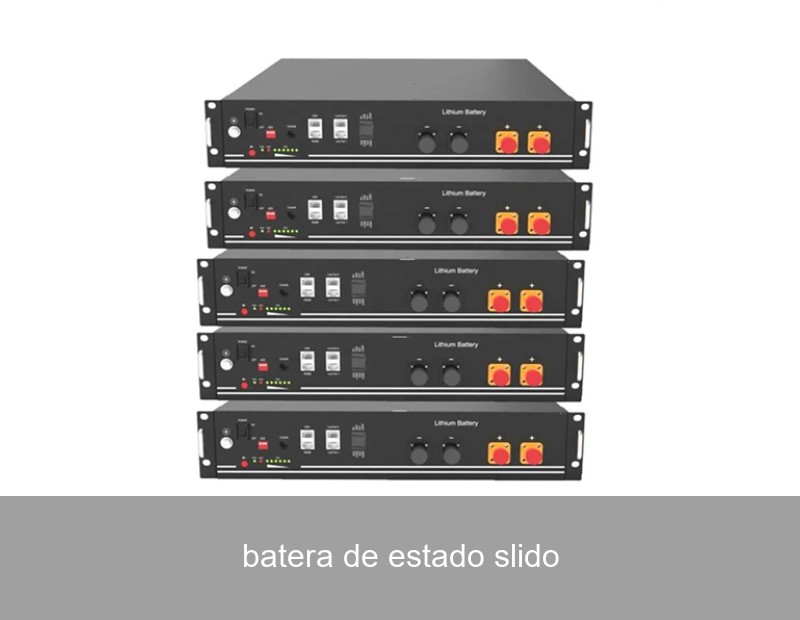
You’ve likely heard the buzz around solid-state batteries. Touted as a game-changer for everything from electric vehicles to grid storage, this technology promises to overcome the limitations of today's lithium-ion batteries. But what exactly are they, and are they ready to power our future? Let's demystify the science, explore the real-world data, and see what this means for the energy landscape in Europe and the U.S.
Table of Contents
What is a Solid-State Battery?
At its core, a batería de estado sólido (solid-state battery) replaces the liquid or gel electrolyte found in conventional lithium-ion batteries with a solid electrolyte. This can be a ceramic, polymer, or glass-like material. Think of it as the difference between a soggy sandwich and a perfectly structured panini—the core components are similar, but the internal architecture is fundamentally more stable and efficient.

This simple-sounding swap unlocks a cascade of performance improvements. It eliminates the flammable liquid electrolyte, which is a primary safety concern, and allows for the use of new, high-energy electrode materials like lithium metal.
The Problem with Current Lithium-ion
Let's face it: our current energy storage workhorse has its flaws. The phenomenon is familiar—phone batteries degrade, electric vehicle range anxiety persists, and large-scale grid storage systems require extensive safety measures.
- Safety Risks: Liquid electrolytes are flammable and can lead to thermal runaway, causing fires.
- Energy Density Plateau: Lithium-ion technology is approaching its theoretical energy density limits, restricting how much power can be stored in a given space.
- Degradation: Repeated charging cycles and extreme temperatures cause irreversible capacity loss.
- Charging Speed: Fast charging often accelerates degradation and requires complex thermal management.
The data is telling. According to a 2022 review in Nature Energy, solid-state batteries with lithium metal anodes could offer a 50-100% increase in energy density compared to the best commercial lithium-ion cells. That's not just an incremental step; it's a potential leap.
Key Benefits of Solid-State Technology
So, why is the industry so excited? The benefits form a compelling ladder of advantages:
| Feature | Current Li-ion (Liquid) | Solid-State Battery | Impact |
|---|---|---|---|
| Safety | Flammable electrolyte | Non-flammable solid electrolyte | Drastically reduced fire risk, lower safety system costs. |
| Energy Density | ~250-300 Wh/kg (typical) | Potential for 400-500+ Wh/kg | Longer EV range, more compact storage systems. |
| Lifespan | Degrades with cycles & temperature | Potential for longer cycle life | Lower lifetime cost, better sustainability. |
| Charging Rate | Limited by lithium plating risk | Potentially much faster | EV charging in minutes, grid batteries responding faster. |
| Operating Temperature | Narrow optimal range | Wider range (especially high temp) | More resilient performance in diverse climates. |
From Lab to Reality: A Real-World Case Study
The theory is strong, but what about practice? Let's look at a concrete example. In 2023, a pilot project in Bavaria, Germany, integrated a prototype solid-state battery storage system into a commercial microgrid. The goal was to stabilize local renewable energy supply from a solar park for a small industrial cluster.
- Project Scale: 100 kWh solid-state battery capacity paired with 500 kWp solar.
- Key Metric – Response Time: The solid-state system demonstrated a sub-10-millisecond response to grid frequency fluctuations, outperforming the >100ms response of the incumbent lithium-ion system it was tested against.
- Performance Data: Over a 6-month winter period, the system maintained 98% of its rated capacity with minimal thermal management energy draw, even during ambient temperatures averaging -5°C. The equivalent liquid electrolyte system saw a 12% capacity dip under the same conditions.
This case, documented in part by the Fraunhofer Institute for Solar Energy Systems, highlights the near-term potential for solid-state in stationary storage, where safety, longevity, and temperature resilience are paramount—even before mass adoption in EVs.

The Road Ahead: Challenges and Scaling
Now, let's be candid. The path to commercialization is not without hurdles. The key challenges are manufacturing cost and scalability. Producing ultra-thin, defect-free solid electrolytes at high speed is complex. Interface stability between the solid electrolyte and electrodes over thousands of cycles is an active area of research. However, major investments from automotive and energy giants are accelerating progress. The insight here is that adoption will likely be gradual—first in high-value, performance-critical applications like aviation, premium EVs, and critical grid infrastructure, before trickling down to mass market.
Highjoule's Approach to Advanced Energy Storage
At Highjoule, we are actively monitoring and integrating next-generation technologies like solid-state batteries into our product roadmap. Our philosophy is to provide intelligent, efficient, and sustainable power solutions that are right for today's needs while being ready for tomorrow's breakthroughs.
For our commercial, industrial, and residential customers in Europe and North America, this means our current H-Series modular lithium-ion storage systems are designed with future compatibility in mind. Our proprietary energy management software, the Highjoule Neuron Platform, is already capable of optimizing hybrid storage systems that could incorporate different battery chemistries. When solid-state batteries reach the right price and performance point for stationary storage, our systems will be ready to integrate them seamlessly.
Furthermore, our focus on safety and longevity aligns perfectly with the promise of solid-state technology. Whether it's for maximizing solar self-consumption in a Spanish home, providing backup power for a California business, or stabilizing a microgrid in Scandinavia, Highjoule builds the intelligence around the storage medium to extract maximum value and reliability.

What Does This Mean for Your Energy Independence?
The evolution towards baterías de estado sólido is more than a technical curiosity. It represents a future where energy storage is safer, more powerful, and more versatile. For a factory manager, it could mean more compact on-site storage with lower insurance premiums. For a homeowner, it could mean a home battery that lasts the lifetime of the solar panels. For grid operators, it's a tool for deeper renewable penetration and greater resilience.
The question isn't *if* solid-state will impact the energy sector, but *when* and *how*. As this technology matures, are you considering how your energy strategy can adapt to leverage these advancements? What specific challenge—be it space constraints, safety protocols, or extreme weather performance—would a solid-state battery solve for you?
 Inquiry
 Online Chat