


Understanding the 50kW Solar System Cost in Poland: A Comprehensive Guide for Businesses
If you're a business owner or facility manager in Poland, you've likely noticed the rising electricity prices and the growing conversation about energy independence. A popular solution emerging in this landscape is the commercial-scale 50kW solar photovoltaic (PV) system. But what exactly goes into the 50kW solar system cost in Poland? It's more than just panels on a roof; it's an investment in predictable energy costs, operational sustainability, and long-term resilience. This article will break down the costs, components, and crucial considerations, helping you navigate Poland's dynamic renewable energy market and make an informed decision for your enterprise.
Table of Contents
- The 50kW Solar System Cost Breakdown in Poland
- Key Factors Influencing Your Final Investment
- The Financial Case: ROI and Incentives
- A Real-World Case Study from Poland
- Beyond Panels: The Critical Role of Energy Storage
- How Highjoule Empowers Polish Businesses with Smart Storage
- Your Next Step Towards Energy Independence
The 50kW Solar System Cost Breakdown in Poland
As of 2024, the total installed cost for a commercial 50kW solar system in Poland typically ranges between PLN 200,000 to PLN 300,000 (approximately €45,000 to €68,000). This wide range isn't arbitrary; it reflects the quality of components, system complexity, and specific site conditions. Let's dissect the primary cost components:
- Solar Panels (PV Modules): 30-40% of the total cost. High-efficiency monocrystalline panels command a premium but yield more power in limited space.
- Inverters: 15-20% of the cost. These are the brains of the system, converting DC solar power to usable AC power. For a 50kW system, you might use several string inverters or a single central inverter.
- Mounting Structure & Electrical Components: 15-25% of the cost. This includes racks, cables, connectors, and safety devices. A flat roof installation often costs more than a pitched roof due to the need for ballasted systems.
- Installation & Labor: 10-20% of the cost. Professional design, permitting, and skilled installation are non-negotiable for system performance and longevity.
- Grid Connection Fees & Administrative Costs: A variable cost for the necessary approvals and technical conditions from your local Distribution System Operator (DSO).
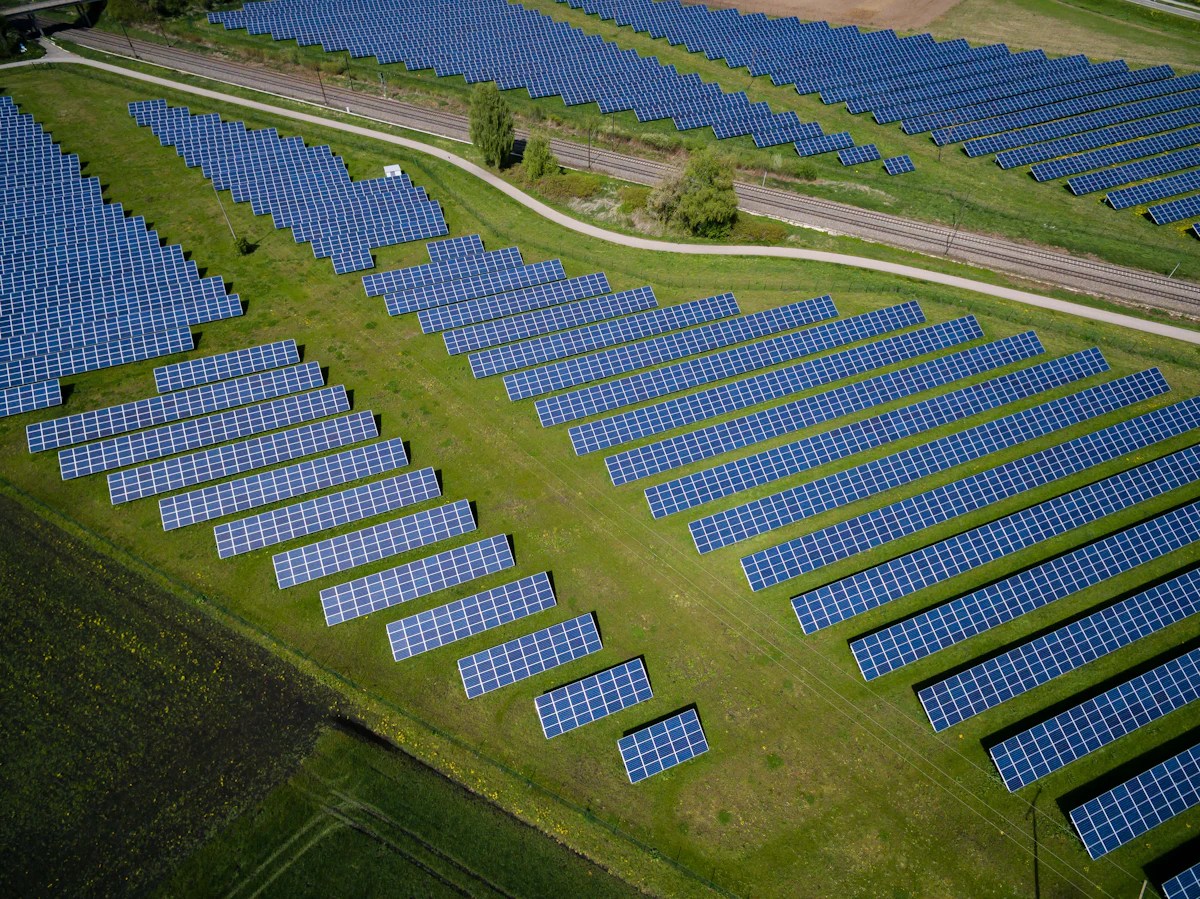
Image Source: Unsplash - Professional commercial solar installation.
Key Factors Influencing Your Final Investment
Understanding the variables is key to accurate budgeting. The final 50kW solar system cost in Poland is heavily influenced by:
- Panel Technology and Brand: Tier-1 manufacturers offer better warranties and proven reliability.
- Roof Type and Condition: Reinforcement or preparation work adds cost.
- System Design Complexity: Shading, multiple roof planes, or distance to the grid connection point can increase material and labor needs.
- Choice of Installer: Experienced, certified installers may charge more but deliver superior system design, warranties, and after-sales service.
The Financial Case: ROI and Incentives in Poland
The initial outlay is just one side of the equation. The true value lies in the return on investment (ROI). A well-designed 50kW system in Poland can produce roughly 45,000 to 55,000 kWh annually, depending on location and orientation. With commercial electricity prices fluctuating, this self-generated power directly offsets your highest-cost consumption.
Poland supports solar investments through mechanisms like:
- Net-Metering/Billing: For systems up to 50kW, you can send surplus energy to the grid and withdraw 80% or 70% (depending on the DSO) later, effectively using the grid as a "battery."
- Tax Relief: Businesses can deduct the VAT paid on the solar installation and benefit from accelerated depreciation.
- EU Funding Programs: Grants and low-interest loans are periodically available through regional and national programs aligned with the EU's REPowerEU plan.
These incentives can significantly improve payback periods, which often fall between 5 to 8 years for commercial systems. Given a system lifespan of 25+ years, this represents decades of low-cost, green energy.
A Real-World Case Study: Manufacturing Facility in Łódź
Let's look at a concrete example. A medium-sized textile manufacturing facility in Łódź faced an average monthly electricity bill of PLN 15,000. In early 2023, they installed a 50.4kWp solar system on their factory roof.
| Component | Details |
|---|---|
| System Size | 50.4 kWp (140 monocrystalline panels) |
| Total Installed Cost | PLN 235,000 (before incentives) |
| Estimated Annual Production | 48,500 kWh |
| First-Year Savings | PLN 42,000 (covering ~28% of their pre-installation bill) |
| Key Driver | Reducing operational costs and hedging against future price spikes, not just green goals. |
The facility manager noted that pairing the system with intelligent energy management allowed them to shift some high-load processes to sunny hours, maximizing self-consumption and savings. This case highlights that the 50kW solar system cost in Poland is a strategic operational expenditure, not just a capital cost.
Beyond Panels: The Critical Role of Energy Storage
Here's a pivotal insight many businesses overlook: a solar-only system leaves significant value untapped. Under net-billing, you "sell" excess power at wholesale prices but "buy it back" at full retail price. The real optimization comes from maximizing self-consumption – using the solar energy you produce, the moment you produce it.
This is where Battery Energy Storage Systems (BESS) become a game-changer. By adding storage, you can:
- Store daytime solar surplus for use in the evening or at night, increasing self-consumption from ~30-40% to 70% or more.
- Provide backup power during grid outages, ensuring business continuity.
- Participate in future grid services or dynamic tariff arbitrage as the Polish energy market evolves.
While it increases the initial investment, storage fundamentally changes the economics and resilience profile of your solar investment, a fact well-understood in more mature markets like Germany or California, as noted by the International Energy Agency (IEA).
How Highjoule Empowers Polish Businesses with Smart Storage
This is precisely where Highjoule, with nearly two decades of global experience, steps in. We see solar and storage not as separate products, but as an integrated, intelligent energy ecosystem. For a Polish business investing in a 50kW solar system, adding a Highjoule storage solution like our H-Stack Commercial Series transforms the installation.
Our modular lithium-ion battery systems are designed to seamlessly integrate with new or existing solar arrays. The true intelligence lies in our Energy Management System (EMS), which learns your facility's consumption patterns, weather forecasts, and tariff structures. It autonomously decides the optimal time to store solar energy, use it directly, or draw from the grid, ensuring every kilowatt-hour delivers maximum financial value.

Image Source: Unsplash - Interior of a modern battery storage system.
For a Polish agro-processing plant, for instance, we configured a 50kW solar system with a 100kWh Highjoule battery. The system prioritizes powering refrigeration units during the day with solar, charges the batteries for nighttime cooling, and seamlessly switches during brief grid disruptions, preventing spoilage. This level of control turns energy from a cost center into a managed, strategic asset.
Your Next Step Towards Energy Independence
So, when you evaluate the 50kW solar system cost in Poland, ask yourself: Am I budgeting for just a price tag, or for a comprehensive energy solution? The most forward-thinking businesses are those planning their solar investment with storage in mind from day one, ensuring their infrastructure is ready for the next phase of energy intelligence.
What specific energy-intensive process in your operation would benefit most from having a guaranteed, low-cost power supply, independent of grid volatility?
 Inquiry
 Online Chat