


Lithium Batteries in Puerto Rico: Powering Resilience and a Renewable Future
Imagine a powerful storm knocks out the grid. For most, it's an inconvenience. For communities in Puerto Rico, it's a recurring reality that threatens safety, business, and daily life. In this landscape, lithium batteries in Puerto Rico have evolved from a niche technology to a cornerstone of energy security and independence. This shift isn't just about backup power; it's about fundamentally reimagining how the island generates, stores, and uses electricity. As a product technology expert at Highjoule, I've seen firsthand how advanced lithium-ion battery storage systems are not merely products but enablers of profound transformation.
Table of Contents
- The Challenge: Beyond Outages, Towards Energy Independence
- Why Lithium? The Technical Edge for Island Grids
- Case Study: A Hospital's Journey to Uninterruptible Power
- The Perfect Pair: Solar + Storage for True Energy Sovereignty
- Highjoule's Role: Delivering Intelligent Storage Solutions
- The Future is Modular and Smart
The Challenge: Beyond Outages, Towards Energy Independence
Puerto Rico's energy challenges are well-documented. An aging grid, vulnerability to extreme weather, and high electricity costs create a perfect storm. The traditional response—diesel generators—is costly, polluting, and dependent on volatile fuel supply chains. The new response centers on resilience: the ability to withstand, adapt, and recover. Here, lithium batteries in Puerto Rico are the critical component, acting as a buffer between unreliable infrastructure and the constant energy needs of homes, businesses, and critical facilities.
Data from the U.S. Energy Information Administration (EIA) highlights the urgency. Even years after major hurricanes, grid instability persists. This isn't just about major disasters; it's about the frequent fluctuations and "mini-outages" that disrupt productivity and compromise sensitive equipment. The quest for lithium batteries in Puerto Rico is, therefore, a quest for stability and predictability.
Why Lithium? The Technical Edge for Island Grids
Not all batteries are created equal. For Puerto Rico's unique needs, lithium-ion technology offers distinct advantages that older battery chemistries like lead-acid simply cannot match.
- Higher Energy Density: More storage capacity in a smaller footprint, crucial where space can be limited.
- Longer Lifespan & Cycle Life: Modern lithium batteries can withstand thousands of deep charge/discharge cycles, offering a decade or more of reliable service, which translates to a lower total cost of ownership.
- Faster Response & Ramp Rates: They can dispatch power in milliseconds, providing seamless backup during a grid failure and offering grid-stabilizing services like frequency regulation.
- Deep Discharge Capability: They can safely use a much larger percentage of their stored energy without damage, providing more usable power per installation.
Think of it this way: a lithium battery system is like a high-performance athlete—responsive, durable, and efficient—while older technologies are more like a weekend jogger. In a crisis, you need the athlete.

Image: A modern, modular lithium-ion battery storage system. Source: Unsplash (Representative Image)
Case Study: A Hospital's Journey to Uninterruptible Power
Let's ground this in reality. A regional hospital in Mayagüez faced a critical problem. Their existing diesel generators took vital seconds to kick in during an outage, risking life-support equipment and data systems. They needed a bridge—a zero-second transition to backup power.
The Solution: A 500 kWh lithium-ion battery storage system, coupled with a sophisticated energy management system, was installed. This system is constantly connected to the grid, silently charging. The moment an outage is detected, it injects power instantaneously, covering the critical load until the generators seamlessly come online. It also performs "peak shaving," reducing the hospital's demand charges from the utility by discharging the batteries during periods of highest, most expensive grid usage.
| Metric | Before Installation | After Installation |
|---|---|---|
| Backup Power Gap | 8-12 seconds | 0 seconds (instantaneous) |
| Estimated Monthly Demand Charge Savings | N/A | ~18-22% |
| Annual Diesel Fuel Savings (from reduced generator runtime) | N/A | ~6,500 gallons |
| CO2 Emissions Avoided | N/A | ~65 metric tons/year |
This case isn't unique; it's a blueprint. It shows that lithium batteries in Puerto Rico deliver a triple bottom line: enhanced resilience, significant operational savings, and a reduced carbon footprint. You can read more about the importance of energy resilience for critical infrastructure from the U.S. Department of Energy.
The Perfect Pair: Solar + Storage for True Energy Sovereignty
Solar panels are abundant in Puerto Rico, but their output is intermittent. Pairing them with lithium batteries creates a synergistic "solar-plus-storage" system. The solar array generates clean, free energy during the day, charging the batteries. The batteries then provide power at night, during outages, or during peak rate periods. This combination moves beyond backup to create true microgrids—self-sufficient energy islands that can operate independently from the main grid.
For a residential community or a commercial facility, this means locking in lower energy costs, maximizing the use of self-generated solar power, and achieving a level of energy independence that was once unthinkable. The growth of this market is supported by policies and funding, including federal programs aimed at strengthening Puerto Rico's grid. The National Renewable Energy Laboratory (NREL) has extensively modeled the benefits of distributed solar and storage for the island.
Highjoule's Role: Delivering Intelligent Storage Solutions
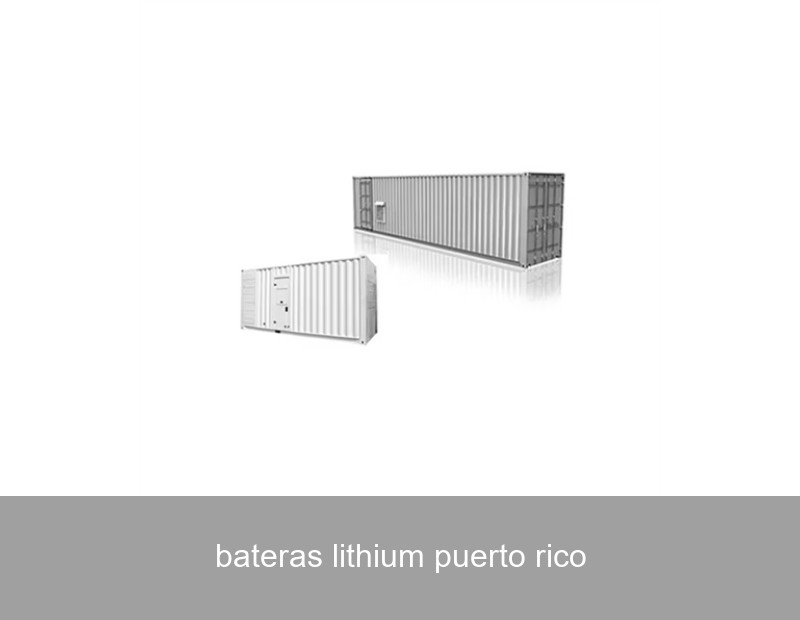
At Highjoule, we don't just ship battery units; we deliver tailored energy security. For the Puerto Rican market, our approach focuses on systems built for high-cyclicity, humidity resistance, and intelligent control. Our H-Series Commercial & Industrial (C&I) ESS is a prime example. It's a containerized or skid-mounted solution that integrates high-density lithium-ion cells with our proprietary Energy Management System (EMS).
What sets it apart is its brain—the EMS. It doesn't just react to outages; it proactively optimizes energy flow based on weather forecasts, utility rate schedules, and on-site generation. For a manufacturer in Puerto Rico, this could mean automatically scheduling battery discharge during the utility's expensive peak period (e.g., 2 PM - 6 PM), while ensuring a 100% state of charge is reserved for storm-related outages. We provide the hardware, the software, and the ongoing performance monitoring to ensure our systems deliver on their promise for years.

Image: Rooftop solar paired with ground-mounted battery storage. Source: Unsplash (Representative Image)
The Future is Modular and Smart
The future of lithium batteries in Puerto Rico lies in modular, scalable, and grid-interactive systems. Imagine community-scale microgrids where clusters of homes and businesses share storage resources, or virtual power plants (VPPs) where thousands of distributed battery systems are aggregated to provide grid services. This creates a more decentralized, robust, and democratic energy network.
Highjoule is at the forefront of this with our Microgrid Controller Platform, which can orchestrate a mix of solar, storage, and even existing generators into a single, resilient entity. This technology is key for municipalities, industrial parks, or university campuses seeking to take full control of their energy destiny.
Your Energy Resilience Questions
The conversation around energy in Puerto Rico is moving from "if" the power goes out to "how prepared are we when it does." The technology to build a resilient, clean, and cost-effective energy foundation is here today. What does the first step look like for your business or community? Is it a resilience audit, a financial analysis of solar-plus-storage, or designing a microgrid that can operate independently? The path to energy sovereignty starts with a single question.
 Inquiry
 Online Chat