


The Modern Power Hub: Unlocking the Potential of the Hybrid Energy Storage Cabinet with 48V Battery
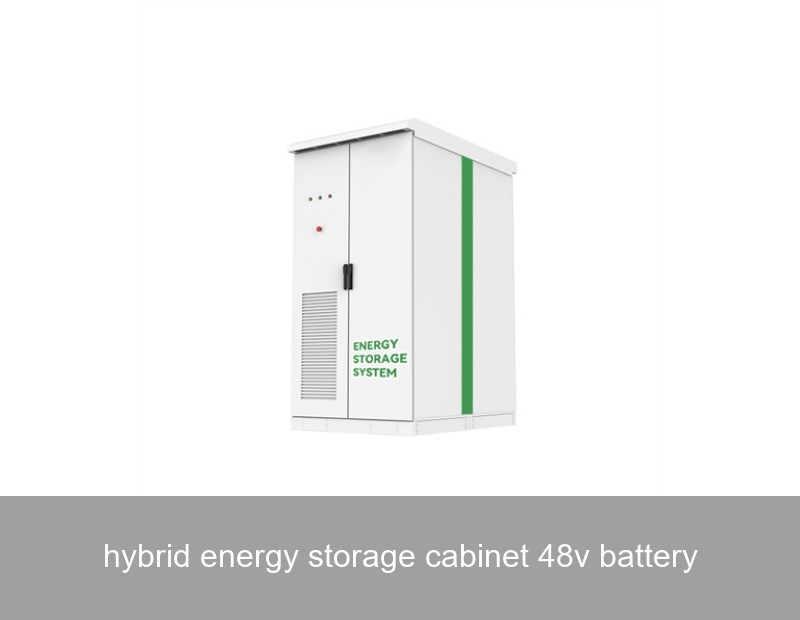
Imagine your business or home consistently powered, your energy bills predictable, and your carbon footprint shrinking—all while the grid outside becomes less reliable. This isn't a distant dream; it's the reality enabled by a sophisticated piece of technology: the hybrid energy storage cabinet with a 48V battery system. For facility managers, homeowners with solar panels, and microgrid operators, this integrated solution is becoming the cornerstone of modern energy independence. But what exactly makes this combination so powerful? Let's dive into how this technology works, why the 48V architecture is a sweet spot, and how it's transforming energy management from a reactive chore into a strategic asset.
Table of Contents
- The Phenomenon: Why Energy Storage is No Longer Optional
- The 48V Difference: Safety, Efficiency, and Scalability
- The Hybrid Cabinet Explained: More Than Just a Battery Box
- A Real-World Case: Stability for a German Manufacturing SME
- The Highjoule Approach: Intelligent Integration
- The Future Energy Landscape with Hybrid Storage
The Phenomenon: Why Energy Storage is No Longer Optional
Across Europe and the United States, two parallel trends are colliding: the explosive growth of renewable energy and increasing concerns over grid stability. In 2023, Europe saw a record 56% of its electricity generated from renewables (Ember, European Electricity Review 2024). Meanwhile, the U.S. Energy Information Administration (EIA) reports a rising frequency of grid disturbance events. This creates a paradox. Solar panels produce abundant, clean energy—but only when the sun shines. This intermittency can strain the grid and lead to wasted energy. The solution? Storing surplus energy for when it's needed most. This is the core function of an energy storage system, and the hybrid energy storage cabinet represents its most advanced, user-friendly form.
The 48V Difference: Safety, Efficiency, and Scalability
You might wonder why 48V is so frequently mentioned alongside battery cabinets. Voltage isn't just a number; it's a critical design choice balancing power, safety, and cost.
- Safety First: Systems operating below 60V are generally classified as Low Voltage Directive (LVD) compliant in Europe and are considered much safer for installation and maintenance, reducing risks of dangerous arc flashes compared to higher-voltage systems.
- Optimal Efficiency: 48V systems strike a perfect balance. They minimize energy losses that occur in very low-voltage systems (like 12V or 24V) over longer cable runs, while avoiding the complex safety gear and conversion losses of high-voltage (>400V) systems.
- Modular Scalability: A 48V architecture is inherently modular. You can start with a single cabinet and easily add more battery racks or cabinets in parallel to increase your energy capacity (kWh) without overhauling the entire system's power electronics.

Image: A modular 48V battery system allows for safe and scalable expansion. (Source: Unsplash, representative image)
The Hybrid Cabinet Explained: More Than Just a Battery Box
So, what makes it "hybrid"? A standard battery cabinet is a container for batteries. A hybrid energy storage cabinet is an all-in-one power hub. It intelligently integrates multiple components behind a single, sleek interface:
| Component | Function | Benefit |
|---|---|---|
| 48V Battery Bank | Stores electrical energy (typically using LiFePO4 chemistry). | Provides high-density, long-cycle-life storage. |
| Battery Management System (BMS) | Monitors cell voltage, temperature, and state of charge. | Ensures safety, longevity, and optimal performance of the battery. |
| Hybrid Inverter/Charger | Converts DC from solar/battery to AC for loads, and AC from grid to DC for charging. | Manages multiple power sources (solar, grid, battery) seamlessly. |
| Energy Management System (EMS) | The "brain" that controls energy flow based on algorithms and user settings. | Automates decisions to maximize self-consumption or reduce cost. |
| Safety & Grid Interface | Includes breakers, fuses, and grid-synchronization hardware. | Ensures safe operation and compliance with local grid codes. |
This integration eliminates the need to piece together components from different vendors, ensuring compatibility, simplifying installation, and providing a single point of control and warranty.
Highjoule's Intelligent Integration: The HPS Series Hybrid Cabinet
At Highjoule, with nearly two decades of experience, we've engineered our HPS Series Hybrid Power Cabinet to embody this all-in-one philosophy. Our cabinet is built around a robust, UL9540-certified 48V LiFePO4 battery module, known for its exceptional safety and 10,000+ cycle life. What sets the HPS Series apart is its proprietary Adaptive Core™ EMS. This system doesn't just react; it learns your energy patterns and local weather forecasts. For instance, if a cloudy afternoon is predicted after a sunny morning, it might conserve more battery reserve than usual, purchasing a small amount of grid power at midday rates to avoid expensive evening peak charges. This level of predictive intelligence transforms the cabinet from a storage unit into a proactive financial and operational asset.
A Real-World Case: Stability for a German Manufacturing SME
Let's look at a concrete example from Bavaria, Germany. A mid-sized automotive parts manufacturer faced two challenges: volatile energy prices and occasional micro-dips in grid voltage that disrupted sensitive CNC machinery, causing costly production halts. Their existing 100kW rooftop solar array often fed excess energy back to the grid at low feed-in tariffs.
The Solution: They installed a Highjoule HPS-100 hybrid energy storage cabinet, featuring a 200kWh 48V battery bank. The system was configured for peak shaving and backup power.
The Data-Driven Outcome (after 12 months):
- Energy Cost Reduction: By drawing from the battery during peak price hours (4 PM - 9 PM), they reduced their grid energy consumption during those periods by over 90%.
- Self-Consumption Increase: Solar self-consumption rose from 35% to 78%, drastically reducing wasted solar generation.
- Operational Resilience: The system's sub-20ms transfer switch provided seamless backup power during four brief grid disturbances, preventing an estimated €45,000 in production losses.
- ROI: Projected payback period is under 5 years, factoring in energy savings, avoided loss, and German subsidy programs for commercial storage.
This case illustrates the multi-faceted value proposition: it's not just about savings, but also about revenue protection and operational continuity.
Image: A hybrid storage cabinet like Highjoule's HPS Series provides clean, integrated power management. (Source: Highjoule project portfolio, representative image)
The Future Energy Landscape with Hybrid Storage
Looking ahead, the role of the hybrid energy storage cabinet with 48V battery will only expand. With the rise of electric vehicles and heat pumps, electrical loads are increasing. These cabinets will act as buffers, allowing homes and businesses to charge EVs overnight using cheap, stored solar energy. Furthermore, advanced systems can participate in grid services—like frequency regulation—where the grid operator pays for the ability to draw on or feed small amounts of power from distributed batteries to stabilize the network. This turns your storage system into a potential revenue stream.
Is Your Energy Strategy Ready for the Next Decade?
The transition to a resilient, low-carbon energy system is underway. The question is no longer if energy storage will be a part of it, but how and when. A well-designed hybrid storage system is the linchpin that unlocks the full value of your solar investment, protects you from grid volatility, and puts you in control of your energy destiny. What would a 30% reduction in your annual energy spend and immunity from power disruptions mean for your business or home?
 Inquiry
 Online Chat