


Finding Truly Baterías Solares Baratas: A Guide to Smart Solar Battery Investment
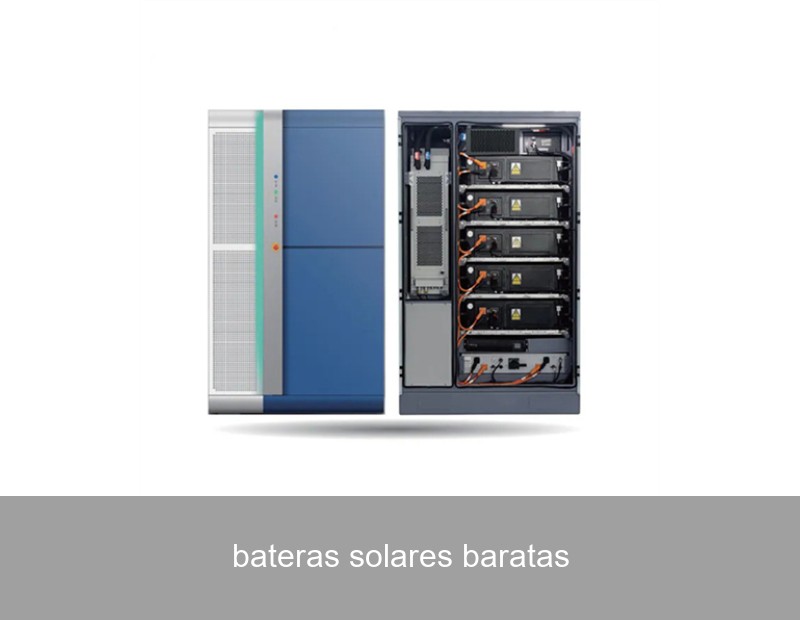
So, you're searching for baterías solares baratas—affordable solar batteries. It's a smart move. With energy prices soaring, the promise of energy independence is more appealing than ever. But here's the catch: the cheapest upfront option can often become the most expensive long-term mistake. True value in solar storage isn't just about the price tag; it's about performance, longevity, and the intelligence of the system. This article will guide you through what to look for, using real data and examples, to ensure your investment in "cheap" solar batteries is genuinely cost-effective.
Table of Contents
- The Price Paradox: Why Cheap Can Be Costly
- Key Metrics Beyond the Price Tag
- A Real-World Case: The German Bakery's Lesson
- Highjoule's Approach: Smart Storage, Sustainable Value
- Questions to Ask Before You Buy
The Price Paradox: Why Cheap Can Be Costly
The initial allure of a low-cost solar battery is undeniable. However, the solar energy storage market is nuanced. A battery's true cost is measured over its entire lifespan, not just at purchase. Consider two critical factors: cycle life and depth of discharge (DoD). A cheaper battery might be rated for 3,000 cycles at 80% DoD, while a slightly more expensive one offers 6,000 cycles at 90% DoD. Over 10 years, the second battery effectively stores and delivers nearly twice the energy for your home or business, cutting your cost per kilowatt-hour (kWh) stored in half.
Furthermore, efficiency matters. If a battery system is only 85% efficient compared to one that is 95% efficient, you're losing 10% of the solar energy you worked hard to capture—energy you then have to buy back from the grid. This loss adds up significantly on your annual energy bill. As the U.S. Department of Energy notes, understanding round-trip efficiency is crucial for calculating real savings.

Image source: Unsplash. Professional battery cells are the heart of a reliable system.
Key Metrics Beyond the Price Tag
When evaluating baterías solares baratas, shift your focus from just "price" to "value metrics." Here’s what to scrutinize:
- Usable Capacity & DoD: How many kWh can you actually use? A 10kWh battery with 90% DoD gives you 9kWh of usable energy.
- Warranty & Cycle Life: Look for a warranty that guarantees both a period (e.g., 10 years) and a minimum remaining capacity (e.g., 70% at end of warranty).
- Round-Trip Efficiency: Aim for systems above 94%. This metric is often where cost-cutting happens.
- Integrated Energy Management: Can the system intelligently decide when to charge, discharge, or hold based on weather forecasts and tariff rates? This software intelligence can unlock 20-30% more value from the same hardware.
| Feature | "Budget" Battery Focus | Value-Optimized Battery Focus |
|---|---|---|
| Primary Metric | Lowest Purchase Price | Lowest Cost per kWh over Lifetime (LCOES) |
| Warranty | 5 years, or vague terms | 10+ years, with guaranteed end-of-life capacity |
| System Intelligence | Basic charge/discharge | AI-driven, grid-responsive energy management |
| Total 15-Year Value | Lower upfront, potentially high replacement/opportunity cost | Higher upfront, significantly lower total cost of ownership |
A Real-World Case: The German Bakery's Lesson
Let's look at a concrete example from Bavaria, Germany. A family-run bakery installed a 20kW solar array in 2018 and opted for the lowest-priced battery storage system to manage evening energy use. By 2022, they noticed a severe drop in backup time during their critical pre-dawn baking hours. Diagnostics showed the battery had degraded to 60% of its original capacity, well below its 5-year warranty claim, but the warranty process was complex and slow.
They replaced it with a robust, intelligently managed system. The new installation, featuring Highjoule's H-IQ Core commercial storage system, not only provided a guaranteed 10-year performance but also used predictive software to align battery charging with solar production and dynamic electricity prices. The result? Their energy self-consumption rate rose from 55% to over 88%, and they are now projected to save an additional €4,200 annually compared to their old setup, paying back the new investment in under 7 years. The initial "cheap" battery ultimately cost them more in premature replacement and lost savings.
Highjoule's Approach: Smart Storage, Sustainable Value
At Highjoule, we believe affordable energy storage should not compromise on intelligence or durability. Our philosophy is to deliver sustainable value—systems that perform reliably for decades, maximizing your return on investment.
For residential clients in Europe and the U.S., our H-IQ Home series is built with lithium iron phosphate (LFP) chemistry, renowned for its safety and long cycle life. Paired with our proprietary energy management platform, it learns your consumption patterns and automatically optimizes for self-sufficiency or cost savings, depending on your goals. You're not just buying a battery; you're buying a smart energy partner.
For commercial and industrial applications, like the bakery in our case study, the H-IQ Core system provides scalable, containerized solutions. These systems handle peak shaving, demand charge reduction, and can even provide grid services, creating new revenue streams. Our focus is on total cost of ownership, ensuring that the system you install today remains a valuable asset through its entire lifecycle.

Image source: Unsplash. A complete home solar and storage installation for energy independence.
Questions to Ask Before You Buy
To cut through the marketing and find genuinely cost-effective baterías solares baratas, arm yourself with these questions for any provider:
- "Can you show me the projected levelized cost of energy storage (LCOES) for this system over 15 years, not just the purchase price?"
- "What is the end-of-warranty capacity guarantee in writing? (e.g., 70% after 10 years)"
- "How does the system's software adapt to changing weather and electricity tariffs to save me more money over time?"
- "Is the battery chemistry (like LFP) suited for daily, deep-cycle use in my climate?" (The scientific consensus on LFP highlights its stability).
Given the rapid evolution of energy markets and the growing importance of grid-scale storage principles trickling down to homes, what specific energy goal—total blackout protection, maximum bill reduction, or carbon footprint minimization—is most critical for your decision right now?
 Inquiry
 Online Chat