


Choosing the Right Bateria para Placa Solar 150W: A Complete Guide to Solar Battery Storage
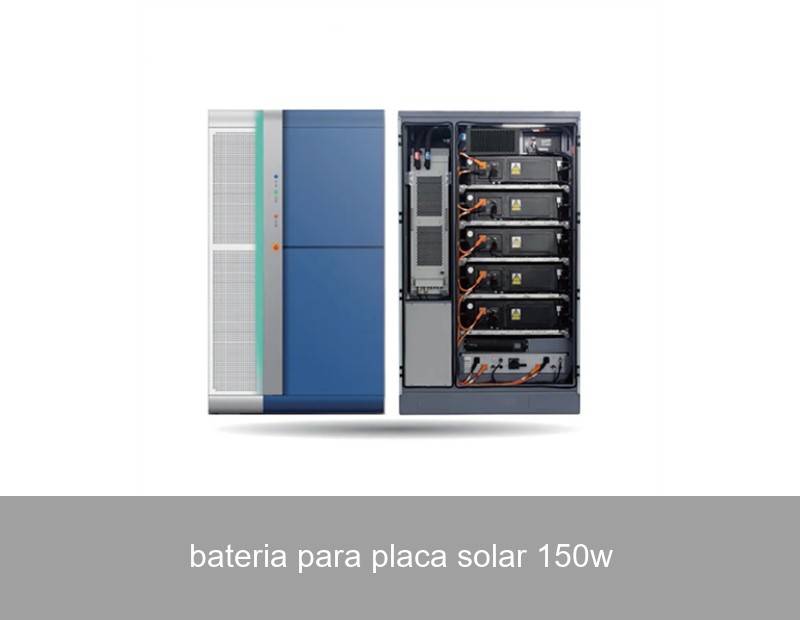
So, you've invested in a 150W solar panel. That's a fantastic first step towards energy independence! Whether it's powering a garden shed, a remote cabin, a boat, or acting as a backup for essential home devices, that small panel is a powerhouse of potential. But here's a question we hear all the time at Highjoule: "My panel generates energy when the sun shines, but what about at night or on cloudy days?" This is where the crucial partner to your solar setup comes in: the right bateria para placa solar 150w (battery for a 150w solar panel). Choosing the correct battery isn't just an add-on; it's the key to unlocking true, 24/7 solar freedom. Let's demystify the process and ensure your renewable energy system works efficiently for years to come.
Table of Contents
- The Core Challenge: Why Your 150W Panel Needs a Battery
- Battery Essentials: Understanding Capacity, Chemistry, and Cycles
- Matching the Perfect Battery to Your 150W Solar Panel
- Real-World Case: Off-Grid Lighting in a Mediterranean Agri-Business
- Thinking Beyond the Battery: The System Matters
- Highjoule Solutions for Reliable, Intelligent Storage
The Core Challenge: Why Your 150W Panel Needs a Battery
Imagine your 150W solar panel as a meticulous, sun-powered water tap. On a bright day, it fills a bucket (your battery) steadily. Without the bucket, the water simply flows away unused. The battery is that bucket—it stores the electrical "water" so you can use it whenever you need it, not just when the sun is generous. For a typical 150W panel in, say, Southern Europe or California, you might generate around 600-750 Watt-hours (Wh) of energy on a good day. That's enough to run a 10W LED light for 60 hours, charge a laptop several times, or keep a Wi-Fi router and security camera online. But without storage, this energy is lost after sunset.

Image Source: Unsplash (Representative image of a small solar setup)
Battery Essentials: Understanding Capacity, Chemistry, and Cycles
Not all batteries are created equal. Selecting a bateria para placa solar 150w involves three key concepts:
- Capacity (Ah & Wh): This is the size of your "bucket." It's often listed in Amp-hours (Ah) at a specific voltage (e.g., 12V). For simplicity, think in Watt-hours (Wh): Voltage (V) x Amp-hours (Ah) = Watt-hours (Wh). A 100Ah, 12V battery has 1200Wh of capacity. If your 150W panel produces 600Wh daily, this battery could theoretically store about two days of production.
- Depth of Discharge (DoD): Lead-acid batteries shouldn't be drained completely. A 50% DoD means you should only use half of its rated capacity for long life. Lithium-ion (LiFePO4) batteries often allow 80-90% DoD, meaning you can use much more of their stated capacity.
- Cycle Life: This is the number of charge/discharge cycles a battery can handle before its capacity significantly degrades. A quality lithium battery might offer 3000+ cycles, while a standard lead-acid may only provide 500-1000.
| Battery Type | Typical DoD | Cycle Life (approx.) | Best For 150W Systems? |
|---|---|---|---|
| Flooded Lead-Acid | 50% | 500-1000 | Budget, infrequent use |
| AGM (Sealed Lead-Acid) | 70% | 500-800 | Low maintenance, moderate use |
| LiFePO4 (Lithium Iron Phosphate) | 80-90% | 3000-6000 | Long-term, daily use, high efficiency |
Matching the Perfect Battery to Your 150W Solar Panel
Here’s the practical part. To size your battery correctly, follow this logic ladder:
- Calculate Your Daily Load: List all devices you'll power and their daily watt-hour consumption (Device Wattage x Hours of Use). E.g., 10W light for 5 hours = 50Wh.
- Account for Autonomy: How many cloudy days do you want to cover? 2 days of autonomy is common.
- Factor in System Losses & DoD: Divide your total needed Wh by the battery's DoD, and add ~15% for system inefficiencies.
Example: Your total daily load is 300Wh. You want 2 days of autonomy (600Wh). You choose a LiFePO4 battery with 90% DoD. Calculation: 600Wh / 0.90 = ~667Wh. Add 15% for losses: ~767Wh. At 12V, you'd need a battery with about 64Ah (767Wh / 12V). A 70Ah or 100Ah LiFePO4 battery would be an excellent bateria para placa solar 150w for this scenario.
Real-World Case: Off-Grid Lighting in a Mediterranean Agri-Business
Let's look at a concrete example from a small vineyard in Andalusia, Spain. The owner needed reliable, off-grid lighting for a tool shed and perimeter security without the cost of trenching grid power. The setup:
- 1 x 150W monocrystalline solar panel.
- 1 x 12V 100Ah LiFePO4 battery (like Highjoule's Residential Lite Series).
- A 20A PWM charge controller.
- 4 x 10W LED motion-sensor lights (running 6 hours/night total).
Data & Outcome: The daily load was 240Wh (4 lights x 10W x 6h). The 150W panel, averaging 4.5 peak sun hours, generated ~675Wh daily, easily replenishing the battery. Even after three consecutive cloudy days (with 30% generation), the battery state of charge remained above 40%. The LiFePO4 battery's high DoD and cycle life ensured the system worked flawlessly for over two years with zero maintenance, enhancing security and operational flexibility. This case highlights that the right bateria para placa solar isn't just about capacity; it's about reliability and total cost of ownership.

Image Source: Unsplash (Representative image of solar in agriculture)
Thinking Beyond the Battery: The System Matters
A battery is the heart, but it needs other components to function healthily. For your 150W system, you'll need:
- Charge Controller: This protects your battery from overcharging. For a 150W/12V system (about 12.5A), a 20A MPPT controller is ideal as it can extract 10-30% more power from your panel compared to PWM, especially in cooler climates like Germany or the UK.
- Inverter: If you need to power standard AC appliances (like a TV or power tools), you'll need an inverter to convert the battery's DC power to AC. A pure sine wave inverter is recommended for sensitive electronics.
- Monitoring: How do you know your battery's state of charge? Simple voltage meters are okay, but smart battery monitors with Bluetooth (like those integrated into Highjoule systems) provide precise data and peace of mind.
Highjoule Solutions for Reliable, Intelligent Storage
At Highjoule, we understand that a bateria para placa solar 150w is part of a broader energy ecosystem. While our large-scale commercial systems are renowned, our expertise directly benefits smaller-scale applications. For robust, long-lasting performance, our Residential Lite Series of LiFePO4 batteries offers the perfect blend of capacity, safety, and intelligence. They feature built-in Battery Management Systems (BMS) for protection, exceptional cycle life, and compact designs. Furthermore, our Smart Hybrid Inverters can seamlessly integrate a small solar array, battery storage, and the grid, allowing you to start with a 150W panel and easily expand your system in the future—a perfect solution for a weekend home in the US or a sustainable business in Europe.
We believe in providing not just hardware, but educated guidance and technologically advanced solutions that grow with your needs. Why settle for a basic battery when you can have an intelligent storage node that optimizes every watt your panel produces?
Ready to Transform Your Solar Energy?
Your 150W solar panel holds immense potential. The right battery storage system is what unleashes it, turning intermittent sunlight into dependable power. We've covered the essentials: from capacity calculations to real-world proof. Now, consider this: What's the first appliance or device you'd want to keep running with your own stored solar energy, and how would that change your daily routine or business operations? Explore the possibilities with a system designed for longevity and intelligence.
 Inquiry
 Online Chat