


Understanding Lithium Battery 230Ah Price: A Smart Buyer's Guide to Value
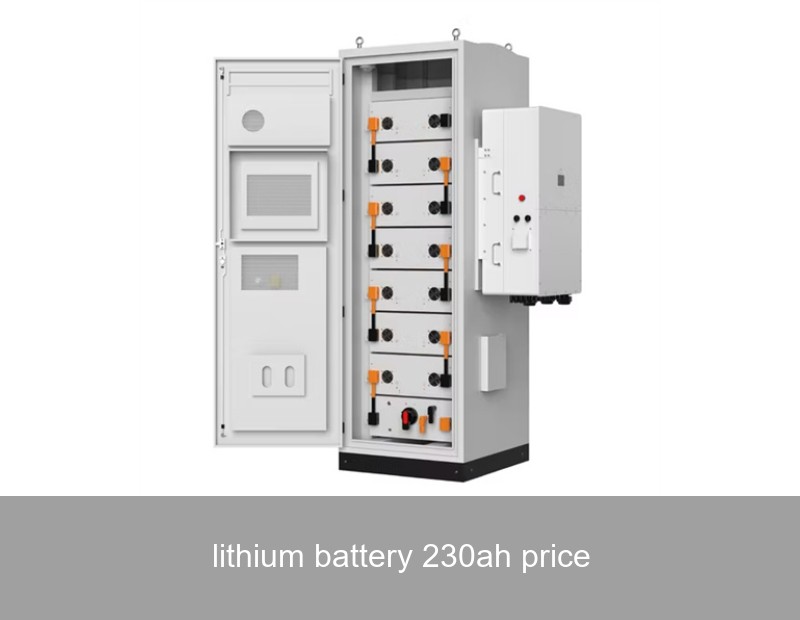
If you're searching for a "lithium battery 230Ah price," you're likely at a crucial decision point in planning a solar storage system, upgrading an off-grid setup, or powering a commercial application. That specific number—230 ampere-hours (Ah)—represents a substantial capacity, a workhorse for serious energy needs. But here's the reality you've probably already discovered: the prices you find online vary wildly. One website quotes $800, another $2,500. This isn't just about finding the cheapest option; it's about understanding what lies behind that cost. As a product technology expert at Highjoule, I see this confusion daily. The initial lithium battery 230Ah price is just the entry ticket. The true cost is measured over thousands of cycles, in reliability, safety, and the intelligence that unlocks your energy independence.
Beyond the Price Tag: What You're Really Buying
Think of a battery not as a commodity, but as a long-term energy partner. A low upfront lithium battery 230Ah price might be appealing, but if it degrades rapidly or lacks proper safety controls, it becomes a liability. Lithium iron phosphate (LiFePO4) chemistry has become the dominant standard for stationary storage, and for good reason: superior thermal stability, longevity, and a deeper usable capacity compared to older lithium-ion variants. When you invest in a quality 230Ah LiFePO4 battery, you're purchasing over 6,000 cycles of reliable service—that's often 15+ years of daily use. You're buying peace of mind through built-in Battery Management Systems (BMS) that prevent overcharge, over-discharge, and overheating. At Highjoule, our H-Store Pro series exemplifies this philosophy. We don't just sell cells in a case; we integrate an adaptive BMS with cell-level monitoring, UL-certified safety features, and software that allows the battery to communicate seamlessly with inverters and energy management systems, ensuring you extract every bit of value from your investment.

Image Source: Unsplash (Professional installation of a residential energy storage system)
Decoding the "230Ah" and Its Impact on Price
Let's get technical for a moment. The "230Ah" rating tells you the battery's capacity at a specific voltage (typically 12.8V for a single module). To understand its true energy potential, you calculate watt-hours (Wh): Voltage (V) x Amp-hours (Ah) = Watt-hours (Wh). So, a 12.8V 230Ah battery stores about 2,944Wh, or roughly 2.94 kWh. This is a key figure for sizing your system. Why does this affect price? Because it directly correlates to the raw materials—the amount of lithium, phosphate, and other components inside. However, two batteries with identical 230Ah ratings can have drastically different performance and prices based on:
- Cycle Life: A battery rated for 3,500 cycles is fundamentally different from one rated for 6,000+ cycles. The latter uses higher-grade cells and more robust engineering.
- Depth of Discharge (DoD): A quality LiFePO4 battery allows a 95-100% DoD. Cheaper alternatives may only safely deliver 80% of their stated capacity, meaning your effective "usable" 230Ah is actually only 184Ah.
- Continuous Discharge Rate: Can it deliver a high current for heavy loads? This is measured in amps (e.g., 100A continuous) and impacts the battery's power capability, not just its energy storage.
The 5 Key Factors Driving Lithium Battery 230Ah Price
To navigate the market, you must look past the headline Ah number. Here’s what truly shapes the lithium battery 230Ah price:
| Factor | Impact on Price & Performance | What to Look For |
|---|---|---|
| 1. Cell Quality & Origin | High-grade, name-brand LiFePO4 cells (e.g., from Tier 1 manufacturers) cost more but ensure consistency, longevity, and safety. | Transparency from the supplier on cell origin and warranty that backs the cycle life claim. |
| 2. BMS Intelligence | A sophisticated BMS is the brain of the battery. It balances cells, manages temperature, and enables communication (CAN, RS485). | Look for features like cell-level voltage monitoring, self-diagnostics, and software updateability. |
| 3. Thermal Management | Passive cooling vs. active thermal management systems. Proper design extends life, especially in extreme climates. | Check operating temperature ranges. A wider range (e.g., -20°C to 60°C) indicates better engineering. |
| 4. Certifications & Safety | UL 9540, IEC 62619, UN38.3 certifications are non-negotiable for insurance and installation permits, particularly in the US and EU. | Always request certification documents. Highjoule products are designed and tested to meet the strictest global standards. |
| 5. System Integration | A battery that is "plug-and-play" with major inverter brands saves on installation time, complexity, and future headaches. | Verify compatibility with your existing or planned inverter (e.g., SolarEdge, SMA, Victron, etc.). |
A Real-World Case: ROI in Action
Let's move from theory to practice. A mid-sized dairy farm in Bavaria, Germany, faced rising grid costs and sought to maximize its 100kW rooftop solar array. They were quoted a very low lithium battery 230Ah price for a generic rack system. However, after consulting with Highjoule's engineering team, they opted for our H-Store Industrial modular rack solution. The key differentiator wasn't just the per-module price, but the system's ability to provide precise peak shaving and participate in the local grid's balancing mechanism.
- Data Point: The installed system comprised 40 units of 230Ah modules, creating a 120kWh storage bank.
- Result: In the first year, the farm reduced its grid energy draw by 68% and generated €4,200 in revenue from grid services. The intelligent management system autonomously shifted between self-consumption, grid charging during low-tariff periods, and feeding power back during high-price windows.
- Insight: The higher initial investment was recouped in under 5 years. The cheaper alternative would have lacked the communication protocols and cycle durability to execute this strategy, locking the farm into a passive storage role. You can read more about the importance of grid services for renewables integration in this report by the International Energy Agency (IEA).

Image Source: Unsplash (Solar installation on a farm)
Choosing the Right Partner for Your Energy Investment
This is where a provider like Highjoule adds immense value beyond the unit price. Since 2005, we've evolved from a component supplier to a full-system solutions provider. We understand that a battery is one part of an ecosystem. Our EnergyOS platform turns a static battery bank into an intelligent asset, allowing for remote monitoring, fleet management for multiple sites, and future-proof software upgrades. For a homeowner, this might mean optimizing for self-consumption. For a factory manager in Ohio, it means setting up automated demand charge reduction. The battery hardware—whether it's our residential H-Store Home or commercial H-Store Pro—is designed to be the perfect physical vessel for this intelligence.
So, what should your next step be when evaluating a lithium battery 230Ah price?
First, shift your question. Instead of "What is the price?", ask: "What is the total cost of ownership over 10 years?" and "What value-added services does this battery enable?" Request detailed spec sheets, warranty terms (look for a throughput warranty, not just years), and proof of certifications. Engage with suppliers who ask about your specific use case, your inverter, and your goals. For a deeper dive into battery longevity science, resources from institutions like The National Renewable Energy Laboratory (NREL) are invaluable.
The Future of Storage: Where Do We Go From Here?
The landscape of energy storage is dynamic. While the lithium battery 230Ah price per kWh continues to decrease gradually due to manufacturing scale, the next frontier is in software, grid integration, and circularity. How will your storage asset interact with vehicle-to-grid (V2G) technology? How can AI-driven forecasting further optimize your energy flows? At Highjoule, we're already piloting second-life applications for our batteries and developing even more sophisticated grid-response algorithms. The battery you buy today should be a platform for the opportunities of tomorrow.
Given that your energy needs and the grid's demands are unique, what specific challenge—be it unpredictable utility bills, backup power criticality, or a sustainability target—is driving you to consider a 230Ah battery solution today?
 Inquiry
 Online Chat