


How Much Suntank Battery Do You Really Need? A Homeowner's Guide
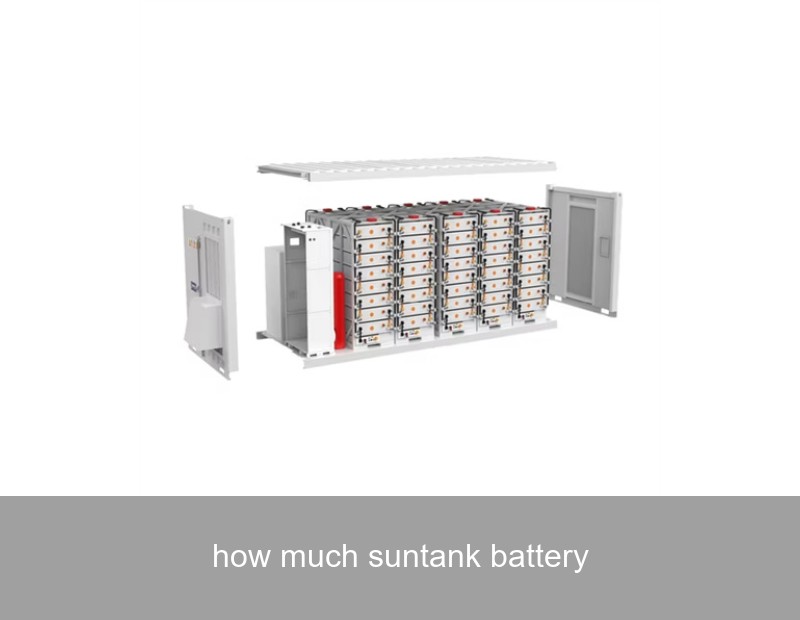
You've made the smart decision to invest in solar panels. You love watching your meter spin backwards on sunny days. But then evening comes, the sun sets, and you're back to buying power from the grid. This common experience leads to the most frequent question we hear from savvy homeowners: how much "suntank" battery storage do I need to truly harness my solar power? The term "suntank" – a clever blend of 'sun' and 'tank' – perfectly captures the idea of storing solar energy for later use. Let's move beyond the guesswork and build a clear understanding of what size battery system will unlock your energy freedom.
What is a "Suntank" Battery? Decoding the Jargon
Think of your solar panels as a water source and your home's electrical needs as a drain. A "suntank" battery, more formally known as a solar battery storage system, is the reservoir in between. It captures the excess solar energy you produce during the day that you don't immediately use, instead of sending it all back to the grid. This stored energy is then ready for you to tap into at night, during cloudy weather, or even during a power outage. The core question of "how much" revolves around the capacity of this reservoir, measured in kilowatt-hours (kWh).
Key Factors That Determine Your Battery Size
Finding your perfect battery size isn't a one-size-fits-all answer. It's a personal equation built on three key pillars.
1. Your Home's Energy Consumption
This is your starting point. You need to understand your daily energy diet. Look at your utility bill to find your average daily kWh usage. A typical U.S. home uses about 30 kWh per day, but this can vary widely. A detailed audit is best:
- Base Load: Refrigerator, WiFi, lights (roughly 10-15 kWh/day).
- Peak Load: Air conditioning, electric vehicle charging, oven (can add 20+ kWh in short bursts).
The goal of your battery is to cover a portion of this load when your solar isn't producing.
2. Your Solar Array Size
Your battery can only store what your solar panels produce. A 5 kW solar system on a sunny day will generate far more excess energy than a 3 kW system. Your installer can provide data on your expected daily surplus – the "fuel" for your battery. Oversizing a battery for a small solar array means it may never fully charge. Undersizing it for a large array means you'll waste precious solar energy back to the grid.
3. Your Backup Goals & Energy Independence
This is the most personal part of the equation. What are you trying to achieve?
- Basic Backup (Essential Loads): Keep the lights, fridge, and internet on for 4-8 hours during an outage. A smaller battery (10-15 kWh) may suffice.
- Whole-Home Resilience: Live normally through an extended outage, running A/C, heating, and all appliances. This typically requires a larger, scalable system (20+ kWh).
- Maximize Self-Consumption: Shift as much of your evening and nighttime load to solar as possible, minimizing grid purchases. This requires analyzing your specific nighttime usage patterns.
Putting It All Together: Real-World Sizing Examples
| Home Profile | Daily Use | Solar System | Primary Goal | Recommended Battery Range |
|---|---|---|---|---|
| Efficient 2-bed home | 20 kWh | 4 kW | Cover evening load, basic backup | 10 - 13 kWh |
| Average 4-bed family home | 30 kWh | 7 kW | Significant self-consumption, whole-home backup for key hours | 15 - 20 kWh |
| Large home with EV | 45+ kWh | 10+ kW | Energy independence, full backup, EV charging from solar | 25+ kWh (often modular) |
Beyond "How Much": The Critical Role of Battery Quality
Capacity (kWh) tells only half the story. The battery's power rating (kW) determines how many appliances you can run at once. A battery with 15 kWh capacity but a low power rating might not start your heat pump. Furthermore, round-trip efficiency (how much energy you get back vs. what you put in), depth of discharge, and lifespan (measured in cycles) are crucial. A cheap 15 kWh battery that degrades quickly is a worse investment than a robust 13 kWh system that will last for decades.

Image: A modern, wall-mounted home battery system. Source: Unsplash
The Highjoule Solution: Intelligent Storage for Real Life
At Highjoule, with nearly two decades of expertise, we understand that the right answer to "how much battery" isn't just about a number—it's about a smart, adaptive system. Our HES (Home Energy System) series is designed to grow with your needs. Starting with a core 10 kWh module, you can seamlessly expand capacity up to 30 kWh. More importantly, our integrated AI-powered Energy Director doesn't just store energy; it learns your household patterns, weather forecasts, and utility rate schedules to autonomously optimize when to charge, discharge, or hold.
This means our system maximizes your return on investment, whether you're on a time-of-use plan in California or seeking off-grid resilience in rural Europe. We focus on high-cycle life lithium iron phosphate (LFP) chemistry for safety and longevity, ensuring your "suntank" remains full and functional for the long haul.
Case Study: A Family in Bavaria
Let's look at real data. The Schmidt family near Munich, Germany, installed a 9 kW solar array on their roof. Their annual production was ~9,000 kWh, but their winter self-consumption was low. They wanted to increase year-round independence from rising grid costs.
- Challenge: High daytime export in summer, high evening import in winter.
- Solution: A Highjoule HES system configured with an initial 16 kWh capacity. The Energy Director was programmed to prioritize charging the battery before exporting, and to reserve a minimum charge for overnight base load.
- Result: In the first year, their grid electricity purchase decreased by 78%. The system automatically adapted to the low solar production in December, strategically using stored energy from sunnier autumn days. Their calculated payback period, with incentives, was under 7 years.
This case shows how the right-sized, intelligent system addresses both daily "how much" and seasonal variability.

Image: Rooftop solar panels, the primary source for your battery. Source: Unsplash
Your Next Step Towards Energy Independence
So, how much suntank battery do *you* need? The journey begins with understanding your unique energy fingerprint. We encourage you to gather your last 12 months of utility bills and note your top priorities: is it financial savings, backup power, or environmental impact?
What would a typical day look like for your home if you could design it to run primarily on the sun you captured yourself? Highjoule's expert partners across Europe and North America are ready to help you translate that vision into a precise, optimized storage solution. The perfect size is out there, waiting to be calculated for your home.
 Inquiry
 Online Chat