


Demystifying Lithium-Ion Battery Prices: Trends, Value, and Smart Investment
If you're exploring energy storage for your home, business, or community project, the term "baterias de iones de litio precio" (lithium-ion battery price) is likely at the forefront of your research. You've probably heard prices are falling, but the market reports can seem contradictory. One month, headlines scream about record lows; the next, about potential cost bumps. This volatility isn't just noise—it's the signature of a rapidly evolving, world-changing technology. As a leader in advanced energy storage systems, Highjoule is here to cut through the complexity. Let's unpack the real drivers behind lithium-ion battery costs, what "price" truly means for your project's return on investment, and how to make a decision that delivers value for decades.
Decoding the Drop: Why Are Lithium-Ion Battery Prices Falling?
The trend over the past decade has been remarkable. According to BloombergNEF, the volume-weighted average price for a lithium-ion battery pack fell from over $1,200 per kilowatt-hour (kWh) in 2010 to just $139/kWh in 2023 [Source: BloombergNEF]. This near 90% reduction is the primary engine behind the renewable energy revolution. But what's fueling this engine?
Scale & Manufacturing Innovation
It starts with sheer scale. Gigafactories around the world are producing battery cells at an unprecedented volume. This mass production, coupled with continuous process improvements like dry electrode coating, drives down unit costs through manufacturing efficiency—a classic example of Wright's Law or the learning curve in action.

Advanced, automated manufacturing is a key driver in reducing lithium-ion battery pack costs. (Image: ThisIsEngineering/Unsplash)
Chemistry & Material Competition
Not all lithium-ion batteries are the same. The dominant chemistry, Lithium Iron Phosphate (LFP), has gained massive market share, particularly in stationary storage. LFP batteries forego expensive cobalt and nickel, using more abundant iron and phosphate. This makes them cheaper, safer, and longer-lasting—a perfect fit for daily cycling in home and grid storage. The competition between LFP and NMC (Nickel Manganese Cobalt) chemistries continues to spur innovation and cost optimization.
A Maturing Global Supply Chain
From lithium mining in Australia to cathode production in Asia and cell assembly in Europe and the U.S., the supply chain is becoming more resilient and competitive. While geopolitical factors and raw material prices (like lithium carbonate) cause short-term fluctuations, the long-term investment in mining, refining, and recycling is creating a more stable foundation for continued cost decline.
Looking Beyond the Sticker Price: The True Cost of Ownership
Focusing solely on the $/kWh price of the battery cell or pack is like buying a car based only on the engine's cost. The real value—and total cost—is in the complete, operational system. Here’s what truly matters:
- Cycle Life & Degradation: A cheaper battery that loses 30% of its capacity in 5 years is far more expensive than a premium battery that retains 80% after 10 years. Always evaluate the warranty and guaranteed end-of-life capacity.
- System Efficiency: How much AC power you get out versus what you put in. High round-trip efficiency (often 95%+ in modern systems) means less wasted solar energy and more bill savings.
- Integration & Intelligence: Can the system seamlessly integrate with your existing solar panels and grid connection? Does its software intelligently dispatch energy based on time-of-use rates and weather forecasts? This intelligence turns a simple battery into a revenue-generating or cost-avoidance asset.
- Safety & Installation: A certified, UL9540-compliant system with integrated safety features and professional installation might have a higher upfront cost but mitigates immense long-term risk.
Case Study: Solar + Storage ROI in a Seville Industrial Facility
Let's ground this in a real European example. A medium-sized food processing plant in Seville, Spain, faced high energy costs, particularly during peak afternoon hours. Their existing 200 kW rooftop solar array often curtailed production at midday. In 2022, they installed a 250 kWh / 200 kW Highjoule CubeStack commercial battery storage system.
| Metric | Before Installation | After Installation |
|---|---|---|
| Grid Energy Consumption (Peak Hours) | ~4,500 kWh/month | ~800 kWh/month |
| Solar Self-Consumption Rate | 68% | 94% |
| Monthly Energy Cost Savings | Baseline | €2,850 |
| Estimated Payback Period | N/A | 6.2 years |
The system's intelligent controller charges the batteries with excess solar and strategically discharges during expensive peak tariff periods. The project wasn't chosen based on the lowest lithium-ion battery price per kWh, but on the highest projected lifetime value, safety credentials, and Highjoule's 10-year performance warranty. The payback period is well within the warranty period, guaranteeing a positive financial return.
Highjoule's Role: Delivering Value Beyond the Battery Cell
At Highjoule, we engineer systems where the whole is greater than the sum of its parts. Our approach to the baterias de iones de litio precio conversation is to provide transparent, long-term value:
- Highjoule HomeStack: Our residential system uses premium LFP cells, not for being the cheapest, but for offering the best cycle life and safety for homeowners. Coupled with our AI-driven energy management platform, it maximizes self-consumption and provides backup power, transforming the battery from a cost into a cornerstone of home resilience.
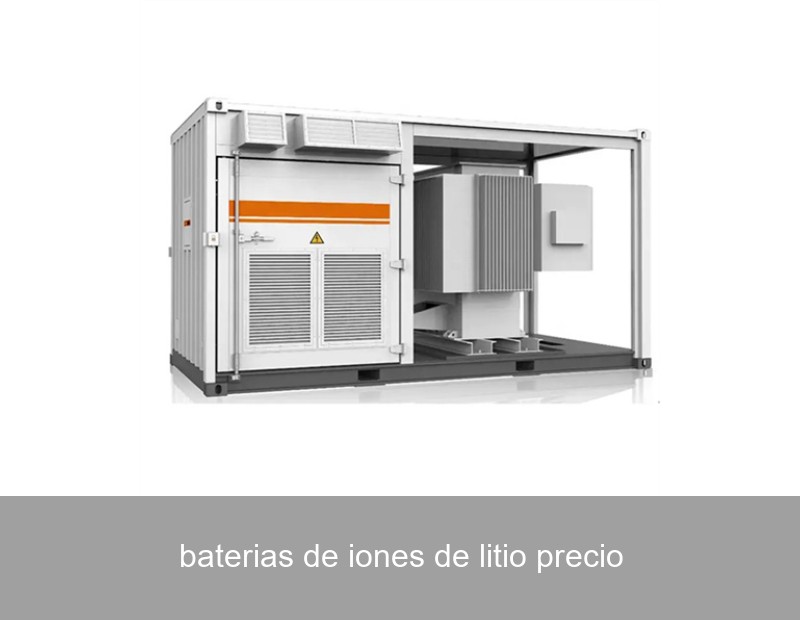
- Highjoule CubeStack (Commercial/Industrial): This modular, containerized solution scales to MWh levels. It includes our proprietary thermal management and cell-balancing technology, ensuring every cell in the system performs optimally for longer, directly improving the levelized cost of storage (LCOS).
- Full-Service Integration: We don't just sell hardware. Our team provides feasibility studies, system design, grid connection support, and ongoing monitoring. This ensures the lithium-ion battery price you see translates directly into the financial and operational outcome you expect.

Professional integration and monitoring are critical to realizing the full value of a battery storage investment. (Image: American Public Power Association/Unsplash)
Future Trends: What's Next for Lithium-Ion Battery Prices?
Experts predict a continued, though potentially slower, decline in prices as technologies mature. The U.S. Department of Energy's investments in domestic manufacturing and the EU's REPowerEU plan will influence regional pricing and availability. Meanwhile, next-generation technologies like sodium-ion and solid-state batteries are on the horizon, which could further diversify the market and apply competitive pressure. The key takeaway? Lithium-ion technology is here to stay as the workhorse of energy storage for the next 20+ years, and its cost-effectiveness is only improving.
Given that the true metric of success is the levelized cost of storage over your system's lifetime, what specific energy challenge—peak shaving, solar self-consumption, backup power, or grid services—would you like a system to solve first for your property?
 Inquiry
 Online Chat