


How Much Can a 2.1 kWh Battery Really Power? A Practical Guide
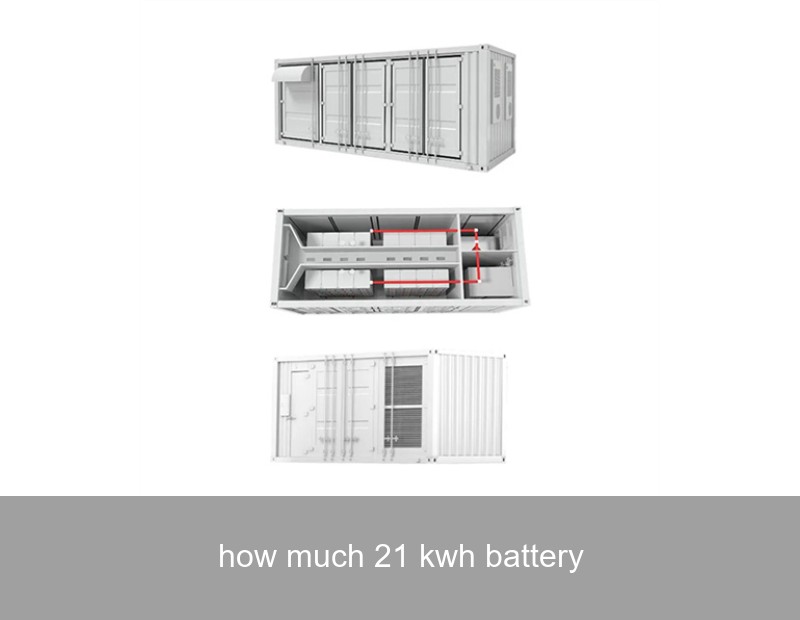
You're considering a home battery, and you've seen the specs: 2.1 kWh capacity. It sounds straightforward, but a crucial question lingers: how much can a 2.1 kWh battery actually power in my daily life? The answer isn't just a list of appliances. It's about understanding your energy patterns, the synergy with solar panels, and how smart technology maximizes every kilowatt-hour. As a global leader in intelligent energy storage since 2005, Highjoule is here to demystify this. We don't just provide batteries; we provide clarity and control over your personal energy ecosystem.
Table of Contents
Beyond the Number: What Does 2.1 kWh Mean?
Let's break it down. A kilowatt-hour (kWh) is a unit of energy. A 2.1 kWh battery can, in theory, deliver 2.1 kilowatts of power for one hour, 1 kilowatt for 2.1 hours, or 0.5 kilowatts for 4.2 hours. Think of it as the size of your energy "fuel tank."
However, two critical factors affect the usable amount:
- Depth of Discharge (DoD): Most lithium-ion batteries shouldn't be fully drained to preserve lifespan. A 90% DoD means you can safely use 1.89 kWh from your 2.1 kWh battery.
- System Efficiency: Energy is lost in conversion (DC to AC and vice versa). A system with 95% round-trip efficiency means you get back 95% of the energy you put in.
So, your practically usable energy might be closer to ~1.8 kWh. This is where Highjoule's technology shines. Our EcoCell Home 2.1 system uses advanced lithium iron phosphate (LFP) chemistry, allowing a consistent 100% Depth of Discharge without degradation, meaning you access every bit of that 2.1 kWh. Combined with our inverter's 97.5% peak efficiency, you get more real, usable power from the same nominal capacity.

Image Source: Unsplash - A modern home battery system like Highjoule's EcoCell provides compact, efficient energy storage.
The Real-World Power Test: What Can You Run?
So, with that ~1.8-2.1 kWh of usable energy, what does your day look like? It's perfect for managing essential loads and shifting time of use.
| Appliance (Average Power) | Estimated Runtime on 2.1 kWh | Practical Scenario |
|---|---|---|
| Refrigerator (150W) | ~14 hours | Keep food cold through the night and peak grid hours. |
| LED Lighting (Whole Home, 200W) | ~10.5 hours | Light your evening without drawing from the grid. |
| Wi-Fi Router & Modem (20W) | ~105 hours | Keep connectivity constant, regardless of outages. |
| Laptop (50W) | ~42 hours | Power your work-from-home setup. |
| 55" LED TV (100W) | ~21 hours | Enjoy a long movie marathon. |
| Microwave (1000W) | ~2 hours | Heat multiple meals. (Note: High power, short duration.) |
The key insight: A 2.1 kWh battery isn't designed to power your entire home indefinitely. It's a master of strategic backup and load shifting. You can keep critical circuits running during a short outage, or more importantly, use cheap solar energy or off-peak grid power to run your basics during expensive peak-rate periods (like 4 PM to 9 PM in many U.S. states). Highjoule's Smart Energy Hub automates this, learning your habits and utility rates to make these decisions for you, maximizing savings and convenience.
The Solar Multiplier Effect: 2.1 kWh Isn't a Static Limit
This is the most exciting part. Paired with solar panels, a 2.1 kWh battery transforms from a finite tank to a dynamic energy manager. During the day, your solar panels might produce 20 kWh. Without a battery, excess energy is sold to the grid at a low rate (feed-in tariff). With a battery, that excess charges your 2.1 kWh storage multiple times throughout the day.
- Morning: Battery charges from solar surplus.
- Afternoon: Battery discharges to run appliances, recharges again if surplus remains.
- Evening Peak: Fully charged battery powers your home, avoiding high grid prices.
Thus, your effective daily usage from the battery can be much higher than 2.1 kWh. It's constantly cycling, storing otherwise wasted solar energy for when you need it most. Highjoule systems are designed for this high-cycle life, with our LFP batteries rated for over 6,000 cycles while maintaining 80% capacity, ensuring this "multiplier effect" lasts for decades.
Case Study: Maximizing a 2.1 kWh Battery in a German Home
Let's look at real data from a project in Hamburg, Germany. The Schmidt family installed a 5 kWp solar array with a Highjoule EcoCell Home 2.1 battery in early 2023.
- Goal: Increase self-consumption of solar power and gain backup for frequent short grid interruptions.
- Configuration: One 2.1 kWh EcoCell unit, integrated with their existing solar inverter via Highjoule's universal energy management system.
- Results (6-month average):
- Solar Self-Consumption Rate Increased: From 35% to 68%.
- Grid Energy Import During Peak Hours: Reduced by 92%.
- Effective Daily Battery Throughput: Averaged 3.1 kWh, meaning the battery cycled 1.5 times per day on average, leveraging the solar multiplier effect.
"The 2.1 kWh unit was the perfect fit for our modest energy needs," Frau Schmidt reported. "It covers our fridge, lights, and internet during outages, and the automated system saves us about €40 monthly by avoiding peak tariffs. We rarely think about it—it just works." This case demonstrates that the value isn't in the raw capacity alone, but in how intelligently it's deployed.

Image Source: Unsplash - Monitoring dashboards, like Highjoule's app, show real-time energy flow between solar, battery, home, and grid.
Choosing the Right System: It's About More Than Capacity
When evaluating "how much a 2.1 kWh battery can power," you must consider the entire system.
- Scalability: Can you add more units later? Highjoule's EcoCell systems are modular. You can start with a 2.1 kWh unit and seamlessly stack additional units as your needs grow (e.g., buying an EV).
- Power Rating (kW): This dictates how many appliances you can run simultaneously. A system with a 5kW power rating can run more at once than one with a 2kW rating, even with the same 2.1 kWh capacity.
- Integration Intelligence: The brain of the system matters most. Highjoule's AI-driven platform forecasts weather, your consumption, and utility rates to optimize every electron.
For deeper technical understanding of battery metrics, reputable sources like the U.S. Department of Energy provide excellent primers.
Highjoule: Your Partner in Intelligent Storage
Since 2005, Highjoule has been at the forefront of advanced energy storage for homes, businesses, and microgrids. We understand that a battery is more than its specs sheet. Our EcoCell Home Series, including the 2.1 kWh solution, is engineered for safety, longevity, and seamless integration. Paired with our Highjoule Energy Operating System (EOS), we ensure you extract maximum value, resilience, and sustainability from every kilowatt-hour.
So, we leave you with this: What specific energy goal—be it backup for essential loads, cutting peak-time bills, or maximizing solar investment—is driving your interest in a 2.1 kWh battery, and how can we help you model its true potential for your unique home?
 Inquiry
 Online Chat