


Why Your Solar Power Plant Needs an Energy Storage Cabinet: The Key to Unlocking True Value
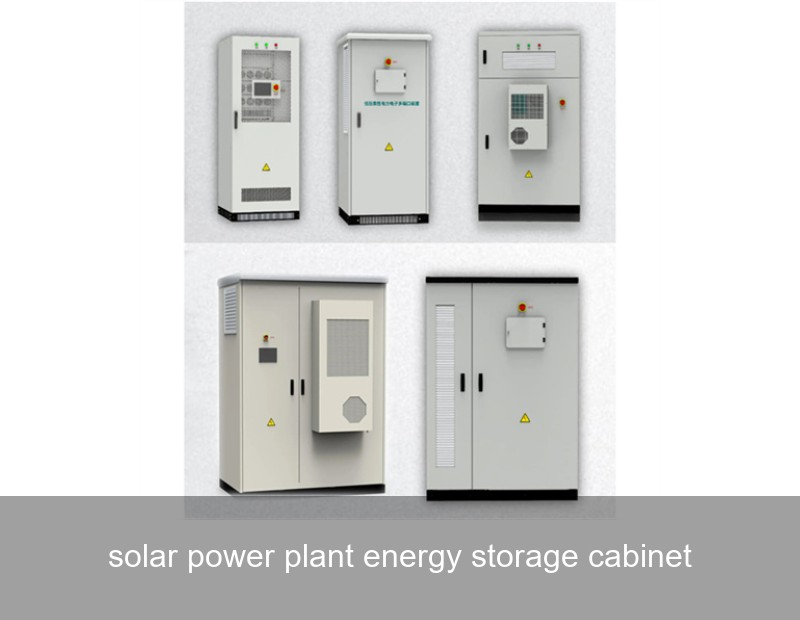
Imagine a state-of-the-art solar power plant, its panels glistening under the midday sun, generating massive amounts of clean electricity. Now, imagine watching a significant portion of that valuable energy simply vanish because the grid is saturated or demand is low. This isn't a hypothetical scenario; it's the daily reality for many solar plant operators. The intermittent nature of solar power is its most significant challenge. But what if you could capture every kilowatt-hour produced? This is where the solar power plant energy storage cabinet transforms from a supporting component into the central nervous system of a modern, profitable, and grid-friendly renewable energy facility. By integrating intelligent battery storage, you're not just generating power; you're orchestrating it.
Table of Contents
- The Curtailment Phenomenon: Wasted Sunlight, Wasted Revenue
- The Data Reality: Quantifying the Grid's Need for Flexibility
- Case Study: Stabilizing the Texas Grid with Solar + Storage
- What Exactly is a Solar Power Plant Energy Storage Cabinet?
- The Highjoule Solution: Engineered for Utility-Scale Performance
- Beyond Revenue: The Strategic Advantages for Plant Owners
- The Future Outlook: Storage as a Standard Feature
The Curtailment Phenomenon: Wasted Sunlight, Wasted Revenue
Solar energy production peaks when the sun is highest, often coinciding with periods of high solar output across a region. Traditional grids, designed for predictable fossil-fuel generation, can become overloaded with this influx of solar power. Grid operators are then forced to ask, or even mandate, solar plants to reduce output—a process called curtailment. For a plant owner, this is akin to turning off a tap of revenue. Every megawatt curtailed is a direct financial loss on your initial investment. An energy storage cabinet acts as a "buffer," absorbing this excess generation during peak production and holding it for later use when it's truly needed and more valuable.
The Data Reality: Quantifying the Grid's Need for Flexibility
The transition to renewables isn't slowing down. In the U.S., the Energy Information Administration (EIA) projects that solar and wind will lead power generation growth in 2024 and 2025. In Europe, ambitious REPowerEU plans aim to massively accelerate green energy deployment. This surge creates a critical need for flexibility. According to a report by the International Renewable Energy Agency (IRENA), the global average daily curtailment rate for solar PV can reach up to 5-10% in systems with high penetration, a figure that can be much higher in specific, sunny regions. This isn't just a technical glitch; it's a systemic inefficiency that storage directly solves.

Image: A modern solar plant integrating battery energy storage cabinets for enhanced reliability. Source: Unsplash
Case Study: Stabilizing the Texas Grid with Solar + Storage
Let's look at a real-world example from the United States. The Electric Reliability Council of Texas (ERCOT) grid is known for its high renewable penetration and unique challenges. A 150 MW solar farm in West Texas was experiencing significant price volatility and curtailment directives. By integrating a 50 MWh DC-coupled energy storage system—essentially a bank of sophisticated energy storage cabinets—the plant operator transformed their business model.
The system was configured to perform multiple value streams simultaneously (a process called value stacking):
- Energy Arbitrage: Storing cheap midday solar energy and discharging during high-price evening peaks.
- Ancillary Services: Providing fast frequency response to help stabilize the ERCOT grid, earning separate capacity payments.
- Curtailment Mitigation: Capturing 100% of solar generation even during grid congestion events.
The result? The project increased the plant's annual revenue by over 35% and provided critical grid resilience during peak demand periods. This case exemplifies how the right storage solution turns a passive generator into an active grid asset.
What Exactly is a Solar Power Plant Energy Storage Cabinet?
It's more than just a box of batteries. A solar power plant energy storage cabinet is a fully integrated, containerized solution that houses the core components of a Battery Energy Storage System (BESS). Think of it as a factory-assembled power station module. Each cabinet typically contains:
| Component | Function |
|---|---|
| Battery Modules (Li-ion NMC or LFP) | The core energy storage units. Lithium Iron Phosphate (LFP) chemistry is increasingly favored for utility-scale projects due to its longer lifespan and superior safety profile. |
| Battery Management System (BMS) | The "brain" of the battery, ensuring each cell operates safely, efficiently, and within its optimal parameters. |
| Power Conversion System (PCS) | The "translator" between DC battery power and AC grid power. Advanced PCS units enable rapid, bi-directional flow. |
| Thermal Management System | Critical for maintaining battery temperature, ensuring performance, safety, and longevity in all climates. |
| Energy Management System (EMS) | The top-level control software that decides when to charge and discharge based on market signals, grid needs, and owner strategies. |
The Highjoule Solution: Engineered for Utility-Scale Performance
At Highjoule, with nearly two decades of experience since 2005, we design our HiveStack Utility BESS cabinets with the rigorous demands of solar power plant integration as our primary focus. Our approach is not just about providing hardware; it's about delivering guaranteed performance.
- DC-Coupling Optimized: Our cabinets are designed for seamless DC-coupling with new or existing solar plants. This architecture reduces energy conversion losses compared to AC-coupled systems, capturing more of your precious solar energy—typically achieving round-trip efficiency exceeding 96%.
- Built on LFP Chemistry: We standardize on Lithium Iron Phosphate batteries for all utility-scale projects. They offer a longer cycle life (often over 6,000 cycles at 80% depth of discharge), enhanced thermal stability, and a lower total cost of ownership.
- Intelligent Grid Integration: The Highjoule GridSync EMS is at the heart of our solution. It uses advanced algorithms and AI-driven forecasting to autonomously optimize dispatch across multiple revenue streams, from wholesale markets to grid service contracts.
- Modular & Scalable Design: Start with a 2 MWh cabinet and scale to hundreds of megawatt-hours as your needs evolve. Our modular design ensures minimal site disruption during expansion.

Image: Modular, serviceable design of modern energy storage cabinets. Source: Unsplash
Beyond Revenue: The Strategic Advantages for Plant Owners
While revenue enhancement is a powerful driver, the benefits of integrating an energy storage cabinet extend further:
- Future-Proofing Your Asset: Grids are evolving and requiring new plants to be "dispatchable." Adding storage today extends the commercial viability and lifespan of your solar asset for decades.
- Reducing Connection Costs: In some markets, you can secure a grid connection agreement for a "solar + storage" plant with a lower export capacity than a solar-only plant of the same size, as you can firm up your output. This can lead to substantial grid connection cost savings.
- Enhancing Sustainability Credentials: By maximizing the utilization of generated solar power and providing grid-balancing services, you contribute to a more stable and higher-renewables grid, strengthening your ESG (Environmental, Social, and Governance) profile.
The Future Outlook: Storage as a Standard Feature
The industry trajectory is clear. Major solar developers, especially in markets like California, Texas, and across Europe, now routinely include storage in their initial project designs. Regulatory frameworks are catching up, creating clearer pathways for storage to participate in energy markets. The solar power plant energy storage cabinet is rapidly shifting from an optional add-on to a fundamental component of any new, competitively tendered, or repowered solar facility.
Highjoule's global service and support network, with deep expertise in both European and North American markets, ensures that your project is not just a one-time installation but a long-term, high-performing partnership. We provide comprehensive services from initial feasibility and system design to commissioning, long-term maintenance, and performance monitoring.

Image: Strategic site layout for a co-located solar and battery storage power plant. Source: Unsplash
So, the question for every solar plant owner, developer, and investor is no longer "Can we afford to add storage?" but rather, "Can we afford not to add storage, and risk leaving significant revenue and strategic value on the table?" What specific grid challenge or market opportunity in your region would make the business case for adding an energy storage cabinet to your solar plant undeniable?
 Inquiry
 Online Chat