


Lithium Batteries in Colombia: Powering a Sustainable Energy Future
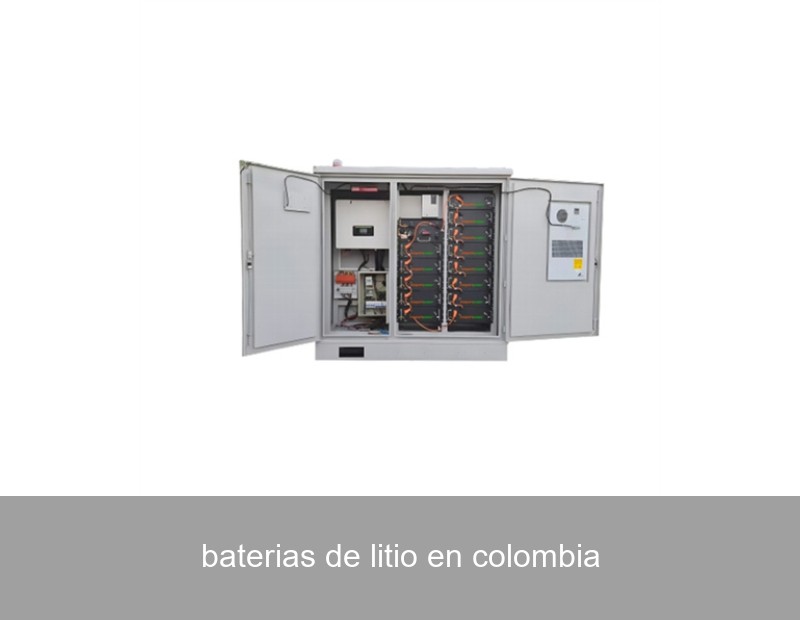
Colombia stands at a pivotal moment in its energy journey. With abundant renewable resources, the nation is increasingly turning to solar and wind power. Yet, a critical question remains: how do we ensure this clean energy is available when the sun doesn't shine or the wind doesn't blow? The answer, increasingly, lies in advanced energy storage, specifically lithium batteries in Colombia. This technology is not just an accessory; it's becoming the backbone of a reliable, modern, and sustainable grid.
Table of Contents
- The Colombian Energy Shift: From Promise to Practicality
- Why Lithium Batteries? The Data Behind the Dominance
- A Real-World Case: La Guajira's Renewable Integration
- Beyond the Battery: The Importance of a Complete System
- Highjoule's Intelligent Solutions for the Colombian Market
- The Future Landscape: Opportunities and Considerations
The Colombian Energy Shift: From Promise to Practicality
Colombia's energy matrix is undergoing a profound transformation. The country has set ambitious goals to reduce its greenhouse gas emissions by 51% by 2030 and achieve carbon neutrality by 2050. A cornerstone of this strategy is the massive deployment of non-conventional renewable energy (NCRE), primarily solar and wind. Regions like La Guajira, with its exceptional wind resources, are poised to become powerhouses.
However, the intermittent nature of these sources presents a grid stability challenge. Think of it like a river with highly variable flow—sometimes a torrent, sometimes a trickle. Lithium-ion battery energy storage systems (BESS) act as a sophisticated dam and reservoir, storing excess energy during periods of high generation (sunny afternoons, windy nights) and dispatching it during periods of high demand or low generation. This is the key to unlocking the full potential of Colombia's renewable revolution.
Why Lithium Batteries? The Data Behind the Dominance
While various storage technologies exist, lithium-ion batteries have emerged as the leading solution for grid-scale and commercial applications. The reasons are backed by compelling performance data:
- High Energy Density: They pack a significant amount of energy into a relatively small, lightweight footprint, crucial for space-constrained installations.
- Efficiency: Modern lithium battery systems boast round-trip efficiency of 90-95%, meaning very little energy is lost during the charge/discharge cycle.
- Rapid Response: They can go from idle to full power in milliseconds, providing critical grid services like frequency regulation that keep the national grid stable.
- Declining Costs: The levelized cost of storage (LCOS) for lithium batteries has fallen dramatically, by over 80% in the last decade, making them increasingly economically viable (IRENA, 2023).
For a country like Colombia, which also faces challenges with energy reliability in remote areas, these attributes make lithium batteries a versatile tool not only for grid support but also for creating resilient microgrids in off-grid communities and industrial zones.
A Real-World Case: La Guajira's Renewable Integration
Let's look at a tangible example. In the La Guajira region, home to Colombia's most ambitious wind projects, developers are increasingly mandated to include storage components to smooth the power output fed into the grid. A recent pilot project attached a 5 MW / 10 MWh lithium-ion battery system to a wind farm.
The results, published in a grid integration study, were telling:
- Ramp Rate Management: The battery successfully limited sudden increases or decreases in power output to below 10 MW per minute, a key grid requirement.
- Capacity Firming: It guaranteed a firm, dispatchable power output for specific periods, increasing the wind farm's value and predictability.
- Reduced Curtailment: By storing excess wind energy that would have otherwise been wasted ("curtailed") during low demand periods, the project increased the farm's annual energy delivery by an estimated 3%.
This case underscores that lithium batteries in Colombia are not a future concept but a present-day solution, directly addressing the technical hurdles of renewable integration.

Credit: Engineers monitoring a large-scale industrial battery storage system. Photo via Unsplash.
Beyond the Battery: The Importance of a Complete System
A common misconception is that a storage project is simply about procuring battery cells. In reality, the battery pack is just one component of a complex, high-stakes system. The true differentiator lies in the power conversion system (PCS), the battery management system (BMS), and the overarching energy management system (EMS).
Think of it this way: the battery cells are the muscles, but the BMS and EMS are the brain and nervous system. A superior BMS ensures each cell operates within its safe, optimal window, dramatically extending lifespan and preventing failures. An intelligent EMS decides when to charge, when to discharge, and at what rate, based on market signals, weather forecasts, and grid needs to maximize financial and operational returns.
Highjoule's Intelligent Solutions for the Colombian Market
This is where Highjoule's nearly two decades of global expertise become directly relevant for Colombia. We understand that deploying lithium batteries in Colombia requires solutions tailored to local grid codes, climate conditions, and economic drivers. Our approach is system-first.
For utility-scale and large commercial/industrial (C&I) applications in Colombia, Highjoule offers our GridMax BESS series. These containerized, plug-and-play solutions integrate our proprietary iBMS (Intelligent Battery Management System) and Apex EMS platform. The Apex platform can be programmed to perform multiple value-stacking functions: from peak shaving and backup power for a factory, to providing frequency regulation services to the national grid operator (XM), all within one installation.
For smaller commercial sites or residential microgrids, our PowerHub modular storage systems provide scalable, safe, and intelligent storage. All Highjoule systems are designed with safety as the paramount concern, featuring multi-layer protection architecture and advanced thermal management suitable for Colombia’s diverse climates.
| Application | Highjoule Solution | Key Benefits for Colombia |
|---|---|---|
| Wind/Solar Farm Grid Integration | GridMax Utility | Grid code compliance, output firming, reduced curtailment. |
| Industrial Peak Shaving & Backup | GridMax C&I / PowerHub Pro | Lowers demand charges, ensures production continuity. |
| Remote Community Microgrids | PowerHub Series + Apex EMS | Enables high renewable penetration, displaces diesel gensets. |
| Commercial Solar Self-Consumption | PowerHub Commercial | Maximizes use of rooftop solar, improves ROI. |
The Future Landscape: Opportunities and Considerations
The path forward for lithium batteries in Colombia is bright, but it requires thoughtful navigation. The regulatory framework is evolving to recognize and value the services storage provides. Continued policy support, like clear rules for storage participation in the capacity and ancillary services markets, will accelerate investment.
Furthermore, sustainability doesn't end with operation. The industry must proactively address the battery lifecycle. Highjoule is committed to circular economy principles, partnering with recycling specialists to ensure that at end-of-life, our battery systems are responsibly processed to recover valuable materials (U.S. Department of Energy).
As Colombia builds its energy future, the integration of intelligent storage will determine how resilient, efficient, and green its grid becomes. The technology is proven. The economic case strengthens every year. The question is no longer "if," but "how best to implement."

Credit: A modern solar farm, representing Colombia's renewable energy growth. Photo via Unsplash.
 Inquiry
 Online Chat