


Why Your Solar Power Plant Needs a Battery: The Key to Unlocking True Energy Independence
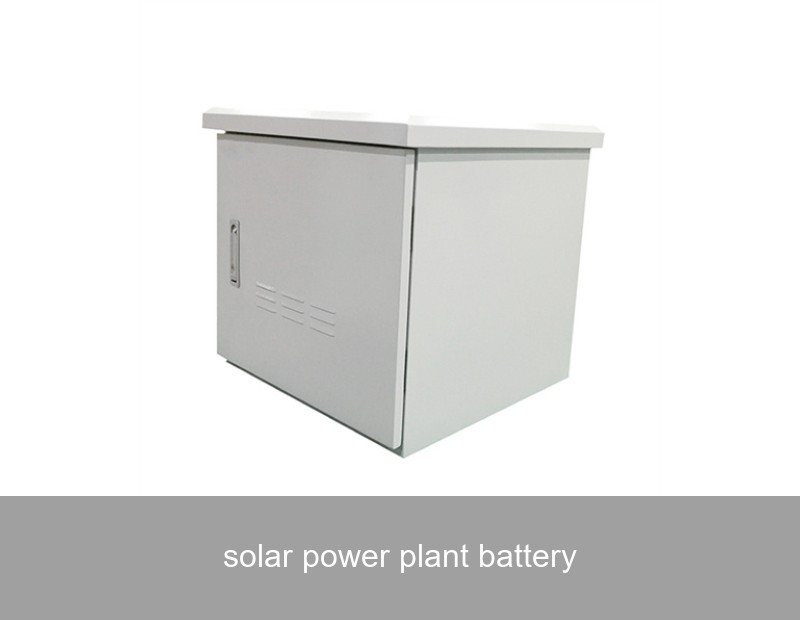
Imagine a state-of-the-art solar power plant, its panels glistening under the midday sun, generating megawatts of clean electricity. Now, imagine that a significant portion of that precious, self-generated power is simply… wasted. This isn't science fiction; it's the daily reality for many solar installations without a solar power plant battery system. As the global push for renewables intensifies, the conversation is shifting from mere generation to intelligent management. The missing link for maximizing the value, reliability, and impact of solar farms is no longer a mystery—it's advanced energy storage.
Table of Contents
- The Challenge: Solar's Intermittency and the Duck Curve
- The Solution: Solar Power Plant Battery Systems
- Key Benefits of Integrating a Battery with Your Solar Plant
- A Real-World Case Study: The California Success Story
- Choosing the Right Battery Technology for Your Plant
- What's the First Step for Your Solar Asset?
The Challenge: Solar's Intermittency and the Duck Curve
Solar energy has one undeniable characteristic: it's variable. Clouds pass over, night falls, and seasonal patterns change. This creates a fundamental mismatch between supply and demand. The now-famous "Duck Curve" graph, first identified in California, perfectly illustrates this. It shows a deep midday dip in net electricity demand (when solar floods the grid) followed by a steep evening ramp-up (as the sun sets and people return home). This rapid ramp places immense strain on conventional power plants, leading to grid instability and, ironically, can force solar plants to be curtailed—told to stop generating even on sunny days.
Without storage, a solar power plant is a fair-weather friend to the grid. It can't provide power during peak evening hours when demand and prices are highest, and it can't help stabilize the grid during sudden fluctuations. This limits its economic value and its role in a resilient energy system.
The Solution: Solar Power Plant Battery Systems
This is where the solar power plant battery, or Battery Energy Storage System (BESS), enters as a game-changer. Think of it as a high-capacity "energy bank" for your solar farm. During peak production hours, instead of wasting excess generation, the surplus electricity is stored in the battery. Later, when the sun isn't shining but electricity is needed most, the stored energy is discharged back to the grid or used on-site.
This simple concept of "time-shifting" energy transforms a solar plant from an intermittent source into a predictable, dispatchable asset. It's the difference between selling your product only at noon and being able to sell it at any time, especially when the market price is most favorable.

Image: A modern solar farm paired with battery storage containers. Source: Unsplash
Key Benefits of Integrating a Battery with Your Solar Plant
Integrating a battery storage system unlocks multiple revenue streams and operational advantages:
- Energy Arbitrage: Buy/store electricity when prices are low (or from your own solar overproduction) and sell it when prices are high.
- Grid Services: Provide critical services like frequency regulation, voltage support, and spinning reserve to grid operators for additional income.
- Capacity Firming: Guarantee a specific power output level, making your solar plant as reliable as a traditional power plant for power purchase agreements (PPAs).
- Reduced Curtailment: Capture 100% of the solar energy you produce, eliminating waste and maximizing your return on investment.
- Enhanced Grid Resilience: Act as a black-start resource or provide backup power to critical community infrastructure during outages.
A Real-World Case Study: The California Success Story
Let's look at tangible data. The Moss Landing Energy Storage Facility in California, one of the world's largest battery systems, provides a powerful example. While not exclusively paired with a single solar plant, it is integral to managing California's vast solar resources.
In 2022, during a severe heatwave that threatened rolling blackouts, the Moss Landing batteries (Phase I & II, with a capacity of 750 MW / 3,000 MWh) discharged a record amount of stored energy to the grid, primarily during the critical evening hours when solar generation dropped. According to the California Energy Commission, this discharge was pivotal in keeping the lights on for hundreds of thousands of homes, demonstrating how storage directly mitigates the Duck Curve's steepest ramps. The system stores excess solar and wind energy during the day and delivers it precisely when needed, showcasing the indispensable role of a solar power plant battery in a high-renewables grid.
| Metric | Without Storage | With Storage |
|---|---|---|
| Solar Energy Utilization | ~60-80% (due to curtailment) | >95% |
| Ability to Serve Peak Demand | Low (sunset mismatch) | High (dispatchable power) |
| Revenue Streams | Primarily energy sales | Energy + Capacity + Grid Services |
| Grid Stability Contribution | Limited | High (frequency regulation, etc.) |
Choosing the Right Battery Technology for Your Plant
Not all batteries are created equal. The choice depends on your primary use case:
- Lithium-Ion (Li-ion): The current market leader, offering an excellent balance of energy density, efficiency, and decreasing cost. Ideal for daily cycling (arbitrage, peak shaving) and fast-response grid services.
- Flow Batteries: Excel in long-duration storage (4+ hours). Their decoupled power and energy ratings make them suitable for applications requiring very long discharge times, though they generally have a larger footprint.
The key is to partner with a provider who understands these nuances and can design a system tailored to your specific site, market rules, and financial goals.
How Highjoule Powers the Future of Solar-Plus-Storage
This is where Highjoule's expertise becomes critical. Since 2005, we have been at the forefront of designing and deploying intelligent storage solutions that make renewable energy projects more profitable and resilient. For a utility-scale solar power plant battery integration, Highjoule offers more than just hardware.
Our H-IQ Energy Platform is the brain of the operation. This advanced energy management system (EMS) doesn't just charge and discharge batteries randomly. It uses sophisticated algorithms and market forecasts to autonomously optimize every kilowatt-hour, deciding in real-time whether to store energy, sell it, or provide a grid service—always aiming to maximize your financial return.

Image: Advanced control systems are crucial for optimizing battery performance. Source: Unsplash
We provide end-to-end solutions, from initial feasibility studies and system design using our containerized H-Cube BESS units—known for their safety, modularity, and seamless integration—to long-term performance monitoring and support. Our systems are designed to meet the rigorous demands of both the North American and European markets, ensuring compliance and interoperability.
What's the First Step for Your Solar Asset?
The transition to a solar-plus-storage model is not a distant future concept; it's the present-day standard for forward-thinking asset owners and developers. The question is no longer *if* you should add a solar power plant battery, but *how* and *when* to do it to capture the greatest value before market dynamics shift again.
What specific grid challenge or market opportunity in your region—be it frequency regulation in the UK, capacity markets in Germany, or the IRA-driven opportunities in the US—could a tailored storage solution from Highjoule help you address and capitalize on?
 Inquiry
 Online Chat