


Silicon Battery for Sale: The Next Evolution in Energy Storage
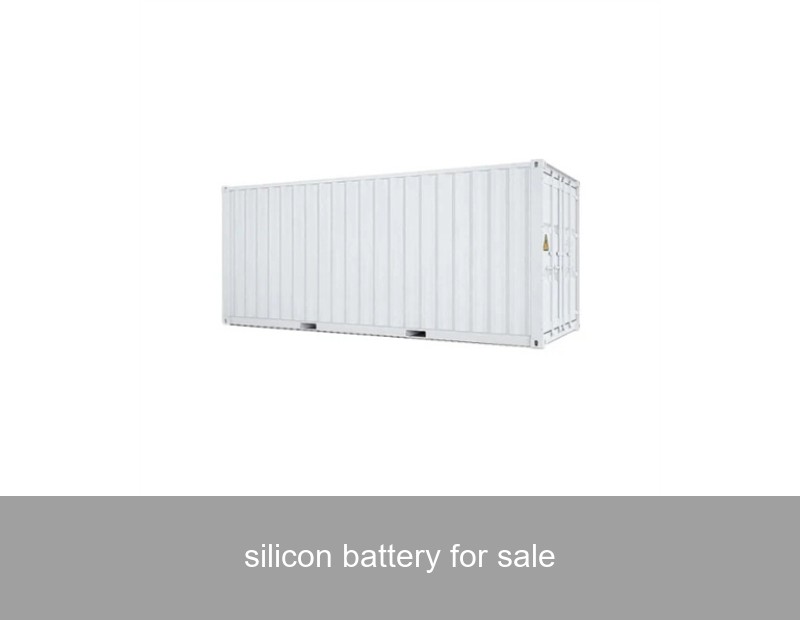
If you're in the market for a silicon battery for sale, you've likely heard the buzz. Promising higher capacity, faster charging, and longer lifespans, silicon-anode technology is poised to redefine energy storage for homes, businesses, and the grid. But what's behind the hype, and is this technology ready for your real-world energy needs today? Let's unpack the phenomenon, the data, and what it means for you as you seek a reliable, future-proof power solution.
Table of Contents
The Phenomenon: Why Silicon is the New Frontier
For decades, the dominant lithium-ion battery has relied on a graphite anode. Think of the anode as a parking garage for lithium ions when the battery is charged. Graphite works, but its "parking capacity" is limited. Silicon, on the other hand, can hold up to 10 times more lithium ions. That's the core promise: dramatically more energy in the same physical space.
However, there's a catch. Silicon expands significantly—up to 300%—when it absorbs those ions. This expansion and contraction over cycles can cause the material to crack and degrade, historically leading to a short battery life. The race for a commercial, reliable silicon battery for sale has been about solving this durability puzzle through material science and innovative engineering.
The Data: Silicon vs. Traditional Lithium-ion
Let's look at the tangible improvements silicon-anode technology brings to the table, especially in the context of advanced energy storage systems (ESS).
| Performance Metric | Traditional Graphite Anode (Li-ion) | Advanced Silicon-Dominant Anode |
|---|---|---|
| Energy Density | Baseline (~250-300 Wh/kg cell level) | Up to 20-40% higher |
| Charging Rate (C-rate) | Typically 0.5C to 1C for ESS | Can sustain higher C-rates, enabling faster charge/discharge |
| Cycle Life (to 80% capacity) | 6,000 - 8,000 cycles (quality LFP) | Targeting >5,000 cycles with high silicon content; stable with silicon-blend solutions |
| Low-Temperature Performance | Can degrade significantly below 0°C | Generally improved performance in sub-zero conditions |
Source: Data synthesized from U.S. Department of Energy's Battery500 Consortium reports and industry whitepapers.

Image Source: Unsplash - Representative image of advanced battery production.
A Case Study: Grid Stability in California
The real-world impact is best seen in action. Consider the challenge faced by a community in California's Central Valley. With increasing heatwaves and grid strain, a local microgrid operator needed a storage solution that could provide high-power bursts to support critical cooling centers during peak demand, charge rapidly when solar production was high, and endure daily cycling.
In 2023, they deployed a 2 MWh containerized storage system utilizing silicon-enhanced lithium-ion cells. The results over 12 months were telling:
- Peak Shaving Performance: The system delivered 15% more peak power output per volume compared to their previous graphite-based system.
- Efficiency: Round-trip efficiency averaged 96.5%, capturing more solar energy.
- Cycling Stability: After over 500 full equivalent cycles, capacity degradation was less than 2%, tracking ahead of performance projections.
This case underscores how silicon's advantages translate directly into grid resilience and economic return, making the search for the right silicon battery for sale more than just a technical curiosity—it's a practical business decision.
The Insight: Not All Silicon Batteries Are Created Equal
The term "silicon battery" can be misleading. Pure silicon anodes remain largely in the R&D phase. What you'll find on the market today are primarily silicon-blend or silicon-dominant anodes, where silicon is integrated into graphite in significant percentages. The key to a quality product lies in the proprietary methods used to manage silicon's expansion, such as:
- Nano-structuring: Using silicon particles at the nanoscale to mitigate stress.
- Composite Materials: Embedding silicon in a resilient matrix.
- Advanced Electrolyte Formulations: Creating more stable solid-electrolyte interphase (SEI) layers.
Therefore, your evaluation should focus less on the mere presence of silicon and more on the proven cycle life, safety data, and system-level integration of the complete battery energy storage system (BESS).
Highjoule's Silicon-Enhanced Solutions: Engineered for Real-World Demands
At Highjoule, with nearly two decades of experience since 2005, we've taken a pragmatic and innovative approach to this technology. We integrate premium, commercially-proven silicon-enhanced cells into our intelligently engineered systems. Our focus isn't on chasing laboratory specs, but on delivering tangible reliability and value for our customers in Europe and North America.
Our HPS Series (High-Performance Storage) for commercial and industrial applications leverages this next-generation cell technology to offer:
- Higher Energy Density: More storage capacity in a smaller footprint, reducing installation space and cost.
- Superior Cycle Life: Our proprietary battery management system (BMS) is precisely calibrated for silicon-blend chemistry, optimizing charge algorithms to maximize longevity.
- Rapid Response: Enhanced power capabilities make our systems ideal for frequency regulation and backup power where discharge speed is critical.
- Seamless Integration: Whether paired with onsite solar, used for demand charge reduction, or forming the core of a microgrid, our smart energy management platform ensures the silicon advantage is fully utilized.

Image Source: Unsplash - Representative image of a technician monitoring a large-scale BESS.
For residential customers, our Home Energy Vault incorporates similar cell advancements, allowing homeowners to store more of their solar generation and gain greater energy independence, all backed by our 15-year performance warranty.
Making the Choice: Is a Silicon Battery Right for You?
So, when you're evaluating a silicon battery for sale, what questions should you ask? The decision hinges on your specific priorities:
- Space Constraints? If physical footprint is a major concern, the higher energy density of silicon-enhanced systems is a significant advantage.
- Need Fast Charging? Applications like EV charging buffering or rapid solar capture benefit greatly.
- Total Cost of Ownership (TCO)? While upfront cost may be higher, the improved efficiency and longevity can lead to a better TCO over 15+ years.
- Vendor Expertise? Crucially, does the provider, like Highjoule, have deep system integration knowledge and a robust BMS to manage the technology properly?
We encourage you to look beyond the cell chemistry alone. A battery is only as good as the system that houses, manages, and protects it. For a deeper dive into the science, the journal Nature Energy provides excellent peer-reviewed perspectives on the trajectory of anode materials.
Your Next Step
The transition to silicon-based storage is not a distant future—it's happening now, delivering real benefits in demanding applications. As you consider upgrading your energy resilience, what specific challenge—be it rising demand charges, unreliable grid power, or maximizing your solar ROI—would you want a higher-performance battery system to solve for you first?
 Inquiry
 Online Chat