


Lithium-Ion Photovoltaic Batteries: The Engine of Modern Solar Energy Independence
Have you ever watched your solar panels generate a surplus of clean energy on a bright, sunny afternoon, only to see that power go to waste—or be sold back to the grid for a fraction of its value? Then, as evening falls, you find yourself drawing expensive, often carbon-intensive power from the utility. This frustrating phenomenon is a common experience for many solar adopters. The missing piece of the puzzle is intelligent energy storage. This is where lithium-ion photovoltaic batteries come into play, transforming solar arrays from intermittent generators into reliable, 24/7 personal power stations. As a global leader in advanced energy storage since 2005, Highjoule has been at the forefront of designing smart, efficient, and sustainable battery systems that make true energy independence not just a concept, but a practical reality for homes and businesses across Europe and the US.
Table of Contents
- The Solar Dilemma: Generation vs. Consumption
- Why Lithium-Ion Reigns Supreme for Solar Storage
- Key Metrics: Understanding Capacity, Power, and Depth of Discharge
- A Real-World Case Study: Peak Shaving in German Manufacturing
- Beyond Backup: The Intelligent Functions of a Modern PV Battery
- Future Trends and Your Next Step
The Solar Dilemma: Generation vs. Consumption
The fundamental challenge with solar photovoltaic (PV) power is its inherent intermittency. Peak production occurs in the middle of the day, while residential energy demand typically peaks in the early morning and evening. According to data from the U.S. Department of Energy, the average capacity factor for solar PV in the U.S. is around 24%. This means without storage, a significant portion of self-generated power is exported, not self-consumed.
This mismatch creates a two-fold problem: financial and resilience-related. Financially, feed-in tariffs are declining, making it less lucrative to sell excess power. Resilience-wise, without a battery, a grid outage still means a blackout, even with solar panels on the roof. The solution is to capture that midday surplus for later use.

This is the precise problem that lithium-ion photovoltaic batteries are designed to solve. They act as a buffer, storing excess solar energy chemically and releasing it as high-quality electricity exactly when you need it most.
Why Lithium-Ion Reigns Supreme for Solar Storage
Not all batteries are created equal for solar applications. While lead-acid batteries had their place, lithium-ion technology has become the undisputed standard for modern solar storage systems. Here’s why:
- High Energy Density: They pack a large amount of energy into a compact, lightweight footprint—crucial for space-constrained residential and commercial installations.
- Excellent Depth of Discharge (DoD): Modern Li-ion batteries for solar can safely use 90% or more of their rated capacity without damage, compared to roughly 50% for lead-acid. This means you get more usable energy from the same rated capacity.
- Long Cycle Life: They can withstand thousands of charge-discharge cycles. A quality Li-ion home battery system is typically warrantied for 10 years or more, with a high residual capacity guarantee.
- High Round-Trip Efficiency: This measures how much energy you get back out versus what you put in. Li-ion systems often exceed 95%, meaning very little solar energy is lost in the storage process.
At Highjoule, our EonCore series of lithium-ion battery systems is engineered around these principles. We utilize lithium iron phosphate (LFP) chemistry, renowned for its exceptional safety, thermal stability, and long cycle life—making it the ideal choice for stationary energy storage in diverse climates from Scandinavia to Southern California.
Key Metrics: Understanding Capacity, Power, and Depth of Discharge
When evaluating a lithium-ion photovoltaic battery, three key specifications tell the story:
| Metric | What It Means | Why It Matters |
|---|---|---|
| Usable Capacity (kWh) | The total amount of electricity the battery can store and deliver, after accounting for Depth of Discharge. | Determines how long your home can run on battery power. A 10 kWh battery could power essential loads for 10-24 hours, depending on usage. |
| Continuous Power (kW) | The maximum rate at which the battery can discharge electricity at a given moment. | Dictates how many appliances you can run simultaneously. High-power devices like air conditioners or well pumps require a battery with high continuous power output. |
| Depth of Discharge (DoD) | The percentage of the battery's capacity that has been used. | A higher allowable DoD (e.g., 100%) means you can use more of the battery's nominal capacity without harming its lifespan. |
For instance, a Highjoule EonCore 15 system offers 15.2 kWh of usable capacity and 7.6 kW of continuous power with a 100% DoD, meaning you have access to every kilowatt-hour stored for maximum flexibility and backup power.
A Real-World Case Study: Peak Shaving in German Manufacturing
Let's move from theory to practice. Consider a mid-sized automotive parts manufacturer near Stuttgart, Germany. Their facility had a 500 kW rooftop solar array but faced high "peak demand" charges from their utility—fees based on their highest 15-minute power draw each month. Even with solar, brief periods of high machinery usage led to costly peaks.
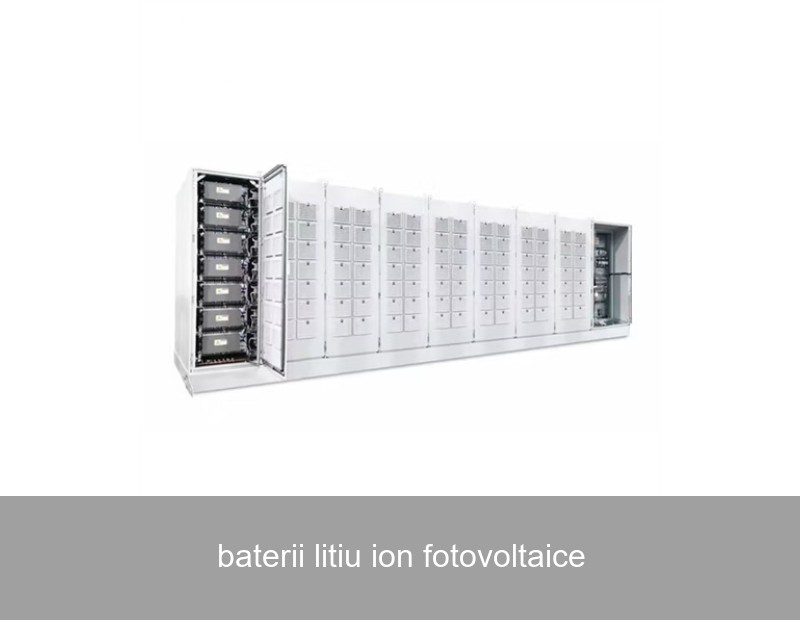
The Solution: They integrated a 240 kWh Highjoule Industrial Energy Stack (IES) with their existing PV system. This modular, containerized battery system is specifically designed for commercial and industrial applications.
The Outcome: The intelligent energy management system (EMS) automatically used the battery to "shave" peaks by discharging during short periods of highest grid demand. The results within the first year were substantial:
- A 28% reduction in monthly peak demand charges.
- An increase in on-site solar consumption from 35% to over 70%.
- Provision of backup power for critical safety and IT systems during two brief grid disturbances.
This case, documented in a Fraunhofer ISE study on energy costs, highlights the dual financial and operational benefits of coupling industrial PV with sophisticated lithium-ion storage.

Beyond Backup: The Intelligent Functions of a Modern PV Battery
While backup power is a key driver, today's lithium-ion photovoltaic batteries are multi-functional assets. Highjoule's systems, governed by our Neuron AI platform, enable several smart capabilities:
- Time-of-Use Optimization: In regions with time-varying electricity rates, the battery can be programmed to charge from solar or the grid when rates are low and discharge when rates are high, maximizing bill savings automatically.
- Grid Services Support: In some markets, aggregated home batteries can provide services to stabilize the grid (frequency regulation), creating a potential revenue stream for the homeowner.
- Solar Self-Consumption Maximization: The primary goal: use your own solar power first, reducing reliance on the grid to the absolute minimum.
The Highjoule Solution: Engineered for Performance and Longevity
Choosing a battery system is a long-term investment. At Highjoule, our approach goes beyond simply supplying hardware. We provide integrated power solutions. Our EonCore residential systems and IES commercial platforms are built with:
- LFP Chemistry: For superior safety (no thermal runaway risk) and longevity.
- Modular Design: Start with what you need and expand capacity seamlessly as your needs grow.
- Advanced Thermal Management: A proprietary liquid cooling system ensures optimal operating temperature in all environments, which is the single biggest factor in extending battery life.
- Full System Integration: We offer compatible hybrid inverters, system design, and monitoring software for a seamless, high-performance package.
Our global service network provides support and monitoring, ensuring your investment is protected for the decades it's designed to last.
Future Trends and Your Next Step
The integration of lithium-ion photovoltaic batteries is accelerating, driven by rising energy costs, climate goals, and advancing technology. We're moving towards ecosystems where electric vehicles, home batteries, and solar panels operate as a unified, intelligent system. The question is no longer if storage is needed for solar, but how to select the right system to meet your specific energy goals and financial parameters.
What would a detailed analysis of your last 12 months of energy bills reveal about your potential savings and energy independence level with a tailored Highjoule solar-plus-storage system?
 Inquiry
 Online Chat