


Advancion Energy Storage: The Cornerstone of a Modern, Resilient Grid
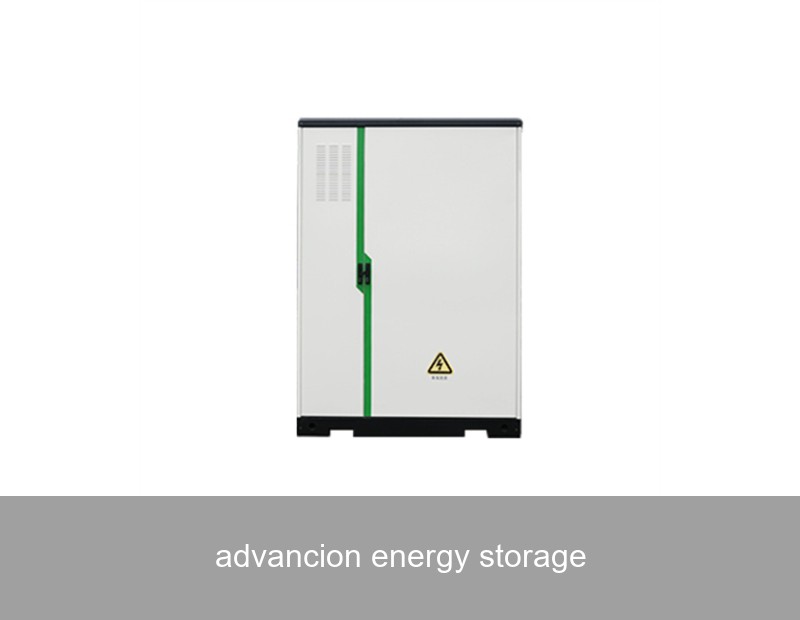
Imagine a world where a sudden cloud cover doesn't threaten a solar-powered factory's output, where a peak energy price spike doesn't cripple a hospital's budget, and where a community can keep its lights on even when the main grid falters. This isn't a distant future; it's the reality being built today with Advancion energy storage systems. These advanced battery energy storage systems (BESS) are far more than just big batteries. They are intelligent, grid-forming platforms that are fundamentally reshaping how we generate, distribute, and consume electricity. For businesses, utilities, and communities across Europe and the US, mastering the shift to renewables means mastering the power of storage.
Table of Contents
The Challenge: Intermittency Meets Rising Demand
Our energy landscape is undergoing a seismic shift. Wind and solar are now the most cost-effective new sources of electricity in most of the world, according to the International Energy Agency. However, this green revolution presents a fundamental engineering puzzle: intermittency. The sun sets, the wind calms, but our demand for power, especially during evening peaks, remains stubbornly high. This mismatch creates a "duck curve" – a deep dip in net demand during sunny afternoons followed by a steep ramp-up as solar fades – straining traditional power plants and grid infrastructure.
The result? Grid instability, volatile energy prices, and missed opportunities to utilize clean power. Simply adding more renewable generation isn't enough; we need a sophisticated buffer. This is precisely the problem that advanced, grid-scale energy storage is designed to solve.

Image: Modern renewable projects increasingly integrate storage to mitigate intermittency.
The Solution: What is Advancion Energy Storage?
When industry professionals talk about "Advancion energy storage," they're referring to a class of sophisticated, utility-scale battery storage solutions. The term, popularized by leading providers, signifies a system that goes beyond basic charge-and-discharge. A true Advancion-class system is characterized by:
- Grid-Forming Inverters: Unlike traditional grid-following systems, these can independently establish grid voltage and frequency, acting as a stable "anchor" for the local grid, crucial for microgrids and areas with weak grid connections.
- Advanced Energy Management Software (EMS): The brain of the operation. This AI-driven platform makes millisecond decisions on when to store, when to discharge, and which grid services to provide, maximizing financial and operational value.
- Multi-Layer Safety Architecture: Incorporating passive and active safety systems, advanced thermal management, and continuous gas detection, ensuring safe operation over a long lifespan.
- Technology Agnostic Design: The ability to integrate with various battery chemistries (like Lithium Iron Phosphate - LFP, which is known for its safety and long cycle life) allowing for optimization based on project-specific needs for duration, frequency, and cost.
Think of it as the difference between a basic water tank and a smart, pressurized municipal water system. Both hold water, but the latter delivers it with precision, reliability, and under controlled pressure to where it's needed most.
Key Benefits of a Deployed Advancion System
The deployment of such a system unlocks multiple revenue streams and operational benefits simultaneously. This "value stacking" is what makes the business case for storage so compelling.
| Application | How It Works | Primary Beneficiary |
|---|---|---|
| Renewables Firming & Time-Shift | Stores excess solar/wind generation and discharges it when generation is low but demand is high. | Renewable Project Developers, Utilities |
| Frequency Regulation | Responds in milliseconds to tiny fluctuations in grid frequency, providing critical stability services. | Grid Operators (ISOs/RTOs), Asset Owners |
| Peak Shaving & Demand Charge Reduction | Discharges during short periods of peak facility demand to lower the highest power draw, drastically cutting utility bills. | Commercial & Industrial (C&I) Facilities |
| Backup Power & Resilience | Provides seamless transition to backup power during grid outages, ensuring continuity for critical operations. | Hospitals, Data Centers, Microgrids |
Real-World Impact: A Case Study from California
Let's move from theory to practice. California, a global leader in renewable adoption, faces acute grid challenges, particularly in the evening "ramp" period. In 2022, a large commercial property portfolio in the San Diego Gas & Electric (SDG&E) territory was grappling with annual demand charges exceeding $1.2 million. These charges are based on the single highest 15-minute power draw each month, a cost structure that can cripple operational budgets.
The solution was the deployment of a 4 MW / 16 MWh Advancion-class battery storage system across two key sites. Here’s what happened:
- Implementation: The system was integrated behind-the-meter, meaning it sits directly on the customer's property. The intelligent EMS predicts the site's load and automatically dispatches the battery during the anticipated peak periods.
- The Data-Driven Result: Within the first year of operation, the system reduced the portfolio's peak demand by an average of 28%. This translated to a direct reduction of over $300,000 in annual demand charges. Furthermore, by participating in SDG&E's Demand Response programs, the system generated an additional $45,000 in revenue by being available to support the grid during extreme stress events.
- The Bigger Picture: This project, documented in a California Public Utilities Commission report on behind-the-meter storage, demonstrates the dual benefit: substantial private cost savings and tangible public grid support. It's a perfect example of value stacking in action.

Image: Technicians ensure the optimal operation of a commercial-scale energy storage system.
Highjoule's Role: Delivering Intelligent Storage Solutions
As a global leader founded in 2005, Highjoule has been at the forefront of this transformation. We understand that every client's needs are unique—whether it's a manufacturing plant in Germany seeking to cap its energy costs, a solar farm in Texas needing to firm its output, or a remote community in Alaska aiming for energy independence.
Our HPS (Highjoule PowerStack) series embodies the Advancion energy storage philosophy. These modular, containerized solutions are built with:
- Highjoule Cortex™ EMS: Our proprietary, AI-powered software platform that optimizes every kilowatt-hour for maximum economic return, whether through arbitrage, frequency services, or demand management.
- Ultra-Safe LFP Chemistry: We prioritize safety and longevity, utilizing Lithium Iron Phosphate battery cells known for their thermal stability and extended cycle life, backed by a robust 10-year performance warranty.
- Grid-Forming Capability: Critical for microgrid and resilience applications, our inverters can "black start" and form a stable grid independently, keeping essential services online.
From initial feasibility and financial modeling to turnkey installation, long-term maintenance, and performance guarantee, Highjoule provides an end-to-end partnership. We don't just sell hardware; we deliver a guaranteed outcome—be it reduced costs, enhanced resilience, or new revenue.
The Future Grid: More Than Just Backup Power
The conversation around energy storage is rapidly evolving. It's no longer just an "add-on" for renewables. Systems like Advancion are becoming the intelligent, flexible core of the modern grid. They enable the deep decarbonization of our electricity supply while enhancing reliability and keeping energy affordable. As electric vehicle adoption soars and electrification of heating and industry progresses, the demand for this grid flexibility will only explode.
For a facility manager, the question is shifting from "Can we afford storage?" to "Can we afford to be without it, given the volatility of energy markets?" For a utility planner, it's about how to defer costly infrastructure upgrades by deploying distributed storage assets. The technology is proven, the economics are clear, and the need is urgent.
What is the single largest barrier to energy independence for your business or community today, and have you evaluated how an intelligent storage system could address it?
 Inquiry
 Online Chat