


Batterie Domestique Photovoltaïque: Your Guide to Energy Independence
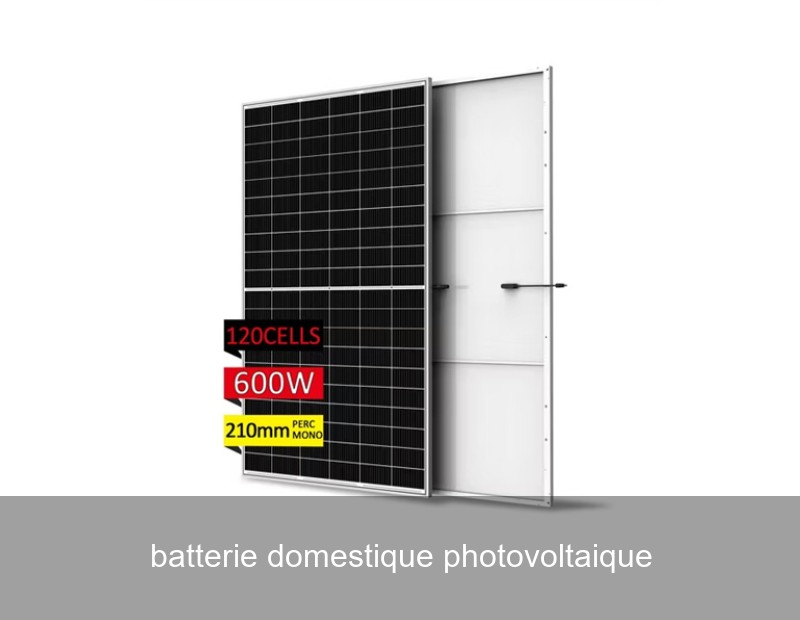
Have you ever watched your solar panels generate a surplus of clean energy on a sunny afternoon, only to see it flow back to the grid, knowing you'll have to buy it back at night? This common experience is the central challenge for homeowners seeking true energy self-sufficiency. The missing piece is a batterie domestique photovoltaïque (a home photovoltaic battery). More than just a backup, it's the cornerstone of a modern, resilient, and economical home energy system. By storing your solar surplus, you can dramatically increase your self-consumption, reduce reliance on the volatile grid, and take a definitive step towards energy autonomy. Companies like Highjoule, a global leader in advanced energy storage since 2005, are at the forefront of making this intelligent, efficient, and sustainable power solution accessible for residential applications across Europe and North America.
Table of Contents
- What is a Home Photovoltaic Battery?
- Why the Shift to Home Storage is Happening Now
- Key Benefits of Integrating a Battery with Your Solar Panels
- Choosing the Right System: Key Technical Considerations
- Real-World Impact: A Case Study from Southern France
- The Future of the Home is Powered by Intelligent Storage
What is a Home Photovoltaic Battery?
At its core, a batterie domestique photovoltaïque is a rechargeable battery system specifically designed to store electrical energy generated by your rooftop solar panels. Think of it as a sophisticated energy "bank account." During peak sunlight hours, instead of exporting all excess electricity, your system diverts it to charge the battery. Then, when your panels aren't producing—in the evening, at night, or during periods of low sunlight—your home draws power from this stored reserve.
Modern systems, like the Highjoule ResiCore series, are far more than just battery banks. They are integrated energy management systems. They include the battery modules (typically using Lithium Iron Phosphate or LFP chemistry for safety and longevity), a hybrid inverter or a dedicated battery inverter, and a smart energy management system (EMS). This EMS is the brain of the operation, intelligently deciding when to charge, discharge, or hold based on your consumption patterns, electricity tariffs, and even weather forecasts.
Why the Shift to Home Storage is Happening Now
The phenomenon is clear: homeowners are increasingly looking beyond just generating solar power to actively managing it. The initial driver was attractive feed-in tariffs, but the landscape has fundamentally changed.
The data tells a compelling story. In markets like Germany and California, feed-in tariffs have significantly decreased, while retail electricity prices have soared. The value of self-consumed solar energy is now often double or triple the value of exported energy. Furthermore, grid instability, manifested in more frequent extreme weather events causing outages, has heightened the desire for backup power. Technological advancements have also played a crucial role: battery costs have fallen by over 80% in the last decade, while energy density and lifespan have improved dramatically.
This convergence of economic factors and technological maturity has created the perfect environment for the batterie domestique photovoltaïque to move from a niche product to a mainstream home upgrade.
Key Benefits of Integrating a Battery with Your Solar Panels
- Maximized Self-Consumption & Reduced Bills: The primary benefit. Increase the portion of your solar energy used directly in your home from 30-50% to 70% or more, slashing your electricity bill.
- Enhanced Energy Security & Backup Power: During a grid outage, a system like the Highjoule ResiCore with islanding capability can automatically keep your critical loads—lights, refrigeration, internet—running seamlessly. This provides peace of mind that is invaluable during storms or grid failures.
- Grid Support and Sustainability: By reducing peak-time demand on the grid, you contribute to community-wide grid stability. You also maximize the use of your clean, renewable energy, reducing your carbon footprint further.
- Future-Proofing and Smart Energy Management: Advanced systems can be configured for time-of-use optimization, charging from the grid when rates are low (if allowed) and discharging when they are high. This prepares your home for dynamic energy markets and potential integration with electric vehicle charging.

Image Source: Unsplash (Representative image of a modern home energy system)
Choosing the Right System: Key Technical Considerations
Selecting a batterie domestique photovoltaïque is not a one-size-fits-all decision. Here are the critical factors to discuss with your installer:
| Consideration | What It Means | Why It Matters |
|---|---|---|
| Usable Capacity (kWh) | The actual amount of energy you can store and use. | Must match your household's evening/night consumption. A typical home may need 5-15 kWh. |
| Power Rating (kW) | How much power the battery can deliver at once. | Determines how many appliances you can run simultaneously on battery power, especially during backup. |
| Battery Chemistry | Most commonly Lithium Iron Phosphate (LFP). | LFP, used in Highjoule systems, offers superior safety (thermal stability), long cycle life (often over 6000 cycles), and is cobalt-free. |
| Depth of Discharge (DoD) | The percentage of the battery that can be safely used. | A high DoD (e.g., 90%) means you can use more of the battery's stated capacity without harming it. |
| System Integration & Smart Features | How the battery communicates with inverters and your home. | Look for a unified system with an intuitive app. Highjoule's EnergyOS platform, for example, provides real-time monitoring, customizable modes, and remote updates. |
| Warranty & Lifespan | Guaranteed capacity retention over time and cycles. | A strong warranty (e.g., 10 years, 70% capacity retention) protects your investment and indicates manufacturer confidence. |
Real-World Impact: A Case Study from Southern France
Let's move from theory to practice. The Dubois family in Toulouse, France, installed a 9 kWp solar array in 2020. Despite generating ample energy, their self-consumption was only 40%, exporting most surplus. In early 2023, they integrated a Highjoule ResiCore 10 system with 10.2 kWh of usable storage.
- Self-Consumption Rate: Increased from 40% to 85%.
- Grid Electricity Purchases: Reduced by 78% year-over-year.
- Bill Savings: Their annual electricity cost dropped from approximately €1,200 to under €300.
- Backup Security: The system provided uninterrupted power during two brief grid outages, keeping their home office fully operational.
"The battery wasn't just an add-on; it transformed how we use our solar power," said Mr. Dubois. "We're now truly maximizing our investment. The Highjoule app lets us see exactly where every kilowatt-hour goes, which has also made us more conscious of our consumption." This case mirrors findings from the U.S. Department of Energy, which highlights storage as key to unlocking the full value of distributed solar.
The Future of the Home is Powered by Intelligent Storage
The journey towards a fully electrified, efficient, and resilient home is accelerating. The batterie domestique photovoltaïque is the enabling technology at the heart of this transition. Looking ahead, we see these systems evolving from single-home solutions to components of virtual power plants (VPPs), where thousands of distributed home batteries can be aggregated to support the wider grid during times of peak demand.
Companies like Highjoule are already engineering for this future. Their systems are designed not only for today's self-consumption and backup needs but are also software-upgradable to participate in such grid services programs where available, potentially creating a new revenue stream for homeowners. This represents the next level of integration: your home battery becomes an active citizen in the energy ecosystem.

Image Source: Unsplash (Representative image of a solar-friendly community)
So, as you consider your own energy future, what role do you see a batterie domestique photovoltaïque playing in not just powering your home, but in redefining your relationship with energy altogether? Are you ready to explore how a tailored system could transform your solar investment from a partial solution into a complete energy independence strategy?
 Inquiry
 Online Chat