


Finding the Best Lithium Ion Inverter for Your Energy Storage System
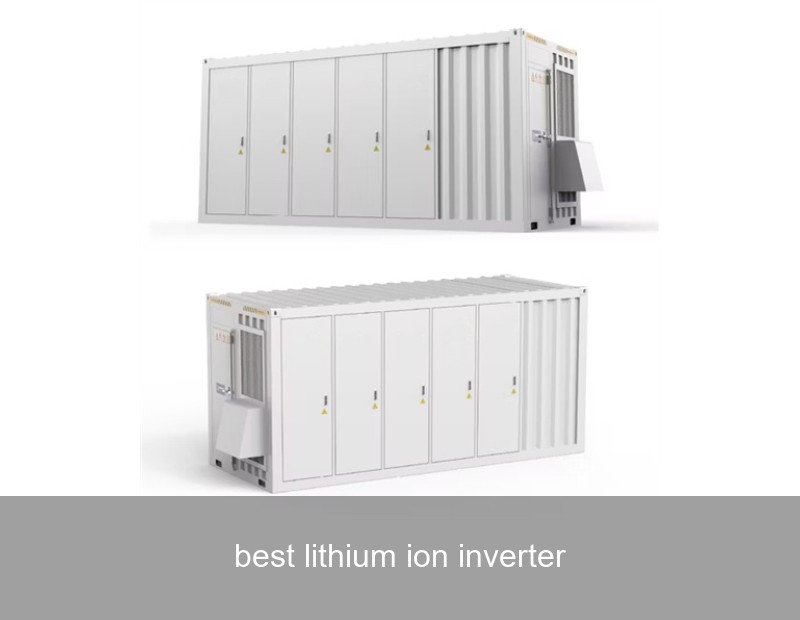
If you're investing in a modern battery storage system, you've likely heard that the inverter is its "brain." But when pairing it with high-performance lithium-ion batteries, the choice becomes critical. The best lithium ion inverter does more than just convert DC to AC power; it becomes the intelligent conductor of your energy orchestra, ensuring safety, maximizing battery life, and squeezing out every kilowatt-hour of value. For homeowners and businesses across Europe and the U.S., this isn't just about hardware—it's about unlocking the full potential of their renewable energy investment.
Table of Contents
- Why Your Inverter Choice Matters More Than You Think
- Key Features of the Best Lithium Ion Inverter
- Beyond Basics: The Technology Evolution in Hybrid Inverters
- How to Choose the Right Inverter for Your Setup
- The Future is Integrated: Smarter Energy Management
Why Your Inverter Choice Matters More Than You Think
Let's start with a common scenario. You install a premium lithium-ion battery with a 10-year warranty. Two years in, you notice your system's capacity has degraded faster than expected, or it fails to power essential loads during a crucial grid outage. Often, the culprit isn't the battery itself, but an incompatible or underperforming inverter.
Lithium-ion batteries, like LiFePO4 (Lithium Iron Phosphate), have distinct charge/discharge profiles, voltage ranges, and communication protocols compared to older battery technologies. A generic or lead-acid optimized inverter can "miscommunicate" with the battery, leading to:
- Reduced Battery Lifespan: Improper charging cycles stress battery cells.
- Safety Risks: Inaccurate state-of-charge monitoring can lead to over-discharge or overcharge.
- Lost Revenue: Inefficient conversion wastes solar energy that could be stored or sold back.
This is where specialized, compatible inverters make all the difference. Companies like Highjoule, with nearly two decades of expertise, design their smart energy storage solutions with seamless inverter-battery integration at their core. Their systems use advanced power electronics specifically engineered to communicate flawlessly with their lithium-ion battery modules, ensuring optimized performance and longevity from day one.

Image: A modern hybrid inverter, the critical link between solar panels, batteries, and the home. Source: Unsplash
Key Features of the Best Lithium Ion Inverter
So, what should you look for? The market is filled with options, but the top-tier inverters for lithium-ion systems share several non-negotiable features.
| Feature | Why It's Important | Highjoule's Approach |
|---|---|---|
| Native Battery Protocol Compatibility | Ensures the inverter "speaks the same language" as the BMS (Battery Management System) for precise control. | Highjoule's inverters and batteries are co-engineered, using a closed-loop communication protocol for millisecond-level data exchange. |
| High Round-Trip Efficiency (RTE) | Measures how much energy you get back vs. what you put in. Losses mean lost money. | Systems are designed for >96% RTE, ensuring more of your self-generated solar power is usable. |
| Seamless Grid & Off-Grid Transition | Critical for backup power. The switch must be fast enough to prevent computers and appliances from shutting down. | Sub-20 millisecond transfer time guarantees uninterrupted power for sensitive loads during outages. |
| Scalable & Modular Power | Your energy needs may grow. The system should adapt without replacing the core inverter. | Highjoule's modular platform allows for easy expansion of both battery capacity and inverter power output. |
| Smart Grid & PV Integration | Manages energy flows intelligently: charging from solar, discharging during peak rates, or providing grid services. | Powered by the JouleBrain AI platform, it automatically optimizes for self-consumption, cost, or carbon footprint. |
A Real-World Case: The German Bakery Maximizing Solar ROI
Let's move from theory to practice. Consider a mid-sized artisan bakery in Bavaria, Germany. Their challenge: high electricity costs, especially during early morning operational peaks, and a solar PV system that produced surplus energy midday when demand was lower.
The Phenomenon: Their existing setup had a standard string inverter without storage. They were selling solar power to the grid at a low feed-in tariff and buying it back at a much higher rate during peak hours.
The Data:
- Peak electricity cost: €0.32/kWh
- Solar feed-in tariff: €0.08/kWh
- Average daily peak load: 25 kW
- Solar overproduction: ~40 kWh/day
The Solution: They installed a Highjoule integrated storage system featuring a 25 kW lithium ion inverter and 40 kWh of LiFePO4 storage. The system was designed for commercial ruggedness and intelligent peak shaving.
The Outcome: Within the first year:
- Energy Bill Reduction: 68% decrease by using stored solar energy during peak times.
- Self-Consumption Rate: Increased from 35% to over 90%.
- ROI Timeline: Projected payback period of under 5 years, thanks to Germany's evolving energy market policies favoring self-consumption.
The bakery's manager noted, "The system doesn't just store energy; it makes intelligent financial decisions for us every hour of the day." This case highlights that the best lithium ion inverter is the one embedded in a solution that understands both physics and economics.
Beyond Basics: The Technology Evolution in Hybrid Inverters
The term "hybrid inverter" is now key. Unlike simple battery inverters, a true hybrid inverter can simultaneously manage power from PV panels, the battery bank, and the grid, directing flows optimally. The latest evolution integrates artificial intelligence for predictive energy management.
For instance, Highjoule's systems can connect to weather forecast APIs. Knowing that tomorrow will be cloudy, the software might decide to conserve more battery charge today. In regions with time-of-use rates (common in California or Italy), it pre-charges the battery when rates are low to avoid drawing power during expensive peak periods.
This level of sophistication turns a passive storage system into an active grid asset. In some U.S. markets, aggregated home batteries with smart inverters can participate in Virtual Power Plants (VPPs), providing grid stability services and generating revenue for the homeowner. The inverter is the gateway that makes this possible.

Image: Diagram illustrating smart energy flow management in a modern home. Source: Unsplash
How to Choose the Right Inverter for Your Setup
Feeling overwhelmed? Here's a practical step-by-step guide:
- Audit Your Energy Profile: Analyze your utility bills. Identify your peak demand (in kW) and daily consumption (in kWh). This determines the inverter's power rating and battery capacity needed.
- Define Your Primary Goal: Is it backup power, bill savings, or maximizing solar self-use? Your goal prioritizes certain inverter features.
- Prioritize Integration, Not Just Components: Opt for a solution from a single provider where the inverter, battery, and software are designed together. Highjoule's philosophy is that this integrated approach is the only way to guarantee safety, performance, and a single point of warranty responsibility.
- Demand Future-Proofing: Ensure the system is software-upgradable and can integrate with upcoming smart home standards or vehicle-to-grid (V2G) technology.
- Look for Local Support: For markets in Europe and the U.S., choose a provider with a strong local service and maintenance network. Highjoule, for example, operates certified installer networks across both regions to ensure professional installation and support.
The Future is Integrated: Smarter Energy Management
The trajectory is clear: the inverter is becoming less of a distinct box and more of an embedded intelligence within a holistic energy management system. We're moving towards platforms that control not just solar and storage, but also EV charging, heat pumps, and home appliances based on real-time energy prices and carbon intensity.
The next frontier is grid interactivity. Inverters that comply with latest grid codes (like UL 1741-SA in the U.S. or VDE-AR-N 4105 in Germany) can help stabilize the grid by providing frequency regulation—a crucial feature as renewable penetration grows. This isn't just tech jargon; it means your home system actively contributes to a more resilient and sustainable electricity network for everyone.
As battery chemistries continue to evolve, the flexibility of the inverter's software will be its most valuable asset. A system that can adapt via a software update to work with future battery innovations protects your investment long-term.
Ready to See the Difference an Optimized System Can Make?
Choosing the best lithium ion inverter is fundamentally about choosing a partner for your energy independence journey. It's the decision that determines whether your storage system is merely adequate or truly exceptional. What energy challenge—be it unpredictable bills, grid instability, or a desire for true energy resilience—is prompting you to look for a solution today?
 Inquiry
 Online Chat