


Batterie Li-ion ou Lithium: Decoding the Core of Modern Energy Storage
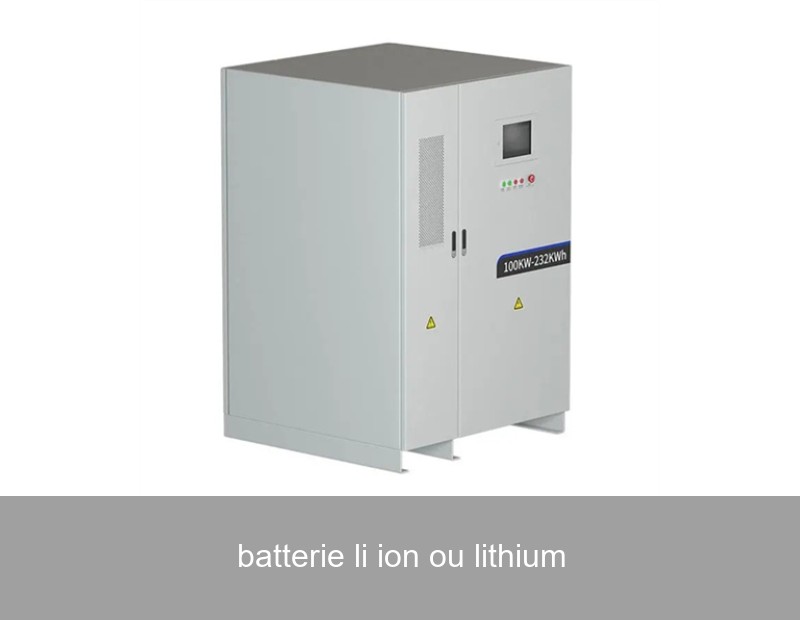
You've probably heard the terms "lithium battery" and "Li-ion battery" used almost interchangeably. But when you're planning a solar-plus-storage project for your home or a large-scale battery system for your business, understanding the subtle yet crucial difference between batterie li ion ou lithium becomes more than semantics—it's key to making an informed, safe, and cost-effective decision. This guide will demystify these technologies, explore their real-world applications, and show you how the right choice powers a sustainable future.
Table of Contents
Chemistry Decoded: Lithium vs. Li-ion
Let's clear up the primary confusion. A lithium metal battery (often the source of the generic "lithium" term) is a primary cell. It uses metallic lithium as an anode. These are typically non-rechargeable, pack a high energy density, and power devices like watches, calculators, and some military equipment. Their key limitation? They can pose safety risks if attempted to be recharged.
On the other hand, a Lithium-ion (Li-ion) battery is a rechargeable secondary cell. Here, lithium ions move between a cathode (typically made of lithium cobalt oxide, lithium iron phosphate, etc.) and an anode (usually graphite). This "shuttle" of ions is reversible, allowing the battery to be charged and discharged hundreds or thousands of times. When we talk about storing solar energy, powering electric vehicles, or backing up data centers, we are exclusively in the realm of advanced Li-ion technology.
| Feature | Lithium Metal (Primary) | Lithium-ion (Secondary) |
|---|---|---|
| Rechargeable | No | Yes |
| Common Uses | Single-use electronics, medical devices | EVs, smartphones, renewable energy storage |
| Energy Density | Very High | High |
| Lifespan (Cycles) | Single use | 2,000 - 6,000+ cycles |
| Safety & Management | Stable for intended use | Requires a Battery Management System (BMS) |
Why Li-ion Dominates Modern Energy Storage
The shift to renewable energy demands storage that is flexible, durable, and intelligent. This is where Li-ion shines, and it's the foundation of all modern systems, including those we engineer at Highjoule. But not all Li-ion is created equal. The magic lies in the specific chemistry and the sophisticated system built around it.
- High Efficiency & Depth of Discharge: Quality Li-ion systems can achieve round-trip efficiencies over 95%, meaning you lose very little energy when storing and using it. They can also be regularly discharged to 80-90% of their capacity without significant degradation.
- Longevity and Cycle Life: A premium Li-ion battery system, like the Highjoule H-Series Commercial ESS, is designed for 6,000+ cycles at 80% depth of discharge. This translates to decades of reliable service, a crucial factor for ROI.
- The Brain: Battery Management System (BMS): This is the unsung hero. A superior BMS, such as the proprietary NeuroSync BMS in Highjoule products, continuously monitors and balances each cell, ensuring safety, maximizing lifespan, and optimizing performance. It's what transforms raw battery cells into a smart, reliable asset.

Image Source: Unsplash (Representative image of energy storage system control)
A Real-World Case: Grid Stability and Renewable Integration in Germany
Let's look at data from a leading market. Germany, a pioneer in the Energiewende (energy transition), faces the challenge of balancing intermittent solar and wind power. Battery storage systems are critical for frequency regulation and grid stability.
In 2023, a 100 MW / 200 MWh grid-scale battery storage facility in Bavaria, utilizing advanced lithium iron phosphate (LFP) Li-ion technology, came online. Within its first year of operation, data showed it provided over 250 GWh of grid-balancing services, responding to frequency deviations in under 100 milliseconds. This project highlights how the right Li-ion application doesn't just store energy—it actively stabilizes national grids, allowing for higher penetration of renewables. Similar large-scale projects are accelerating across Europe and the US, underlining the technology's pivotal role.
At Highjoule, we apply this same principle of grid intelligence to smaller scales. Our MicroGrid Commander platform allows industrial campuses and communities to create self-stabilizing energy networks, using our Li-ion battery systems as the buffer and controller, maximizing on-site renewable consumption and providing backup during outages.
Choosing the Right System for Your Needs
So, you're considering a batterie li ion system? The answer is "Li-ion," but the next questions are about chemistry and configuration.
- For Residential & Small Commercial (Solar Self-Consumption): Safety and cycle life are paramount. Lithium Iron Phosphate (LFP) chemistry is often the best choice due to its exceptional thermal stability and long cycle life. Highjoule's HomePower+ series uses LFP technology, coupled with an AI-driven energy manager that learns your consumption patterns to optimize savings.
- For Large Commercial & Industrial (Demand Charge Reduction, Backup): Energy density and power output become critical. Here, a blend of chemistries like Nickel Manganese Cobalt (NMC) might be used for its high power capability. Highjoule's H-Series is modular, allowing customization for peak shaving, demand response, and seamless UPS-grade backup power.
- For Utility & Microgrid Applications: The focus is on scalability, durability, and grid service functionality. System-level integration and advanced software are as important as the cells themselves. Highjoule delivers end-to-end turnkey solutions, from feasibility studies and system design to installation and long-term performance monitoring via our GridFleet OS.
The Future Horizon: What's Beyond Today's Li-ion?
Innovation never stops. While Li-ion is the undisputed champion today, research is active on solid-state batteries (which could offer even greater safety and energy density) and other post-lithium chemistries like sodium-ion for stationary storage. For the foreseeable next two decades, however, incremental improvements in Li-ion technology—driven by companies committed to R&D like Highjoule—will deliver the steady gains in cost, safety, and performance that the energy transition relies on.
To understand the broader context of these technological advancements, leading research institutions like the National Renewable Energy Laboratory (NREL) provide invaluable insights into the future of storage.

Image Source: Unsplash (Representative image of battery R&D)
Your Energy, Your Choice
The journey from asking about a simple batterie li ion ou lithium leads to the heart of our energy future. It's about choosing a smart, adaptable, and durable partner for your energy independence. The technology is ready, and the economic case grows stronger every day. What specific energy challenge—be it unpredictable utility bills, the need for resilient backup power, or a goal for 100% renewable consumption—could a tailored Li-ion storage system solve for you?
 Inquiry
 Online Chat