


Monocrystalline vs. Polycrystalline Solar Panels: A Clear-Cut Guide for Your Energy Future
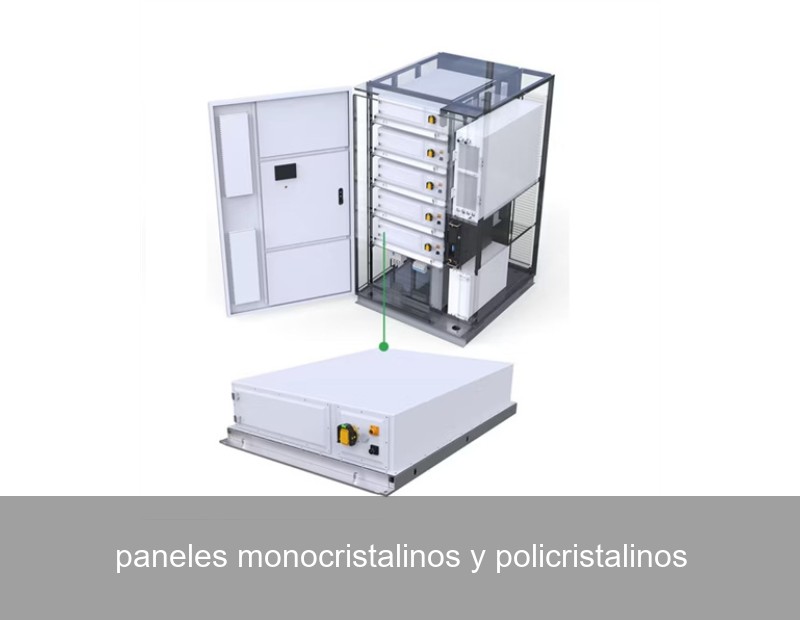
You've decided to harness the sun's power, but when you start researching solar panels, you're quickly met with a choice: paneles monocristalinos y policristalinos (monocrystalline and polycrystalline). This isn't just industry jargon; it's a fundamental decision that affects your system's efficiency, aesthetics, and long-term value. As a homeowner or business leader in Europe or the U.S., understanding this difference is key to maximizing your return on investment and contributing meaningfully to a sustainable grid. Let's demystify these technologies and see how they fit into a complete, intelligent energy solution.
Table of Contents
- The Core Difference: It Starts with a Crystal
- Monocrystalline Solar Panels: The Efficiency Leader
- Polycrystalline Solar Panels: The Value Contender
- Head-to-Head Comparison
- Beyond the Panel: Why Your Storage System is the Real Game-Changer
- Making Your Choice: Factors to Consider
The Core Difference: It Starts with a Crystal
Both monocrystalline and polycrystalline panels are made from silicon, the second most abundant element on Earth. The "crystal" in their names refers to how the silicon is structured during manufacturing. Think of it like ice: a single, perfect ice cube is uniform and clear (monocrystalline), while crushed ice is made of many smaller pieces fused together (polycrystalline). This foundational process dictates nearly everything that follows.

Image: A visual comparison highlighting the uniform dark hue of monocrystalline cells versus the blue, speckled appearance of polycrystalline cells.
Monocrystalline Solar Panels: The Efficiency Leader
Monocrystalline panels are crafted from a single, pure silicon crystal. This intricate process, known as the Czochralski method, results in a wafer with a perfectly aligned lattice structure. This uniformity allows electrons (the particles that generate electricity when hit by sunlight) to flow with minimal resistance.
- Higher Efficiency: Typically 20-23%. They convert more sunlight into electricity per square foot.
- Better Performance in Low Light: They tend to perform slightly better in cloudy conditions or early morning/late afternoon.
- Space-Efficient: You need fewer panels to achieve your desired power output, ideal for roofs with limited space.
- Aesthetics: They have a distinctive, sleek black appearance that many homeowners prefer.
- Longevity: They often come with longer warranties (25+ years is standard) and exhibit slower degradation rates.
The trade-off? This precise manufacturing is energy-intensive, which historically made these panels the premium, more expensive option. However, the price gap has narrowed significantly in recent years.
Polycrystalline Solar Panels: The Value Contender
Polycrystalline panels are made by melting multiple fragments of silicon together in a mold. The resulting wafer contains many smaller crystals with boundaries between them. It's a simpler, faster, and less wasteful process.
- Cost-Effective: Lower production costs traditionally made them the budget-friendly entry point.
- Good Efficiency: Modern polycrystalline panels offer respectable efficiencies, typically in the 15-18% range.
- Blue Hue: Their signature blue, speckled look comes from the way light reflects off the multiple crystal facets.
- Durability: They are still highly durable and come with robust warranties, often only a few years shorter than their mono counterparts.
The key consideration is that you'll generally need more polycrystalline panels to match the power output of a monocrystalline system, requiring more roof space.
Head-to-Head Comparison
| Feature | Monocrystalline | Polycrystalline |
|---|---|---|
| Cell Structure | Single, pure silicon crystal | Multiple silicon fragments melted together |
| Typical Efficiency | 20% - 23% | 15% - 18% |
| Appearance | Uniform black color | Blue, speckled color |
| Space Requirement | Lower (more power per sq. ft.) | Higher |
| Heat Tolerance | Slightly better | Slightly lower |
| Cost (Historical) | Higher upfront cost | Lower upfront cost |
| Best For | Limited roof space, maximizing output, premium aesthetics | Ample roof space, budget-conscious projects |
Data sourced from aggregated industry reports and manufacturer specifications. For detailed scientific comparisons, refer to resources from the National Renewable Energy Laboratory (NREL).
Beyond the Panel: Why Your Storage System is the Real Game-Changer
Here's a critical insight we at Highjoule have learned since 2005: The panel type is important, but the intelligence behind your entire energy system is what truly unlocks independence and value. Whether you choose mono or poly, the sun doesn't always shine when you need power. This is where advanced energy storage systems (ESS) become non-negotiable.
An efficient panel captures energy, but a smart battery system like Highjoule's H-Series Commercial ESS or HomePower+ residential unit stores it, manages it, and deploys it precisely when needed. Our systems use sophisticated algorithms to:
- Maximize self-consumption of your solar energy, reducing grid reliance.
- Provide backup power during outages, ensuring business continuity or home comfort.
- Enable time-of-use optimization, automatically using stored power during peak rate periods.
- Seamlessly integrate with both monocrystalline and polycrystalline arrays, extracting the maximum possible value from every kilowatt-hour generated.

Image: A complete home energy system: solar panels generating power and a wall-mounted battery storing it for later use.
Case Study: A German Bakery's Sweet Success
Let's look at a real-world example from Bavaria, Germany. Bäckerei Schmidt, a family-run bakery with high early-morning energy demands, installed a 50 kW solar array. Initially, they chose polycrystalline panels due to favorable pricing, covering their large bakery roof. However, their grid electricity costs remained high because much of their solar generation happened in the afternoon, missing the morning peak.
In 2022, they integrated a Highjoule H-50 Commercial ESS (100 kWh capacity). The system stores their afternoon solar production. Now, the bakery runs its ovens and lights at 4 AM primarily on stored solar energy.
The Result: A 68% reduction in grid electricity purchases in the first year, with a project payback period of under 5 years. The choice of panel was sensible for their budget and space, but adding intelligent storage transformed their energy economics. "The panels make the energy, but the Highjoule system gives us control," said owner Klaus Schmidt. This case underscores that the synergy between generation and storage is paramount.
Making Your Choice: Factors to Consider
So, which panel is right for you? Ask these questions:
- What is your available roof space? Limited space leans toward higher-efficiency monocrystalline.
- What is your budget? While the gap has shrunk, polycrystalline may still offer a lower entry price.
- How important are aesthetics? The uniform black of mono panels is often preferred for residential integration.
- What are your long-term goals? If maximizing every bit of production over 25+ years is key, mono's higher efficiency adds up.
- Most importantly, are you planning for storage? If yes, your panel efficiency calculation changes. The goal becomes generating enough *storable* energy to cover your critical loads, not just offsetting daytime grid use. A Highjoule energy consultant can model both panel types with our storage systems to show you the lifetime value of each option.
The solar industry is dynamic. New technologies like PERC (Passivated Emitter and Rear Cell) and half-cut cells are enhancing both panel types. For the latest independent data, consulting the U.S. Department of Energy's solar portal is always recommended.
The Highjoule Advantage: Your Intelligent Energy Ecosystem
At Highjoule, we don't just sell panels or batteries; we deliver integrated, intelligent power solutions. For our commercial and industrial clients across Europe and the U.S., our GridSynergy Microgrid Platform can orchestrate solar arrays (of any type), large-scale battery storage, and even backup generators as a single, resilient entity. For homeowners, our HomePower+ system with its intuitive app puts complete energy awareness and control in your pocket.
The debate between paneles monocristalinos y policristalinos is a technical starting point. The finish line is achieving true energy resilience and cost predictability. That requires a partner who thinks beyond the module.
Ready to see how your panel choice interacts with a state-of-the-art storage system to create a solution greater than the sum of its parts? What would you do with a power system that not only saves you money but also guarantees your lights stay on?
 Inquiry
 Online Chat