


Batterie Sodio: How Much Do Sodium Batteries Really Cost?
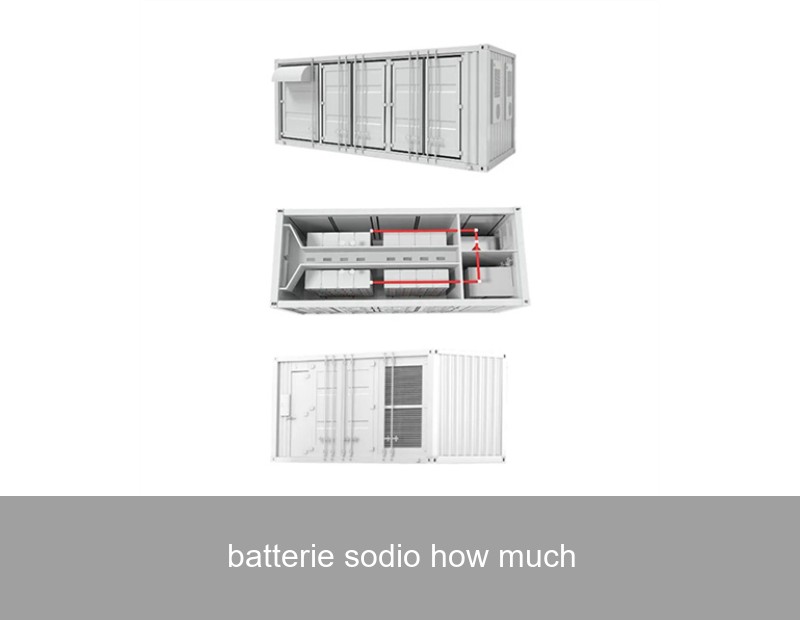
As the global push for renewable energy intensifies, a quiet revolution is brewing in the world of energy storage. Lithium-ion has long been the undisputed champion, but questions about its long-term sustainability, supply chain volatility, and cost are driving innovators to look for alternatives. Enter sodium-ion (batterie sodio) technology. If you're a business owner, project developer, or simply an energy enthusiast, you're likely asking: "Batterie sodio—how much does it cost, and is it a viable alternative for my needs?" This article dives deep into the economics, performance, and real-world potential of sodium batteries, offering a clear-eyed view of their value proposition for the European and American markets.
Table of Contents
The Phenomenon: Why Sodium is Gaining Traction
Let's start with the obvious. Lithium, cobalt, and nickel are finite resources with geographically concentrated and politically sensitive supply chains. Their prices can be wildly unpredictable, directly impacting the final cost of energy storage systems. Sodium, on the other hand, is abundant—literally extracted from seawater and salt mines—making it one of the most common elements on Earth. This fundamental difference isn't just about chemistry; it's about building a more resilient and democratic energy future. The promise of sodium-ion batteries lies in their potential for lower raw material costs, enhanced safety (they are less prone to thermal runaway), and better performance in a wider temperature range.
The Core Drivers Behind the Shift
- Supply Chain Security: Reducing dependence on a limited number of lithium-producing countries.
- Cost Stability: Abundant materials lead to more predictable long-term pricing.
- Sustainability: Many sodium-ion chemistries can avoid the use of critical minerals like cobalt.
- Safety Profile: Inherently more stable chemistry reduces fire risk, a crucial factor for commercial and residential installations.

Image: The abundance of sodium, from sources like salt, is a key driver for battery innovation. Source: Unsplash.
Cost Data: Breaking Down the "Batterie Sodio How Much" Question
So, let's address the elephant in the room: price. It's tempting to expect sodium-ion batteries to be drastically cheaper than lithium-ion today, but the reality is more nuanced. Currently, at the cell level, leading sodium-ion batteries are estimated to be 20-30% cheaper than standard Lithium Iron Phosphate (LFP) cells, primarily due to the lower cost of raw materials. However, when integrated into a full Battery Energy Storage System (BESS)—which includes power conversion systems (PCS), battery management systems (BMS), thermal management, and enclosure—the upfront system cost difference narrows.
The real economic advantage emerges when we look at the total cost of ownership (TCO) over the system's lifetime. Here's a simplified comparison:
| Cost Factor | Lithium-Ion (LFP) System | Sodium-Ion System (Projected) |
|---|---|---|
| Upfront System Cost (per kWh) | $250 - $350 | $200 - $300 (early adoption) |
| Cycle Life (to 80% capacity) | 6,000 - 8,000 cycles | 5,000 - 7,000 cycles (current gen) |
| Raw Material Price Volatility | High (Lithium, Cobalt) | Very Low (Sodium, Iron, Manganese) |
| Safety & Insurance Costs | Standard | Potentially Lower |
Data compiled from industry reports and market analysis (2023-2024). Note: Prices are indicative and vary by scale and region.
As manufacturing scales up—think gigafactories dedicated to sodium-ion production—economies of scale will push system costs down further. Analysts at the International Energy Agency (IEA) project that sodium-ion could become the dominant low-cost technology for stationary storage by 2030 in certain scenarios.
A Real-World Case: Sodium Storage in Action
Theory is one thing, but what about practice? In 2023, a pilot project in Northern Germany provided compelling data. A mid-sized agricultural cooperative installed a 100 kWh sodium-ion battery storage system alongside their existing solar PV array. Their goals were to increase self-consumption of solar power, provide backup for critical cooling systems, and test the technology's reliability in a cold climate.
- Project Duration: 12-month monitoring period.
- Performance: The system maintained over 95% of its initial capacity through all seasons, showing remarkable resilience during winter months where temperatures frequently dropped below freezing—a condition that typically degrades lithium-ion performance.
- Economic Outcome: By shifting solar energy to peak evening hours, the cooperative reduced its grid electricity purchases by 68%, achieving a simple payback period estimated at 8 years. The operators notably highlighted the "peace of mind" due to the battery's stable, non-flammable chemistry in their barn environment.
This case underscores that for applications where absolute energy density (weight/volume) is less critical than cost, safety, and longevity, sodium-ion presents a formidable option today.
Expert Insights and Future Trajectory
Where is this technology headed? The innovation cycle is moving rapidly. Research institutions and companies are working on next-generation cathodes and electrolytes that promise to close the energy density gap with lithium-ion while further extending cycle life. The key insight for end-users is this: sodium-ion isn't necessarily a wholesale replacement for lithium-ion. Instead, it's about choosing the right tool for the job.

Image: Continuous R&D is accelerating the performance of sodium-ion technology. Source: Unsplash.
Think of it this way: For long-duration storage (8+ hours), where the sheer mass of the battery is less important, sodium's cost advantage shines. For electric vehicles requiring maximum range per kilogram, lithium still leads. The future grid will likely be a heterogeneous mix of storage technologies. A recent review in Nature Energy emphasized this multi-technology approach, highlighting sodium-ion's ideal role in mitigating grid congestion and supporting renewable integration at the utility scale.
Highjoule's Role in the Evolving Storage Landscape
At Highjoule, we have been at the forefront of intelligent energy storage since 2005. We monitor these technological shifts not as spectators, but as active integrators focused on delivering optimal solutions for our clients. Our approach is technology-agnostic. Whether for commercial, industrial, residential, or complex microgrid applications, we design systems that prioritize your specific needs: levelized cost of storage, safety, lifespan, and sustainability.
While we rigorously evaluate emerging technologies like sodium-ion, our core strength lies in our Adaptive BESS Platform. This smart, modular system is designed with future compatibility in mind. Its advanced battery management and grid-interactive inverters can potentially integrate promising new battery chemistries as they become commercially mature and proven. For clients today, this means investing in a platform that protects against technological obsolescence. We provide the intelligence and architecture; the underlying storage cells can evolve.
Our services extend beyond hardware. We offer comprehensive energy audits, financial modeling (to answer your precise "how much" questions), and long-term performance monitoring to ensure any storage investment, whether lithium, sodium, or beyond, delivers on its promise.
Is Sodium-Ion Right for Your Next Project?
The question of "batterie sodio how much" ultimately leads to a more profound discussion about your energy objectives. Are you looking to shore up resilience for a remote microgrid? Maximize the return on a large-scale solar farm? Or simply achieve energy independence for your home with the safest possible technology?
The landscape is exciting, and the economics are shifting. We invite you to bring your scenario to us. What specific energy challenge are you hoping to solve with storage, and how might the unique properties of sodium-ion technology change the equation for you?
 Inquiry
 Online Chat