


The 48V Energy Storage Cabinet Battery: A Cornerstone of Modern Power Resilience
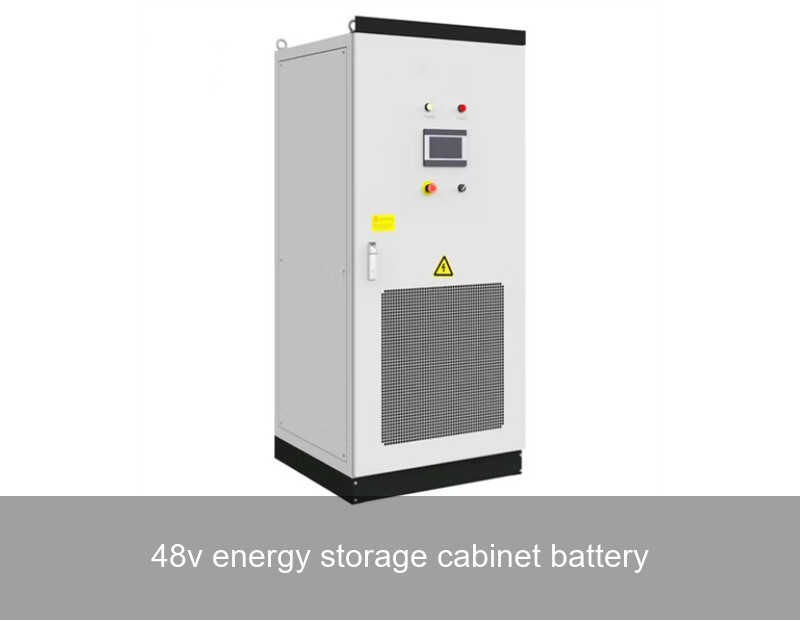
Imagine a world where your business never faces a disruptive power flicker, where your solar panels work in perfect harmony with your energy needs, and where rising electricity costs become a manageable, predictable line item. This isn't a distant dream; it's the reality enabled by a technological workhorse: the 48V energy storage cabinet battery. As grids face increasing strain and renewable energy becomes ubiquitous, these robust, scalable systems are emerging as the silent guardians of commercial and industrial power stability across Europe and the United States.
The Voltage Sweet Spot: Why 48V?
You might wonder, "Why 48 volts?" In the landscape of energy storage, voltage is a critical design choice balancing safety, efficiency, and cost. Low-voltage systems, typically under 60V, like the 48V standard, fall into what's known as a Safety Extra-Low Voltage (SELV) range in many regions. This means they present a significantly lower electrical hazard during installation and maintenance, reducing compliance complexity and associated costs.
But the benefits go beyond safety. The 48V architecture is a proven, robust standard borrowed from telecommunications and data centers. It offers a perfect equilibrium:
- Efficiency: It minimizes energy losses compared to lower-voltage systems that require higher, more resistive currents to deliver the same power.
- Scalability: Systems are built by connecting multiple 48V battery modules in parallel, allowing for easy capacity expansion from tens of kilowatt-hours to megawatt-hours.
- Component Availability: A vast ecosystem of reliable, cost-effective components (like inverters, converters, and BMS) is available, driving down system costs and improving serviceability.

Image: Modular 48V battery systems allow for safe and straightforward maintenance. Credit: Unsplash
Beyond the Battery: Anatomy of a Modern 48V Cabinet
A 48V energy storage cabinet battery is far more than just a box of batteries. Think of it as an integrated power brain. The cabinet itself is a sophisticated enclosure housing several critical components:
- Battery Modules: The core energy reservoir, using Lithium Iron Phosphate (LFP) chemistry for its renowned safety, long cycle life (often 6,000+ cycles), and stability.
- Battery Management System (BMS): The guardian of the battery, continuously monitoring cell voltage, temperature, and state of charge to ensure optimal performance and safety.
- Power Conversion System (PCS): The translator, converting the DC power from the batteries to the AC power used by your facility (and vice-versa for charging).
- Thermal Management: An integrated cooling system (air or liquid) to maintain the batteries at their ideal operating temperature, extending lifespan.
- Energy Management System (EMS): The intelligence, making real-time decisions on when to charge (from grid or solar) and discharge based on tariffs, consumption, and grid signals.
Data-Driven Demand: The Market Shift to Modular Storage
The trend is clear and backed by numbers. According to the International Energy Agency (IEA), global grid-scale battery storage capacity is set to multiply by a factor of 35 between 2022 and 2030. A significant portion of this growth in the commercial & industrial (C&I) segment is driven by modular, containerized solutions, with 48V architecture being a dominant design. Why? Because businesses are responding to tangible pressures:
| Phenomenon | Supporting Data/Impact | Business Need |
|---|---|---|
| Volatile Energy Prices | EU electricity prices for non-household consumers saw fluctuations exceeding 300% in some regions during the 2022 crisis (Eurostat). | Price arbitrage (store when cheap, use when expensive). |
| Increasing Power Outages | The U.S. experienced over 1.3 billion customer-hours of outages in 2020-2021 (U.S. EIA). | Backup power & operational resilience. |
| Renewable Integration | Solar PV generation in Europe has grown by over 80% since 2019 (Ember). | Maximize solar self-consumption, reduce curtailment. |
A Case Study in Resilience: German Manufacturing Plant
Let's make this concrete. A mid-sized automotive parts manufacturer in Bavaria, Germany, faced two major challenges: frequent micro-dips in grid power causing costly production line stoppages, and soaring peak demand charges that comprised nearly 40% of their electricity bill.
Their solution was a turnkey installation featuring a 48V energy storage cabinet battery system. The project involved:
- Scale: 4 interconnected 48V cabinet units, providing a total capacity of 480 kWh and 250 kW of power.
- Integration: Seamless coupling with their existing 300 kW rooftop solar array.
- Intelligence: An advanced EMS programmed to prioritize solar self-consumption, automatically shave peak loads, and provide seamless transition to backup power during grid disturbances.
The Results (18-month post-installation):
- Cost Savings: A 28% reduction in overall electricity costs, primarily through dramatic cuts in peak demand charges.
- Uptime: Elimination of production losses due to short-duration grid issues, safeguarding over €200,000 in potential annual downtime costs.
- Sustainability: Increased solar self-consumption rate from 35% to over 80%, significantly reducing their carbon footprint.
This case exemplifies how a well-designed 48V storage system moves beyond simple backup to become a strategic financial and operational asset.
Key Considerations for Choosing a 48V Cabinet System
Not all cabinets are created equal. When evaluating a 48V energy storage cabinet battery solution, ask these critical questions:
- Is the core chemistry safe and durable? LFP is the industry benchmark for C&I applications.
- How intelligent is the system? Can it integrate with multiple revenue streams (peak shaving, frequency response, solar time-shift)? What does the warranty truly cover? Look for a performance guarantee (throughput or end-of-warranty capacity) not just a time-based warranty.
- Is it future-proof? Can you easily add more 48V modules in the future as your needs grow?
The Highjoule Approach: Intelligent 48V Storage Solutions
At Highjoule, with nearly two decades of experience since 2005, we've engineered our H-Cube 48V Modular Storage System to address every consideration outlined above. We don't just sell cabinets; we deliver integrated power resilience.
The H-Cube is built on a native 48V LFP architecture, designed for maximum safety and effortless scalability from 100 kWh to multi-MWh installations. What sets it apart is the Highjoule Neuron™ EMS platform. This AI-driven brain doesn't just react; it learns your facility's load patterns, weather forecasts, and real-time tariff structures to autonomously optimize every kilowatt-hour for maximum economic return.
Our solutions are deployed across Europe and North America, providing businesses with:
- Uninterruptible power supply (UPS) for critical operations.
- Peak demand charge reduction, often with a payback period under 5 years.
- Future-ready integration for solar PV, EV fleets, and microgrid applications.

Image: A modern, scalable 48V energy storage installation in an industrial setting. Credit: Unsplash
So, as you look at your facility's rising energy bills and ponder your vulnerability to the next grid event, ask yourself this: Is your current power infrastructure a cost center you simply accept, or is it a strategic asset waiting to be optimized? What would the ability to control and predict your energy costs do for your business's bottom line and competitive edge over the next decade?
 Inquiry
 Online Chat