


Batteries for Solar Panels Cost: A Smart Investment for Energy Independence
You've made the smart move to solar panels. They're quietly generating clean energy on your roof, slashing your electricity bills and your carbon footprint. But have you ever watched the sun set and wondered, "Where does all that extra energy my panels made today actually go?" Without a battery, it simply flows back to the grid, often for minimal credit. The conversation around solar is now decisively shifting towards batteries for solar panels cost—not as an extra expense, but as the key to unlocking true energy freedom and maximizing your system's value. Let's demystify the investment and explore what you're really paying for.
Table of Contents
- The Real Cost Breakdown: More Than Just a Price Tag
- From Expense to Asset: How Battery Value Has Evolved
- A Real-World Case: The German Household Transformation
- Key Factors Influencing Your Battery System Cost
- The Highjoule Approach: Optimizing Cost Over the System's Lifetime
- Finding the Right System for Your Home and Budget
The Real Cost Breakdown: More Than Just a Price Tag
When we talk about the cost of batteries for solar panels, it's crucial to look beyond the initial sticker price. A complete residential energy storage system involves several components:
- The Battery Cells & Module: The core energy storage unit, typically using Lithium Iron Phosphate (LFP) chemistry for its safety and long life.
- The Battery Management System (BMS): The intelligent "brain" that ensures safe operation, balances cells, and maximizes lifespan.
- The Hybrid Inverter or Power Conversion System (PCS): This critical device manages energy flow between solar panels, the battery, and your home's electrical panel.
- Installation & Integration: Professional labor, electrical work, permits, and potential panel upgrades.
- Software & Monitoring: The intelligent platform that lets you control, monitor, and optimize your energy usage.
For a typical US or European home, a fully installed system with a usable capacity of 10-15 kWh can range significantly. However, focusing solely on upfront cost is a short-sighted view. The real metric is Levelized Cost of Storage (LCOS)—the total cost of owning and operating the system over its lifetime, divided by the total energy it will dispatch. A cheaper battery with a shorter lifespan and lower efficiency may have a higher LCOS than a more robust, intelligently managed system.
From Expense to Asset: How Battery Value Has Evolved
The narrative has flipped. A solar battery is no longer just a backup for blackouts. Its value is multi-faceted and directly impacts the batteries for solar panels cost justification:
| Value Stream | How It Works | Financial Impact |
|---|---|---|
| Self-Consumption Maximization | Store excess solar for use at night, drastically reducing grid imports. | Directly lowers monthly utility bills, often by 70-90%. |
| Time-of-Use (TOU) & Peak Shaving | Avoid drawing power from the grid during expensive peak rate periods. | Protects against high tariff rates; can yield faster payback in regions with high peak/off-peak differentials. |
| Grid Services & Virtual Power Plants (VPPs) | Aggregated home batteries can provide stability to the grid. Homeowners may receive compensation. | Creates a potential revenue stream, turning your battery into a grid asset. |
| Backup Power & Resilience | Provides electricity during grid outages, a growing concern. | Value in avoided disruption, protecting food, medicine, and enabling work-from-home. |
According to a National Renewable Energy Laboratory (NREL) report, when multiple value streams are stacked, the economic case for solar-plus-storage becomes compelling in many markets.
A Real-World Case: The German Household Transformation
Let's look at data from a real installation. The Schmidt family in Bavaria, Germany, had a 8 kWp solar array. Despite high solar generation, their grid import at night remained high due to Germany's limited sunshine hours in winter and evening usage.
- Situation: High evening grid reliance, desire for backup power, and participation in a grid-balancing program.
- Solution: Installation of a 12 kWh Highjoule Harmony Home battery system with an integrated hybrid inverter.
- Data & Results (First Year):
- Self-Consumption Rate increased from 35% to 85%.
- Grid Electricity Purchase reduced by 78%.
- Bill Savings: €1,250 annually, based on a 0.35 €/kWh average cost.
- VPP Earnings: Additional €180 from participation in a pilot flexibility program.

For the Schmidts, the batteries for solar panels cost was offset by nearly €1,430 in combined savings and earnings in Year 1 alone, accelerating their payback period significantly. The intangible benefit of uninterrupted power during two short grid outages provided further peace of mind.
Key Factors Influencing Your Battery System Cost
Why do quotes vary? Several technical and market factors are at play:
- Battery Chemistry & Quality: LFP batteries, like those used in Highjoule systems, have a longer cycle life and superior thermal stability than some older chemistries, justifying a potential premium.
- System Capacity & Power Rating: Larger capacity (kWh) and higher continuous power (kW) increase cost. Sizing correctly for your consumption is key.
- Inverter Strategy: An AC-coupled system (battery with its own inverter) can be easier to retrofit. A DC-coupled system (shared inverter) can be more efficient. Integrated hybrid solutions offer optimized performance.
- Installation Complexity: Electrical panel age, distance between components, and local permitting fees all affect final cost.
- Regional Incentives: In the US, the federal Investment Tax Credit (ITC) now applies to standalone storage. In Europe, countries like Italy, Germany, and Austria offer various subsidies. These can dramatically reduce net cost.
The Highjoule Approach: Optimizing Cost Over the System's Lifetime
At Highjoule, we engineer our energy storage solutions with the total cost of ownership in mind. Our Harmony Home series isn't just about storing kilowatt-hours; it's about delivering the lowest LCOS through intelligent design.
How do we achieve this? First, our proprietary battery management system and advanced thermal controls ensure our LFP cells far exceed standard cycle life warranties, meaning more energy delivered over decades. Second, our integrated Energy Operating System (EOS) uses AI-driven forecasting to automatically optimize charge/discharge cycles based on your usage patterns, weather, and real-time electricity prices. This ensures every cycle delivers maximum financial value, whether it's avoiding a peak tariff or participating in a grid service.

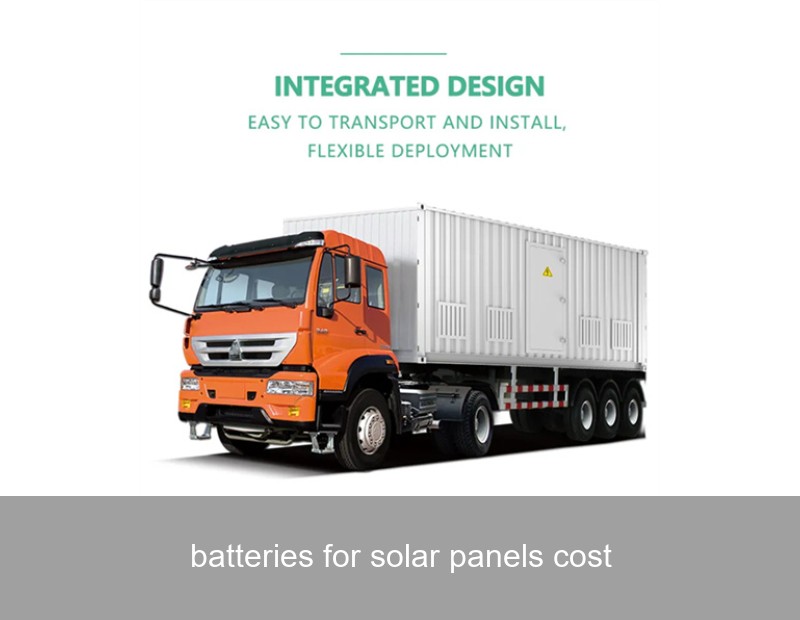
For commercial and industrial clients, our GridMAX solutions offer scalable, containerized storage that manages demand charges, provides backup, and can create new revenue through grid service contracts. By focusing on system intelligence and durability, we ensure the batteries for solar panels cost translates into a high-return investment, not just a purchase.
Finding the Right System for Your Home and Budget
So, how do you navigate this? Start by asking the right questions: What are your primary goals—bill savings, backup, or environmental impact? Analyze your last 12 months of electricity bills to understand your consumption pattern. Get multiple quotes, but insist they detail not just hardware, but projected performance, warranty terms (both capacity retention and years), and software capabilities.
Remember, the cheapest system might lock you into inferior software that can't adapt to new tariffs or VPP programs, or a battery that degrades faster. The goal is a system designed for a 20+ year partnership with your home's energy needs.
What specific energy consumption pattern in your home do you think a battery could most effectively optimize, and how would that change your relationship with the grid?
 Inquiry
 Online Chat