


Unlocking Energy Freedom: The Complete Guide to an 11kW Solar System with Battery
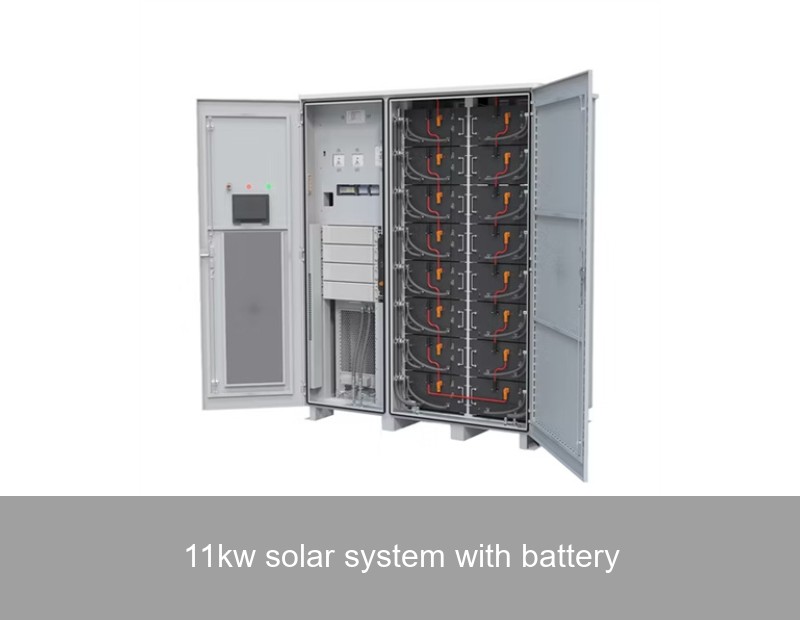
Have you ever looked at your electricity bill and wondered, "There has to be a better way"? For a growing number of homeowners and small business owners across Europe and the US, the answer is increasingly clear: a robust 11kW solar system with battery storage. This isn't just about going green anymore; it's a practical, financial, and strategic move towards true energy independence. But what does this system really offer, and is it the right fit for your energy appetite? Let's demystify it together.
An 11kW solar photovoltaic (PV) system is a significant power generator. To put it in perspective, it typically consists of 28-32 high-efficiency solar panels, depending on the model. In sunny regions like Southern California or Spain, such a system can produce 14,000 to 17,000 kWh of clean electricity per year. That's often enough to cover the annual consumption of a large, energy-intensive household with electric vehicles, pool pumps, and air conditioning. But the real game-changer, the component that transforms a solar array from a daytime saver to a 24/7 power hub, is the integrated battery storage system.
Why You Should Seriously Consider Adding a Battery
The traditional solar story has a fundamental plot hole: the sun sets just when many families come home and start using power. Without a battery, excess solar energy produced at midday is often sold back to the grid at a low rate, only for you to buy it back in the evening at a premium. This cycle keeps you tethered to the utility's whims and rate hikes.
Adding a battery to your 11kW solar system changes the narrative entirely. It allows you to store your surplus solar energy and use it on your own schedule. The benefits are compelling:
- Maximized Self-Consumption: Use more of the energy you produce, sometimes increasing direct usage from 30-40% to 70% or more.
- Reliable Backup Power: When the grid fails—a growing concern in many areas—your essential circuits stay on. Lights, refrigeration, and internet remain operational.
- Financial Resilience: You can avoid drawing power during expensive peak-rate periods (often 4-9 pm), dramatically reducing your bill under time-of-use tariffs.
- Grid Support: Advanced systems can even provide services to stabilize the local grid, a concept that utilities are beginning to value.
A Real-World Case Study: The Smith Family in California
Let's move beyond theory. Consider the Smith family (name changed for privacy) in Sacramento, California. In 2022, they installed an 11.2kW solar array paired with a 13.5kWh battery system. Their goals were clear: eliminate their $280-$400 monthly summer cooling bills and gain security against Public Safety Power Shutoffs (PSPS).
Here’s their data one year post-installation, presented alongside their previous utility costs:
| Metric | Before Installation (2021) | After Installation (2023) |
|---|---|---|
| Annual Electricity Bill | $3,850 | $212 (Grid connection fee only) |
| Grid Energy Imported | 16,200 kWh | 1,150 kWh |
| Self-Consumption of Solar | N/A | 92% |
| Backup Events Used | N/A | 8 outages, totaling 42 hours |
The Smiths' system generated 15,800 kWh annually. The battery allowed them to store the daytime surplus, powering their home through the evening and night. During a two-day PSPS event, they lived normally while neighbors scrambled. Their simple payback period is now projected at under 8 years, and they've insulated themselves from future rate increases. This is the tangible power of a correctly sized and integrated 11kW solar system with battery.

Image Source: Unsplash - A modern home equipped for energy independence.
Key Components of a Robust 11kW Solar + Battery System
Not all systems are created equal. A high-performance setup is a symphony of components working in intelligent harmony.
- High-Efficiency Solar Panels (11kW): Monocrystalline panels with efficiency ratings above 21% are the standard for premium installations, maximizing roof space.
- Smart Hybrid Inverter(s): The brain of the operation. This device not only converts DC solar power to AC for your home but also manages the bidirectional flow of energy to and from the battery. Look for models with multiple maximum power point trackers (MPPTs) for optimal panel performance.
- Lithium-Ion Battery Bank: The heart of storage. Lithium Iron Phosphate (LFP) chemistry is now the preferred choice for residential storage due to its longer lifespan, superior thermal stability, and depth of discharge. Capacity should be matched to your evening load; typically 10-20kWh for an 11kW array.
- Energy Management System (EMS): The nervous system. This intelligent software learns your consumption patterns, weather forecasts, and utility rate schedules to autonomously decide when to charge, discharge, or export energy, maximizing your economic return.
The Highjoule Solution: Intelligent Energy Independence
This is where the expertise of a seasoned provider becomes critical. At Highjoule, with nearly two decades of experience since 2005, we've moved beyond simply selling components. We engineer integrated power solutions. For the homeowner considering an 11kW solar system with battery, our Highjoule HomePower Stack offers a seamless answer.
Our system is built around the Highjoule Harmony Hub, a hybrid inverter that integrates seamlessly with our modular LFP EverCore batteries. You can start with a 10kWh battery and easily expand as your needs grow—perhaps after adding an EV. What truly sets it apart is our Neuron OS energy management platform. It doesn't just react; it predicts. By analyzing local weather data and your historical usage, it optimizes your energy flow for savings and readiness. For instance, it might conservatively top up the battery before a forecasted heatwave, ensuring you have backup for AC during grid strain.
For larger applications, like small businesses or community microgrids, our Highjoule C&I Series provides scalable, containerized solutions that can integrate 11kW solar arrays and much larger storage capacities, ensuring operational continuity and cost predictability.

Image Source: Unsplash - Advanced energy storage system monitoring.
Making the Decision: Is an 11kW System Right for You?
Sizing your system is crucial. An 11kW system is substantial. It's ideal for:
- Homes with annual consumption above 10,000 kWh.
- Households with electric vehicles (each adds ~3,000-4,000 kWh/year).
- Homes with electric heating/cooling (heat pumps) or pools.
- Small commercial premises with daytime operations.
Before you commit, a professional audit is essential. Reputable installers will analyze 12 months of your utility bills, assess your roof's orientation and shading, and discuss your future plans (like EV purchase). They should also provide a clear analysis of incentives, like the US federal Investment Tax Credit (ITC) which, as of 2024, still covers 30% of the cost of both solar and storage*. In Europe, schemes vary by country, but many still offer favorable conditions for self-consumption with storage*.
The journey to energy independence is one of the most impactful decisions a modern homeowner or business can make. It's a statement of resilience, financial savvy, and environmental stewardship. An 11kW solar system with battery is not merely an appliance; it's the foundation of a new, more secure relationship with energy.
What's the first step you'll take to understand your home's true potential for energy independence? Could your next power outage be the last one you ever worry about?
 Inquiry
 Online Chat