


Your Complete Guide to a Solar Energy Storage Cabinet Setup for Home
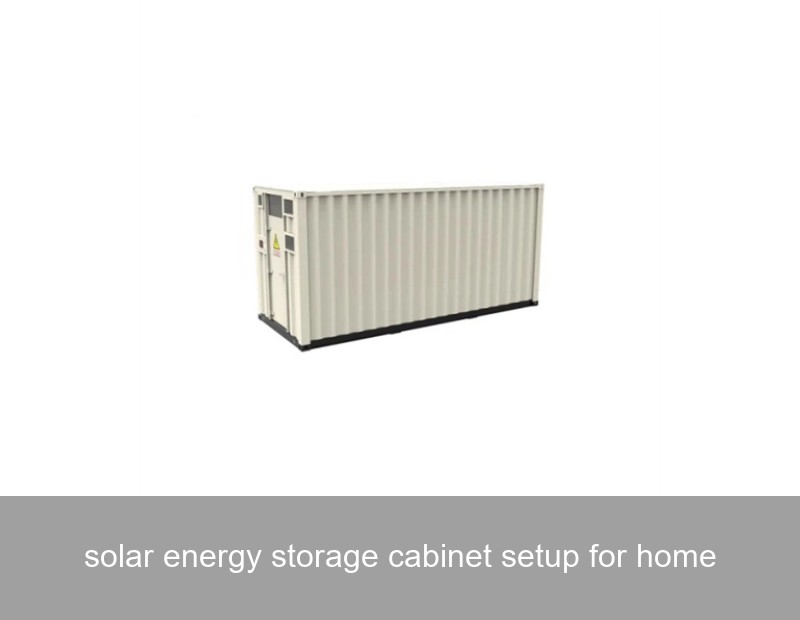
Have you ever watched your solar panels generate power on a sunny afternoon, only to think about that energy being sent back to the grid, while you'll buy it back at a higher price in the evening? This common frustration is exactly what a solar energy storage cabinet setup for home is designed to solve. It's the missing piece that transforms your solar array from a daytime energy-saver into a true 24/7 power provider for your household. For nearly two decades, Highjoule has been at the forefront of this revolution, engineering smart storage solutions that empower homeowners to take full control of their energy.
Table of Contents
- The Phenomenon: Solar Power's "Use-It-Or-Lose-It" Problem
- The Data: Why Storage is Becoming a Homeowner's Best Investment
- The Components: What Makes a Home Energy Storage Cabinet?
- The Setup: Key Considerations for Installation
- The Highjoule Difference: Intelligent Storage for Modern Homes
- A Real-World Case Study: The Johnson Family in California
- Future-Proofing Your Energy Independence
The Phenomenon: Solar Power's "Use-It-Or-Lose-It" Problem
Most residential solar systems are connected to the grid. When the sun is shining, they power your home first, and any excess is fed back. This earns you credits, but here's the catch: the financial value of that exported energy is often significantly lower than the cost of electricity you import from the grid at night or on cloudy days. This mismatch creates a financial and practical gap. Your system is most productive when your home consumption might be lowest (e.g., midday when everyone is at work or school). A solar energy storage cabinet bridges this gap by acting as a personal energy bank, storing your surplus solar generation for you to use exactly when you need it most.
The Data: Why Storage is Becoming a Homeowner's Best Investment
The economic and resilience case for adding storage is stronger than ever. According to the U.S. Department of Energy, pairing storage with solar can increase a homeowner's consumption of self-generated solar electricity from 20-40% to 50-90%. Let's translate that: you're buying far less expensive power from the utility. Furthermore, with grid electricity prices in Europe and the U.S. experiencing volatility and steady increases, the ability to lock in your own energy cost becomes a powerful financial shield. In areas with time-of-use rates, where electricity is more expensive during peak evening hours, the value of stored solar energy skyrockets.

Image: A modern home energy setup featuring solar panels and a storage cabinet installation. Credit: Unsplash
The Components: What Makes a Home Energy Storage Cabinet?
Think of a storage cabinet as the heart of your personal power station. It's more than just batteries in a box. A complete, integrated system typically includes:
- The Battery Modules: The core energy reservoir, usually using Lithium Iron Phosphate (LFP) chemistry for its safety, longevity, and stability.
- The Battery Management System (BMS): The brain that monitors cell voltage, temperature, and health to ensure optimal and safe operation.
- The Hybrid Inverter or Power Conversion System (PCS): This critical device manages the flow of energy. It converts the DC electricity from your solar panels and batteries to AC for your home, and vice versa for charging. It intelligently decides when to charge from solar, discharge to the home, or interact with the grid.
- Thermal Management System: A built-in cooling (and sometimes heating) system to keep the batteries at their ideal operating temperature, extending their lifespan.
- Safety Enclosure & Monitoring: A robust, UL-certified cabinet for physical protection, integrated with software for remote monitoring and control via a smartphone app.
The Setup: Key Considerations for Installation
Planning your solar energy storage cabinet setup for home requires careful thought. Here are the pivotal questions to address:
| Consideration | Key Questions | Why It Matters |
|---|---|---|
| Capacity & Power | How much energy do you want to store (kWh)? What is the maximum power output (kW) you need at once? | Defines how long you can power essential loads during an outage and if you can run high-power appliances simultaneously. |
| Location | Garage, basement, utility room, or outdoors? Is the space temperature-controlled? | Impacts installation cost, safety compliance, and battery performance/longevity. Most modern cabinets are indoor/outdoor rated. |
| Grid Interaction & Backup | Do you want whole-home backup or just critical loads? How does your utility compensate for exported energy? | Determines system sizing and electrical configuration. Critical loads backup is more cost-effective than whole-home. |
| Future Expansion | Might you add an EV charger or more solar panels later? | Choosing a modular system allows you to easily add battery capacity later without replacing the entire cabinet. |
The Highjoule Difference: Intelligent Storage for Modern Homes
This is where our expertise transforms a standard setup into a smart energy asset. Highjoule's Residential Energy Cabinet (REC Series) is engineered with the homeowner in mind. It's not just about storage; it's about intelligent energy management. Our systems feature:
- Modular, Scalable Design: Start with a base capacity and stack additional battery modules as your needs grow, protecting your initial investment.
- Advanced LFP Battery Chemistry: We prioritize safety and cycle life, offering a warranty that reflects our confidence in the product's durability.
- Highjoule EnergyOS™: Our proprietary software platform is the true differentiator. It learns your household's energy patterns and automatically optimizes charging and discharging based on solar production, time-of-use rates, and weather forecasts. You maximize savings without lifting a finger.
- Seamless Integration: Our cabinets are designed to work harmoniously with leading solar inverter brands and are installed by our network of certified partners, ensuring a smooth, professional setup.
Choosing Highjoule means partnering with a global leader who views your storage cabinet as the core of a resilient, efficient, and sustainable home energy ecosystem.

Image: A sleek, modern energy storage cabinet integrated into a home garage. Credit: Unsplash
A Real-World Case Study: The Johnson Family in California
Let's look at a concrete example. The Johnson family in Sacramento, CA, had a 7.5kW solar system but faced high peak-time rates from 4-9 PM. Despite having solar, their evening energy bills were still substantial. In 2023, they installed a Highjoule REC-15 cabinet (15 kWh usable capacity) with a hybrid inverter.
- Self-Consumption of Solar: Increased from 35% to 88%.
- Bill Savings: Their average monthly electricity bill dropped from a net $90 to a net $12, despite having an electric vehicle they now charge primarily from stored solar.
- Backup Security: During three brief grid outages in the year, their system seamlessly powered critical loads (refrigerator, lights, internet) for the full duration without interruption.
- ROI Projection: Based on current rates and state incentives, they project a full return on investment in under 7 years.
This case, mirrored by many homeowners in Europe facing similar high energy costs, illustrates the tangible triple benefit: savings, security, and sustainability.
Future-Proofing Your Energy Independence
The journey towards a fully energy-independent home is evolving. Today, it's a solar energy storage cabinet setup for home. Tomorrow, that same cabinet will be the hub that intelligently manages your solar production, electric vehicle charging (V2H - Vehicle-to-Home is on the horizon), and even grid services. By choosing a scalable, software-driven system like Highjoule's, you're not just solving today's energy bill problem—you're building the adaptable energy platform for your home's future.
What's the first question you would ask an installer when planning your own home energy storage system to ensure it aligns with your family's lifestyle for the next decade?
 Inquiry
 Online Chat